Many people overlook that the same battery capacity can translate into different energy contents depending on voltage. Understanding how ampere-hours (Ah) and watt-hours (Wh) quantify a battery’s performance is essential for making informed choices. While Ah measures charge capacity, Wh accounts for energy delivery across varying voltages. Recognizing the distinctions between these metrics can greatly impact your application’s efficiency and longevity. Let’s explore why both are vital and how they influence battery selection.
Key Takeaways
- Ah measures the total charge a lithium battery can deliver, indicating capacity; Wh reflects total energy, considering voltage variations.
- Wh provides a more comprehensive energy comparison across different lithium chemistries with varying voltages.
- Ah is useful for assessing runtime and continuous current, while Wh is better for understanding overall energy content.
- Conversion between Ah and Wh requires knowledge of the battery’s voltage: Wh = Ah × Voltage.
- Both metrics are essential; Ah for capacity planning and Wh for energy efficiency in lithium battery applications.
What Are Ampere-Hours (Ah) and How Do They Measure Capacity?
Ampere-hours (Ah) are a fundamental unit used to quantify the capacity of lithium batteries, representing the total charge they can deliver over a specified period. This measurement directly relates to battery capacity, influencing runtime and system performance. Accurate Ah ratings are essential for guaranteeing battery safety, as improper capacity can lead to overheating, overcharging, or failure. Additionally, manufacturing standards dictate strict criteria for measuring and labeling Ah to maintain consistency and reliability across products. These standards help prevent safety hazards associated with subpar batteries and ensure predictable performance. By understanding Ah, we can evaluate a battery’s ability to supply current over time, enabling safer, more efficient applications that adhere to manufacturing standards and optimize overall system integrity.
Understanding Watt-Hours (Wh) and Why They Matter for Energy Content
Watt-hours (Wh) serve as a critical measure of a battery’s total energy content, capturing the amount of work it can perform before needing recharging. This metric accounts for battery chemistry, which influences energy density and overall performance. Unlike Ah, Wh considers voltage variations, providing a more *thorough* picture of usable energy. This is especially relevant when comparing batteries across different chemistries, such as lithium-ion or lithium-polymer, where voltage ranges differ. Additionally, charging cycles impact the effective energy output over a battery’s lifespan, as repeated cycles diminish capacity. By understanding Wh, consumers and engineers can better evaluate a battery’s true energy potential, ensuring *best* application and longevity, particularly in devices where energy efficiency and cycle durability are critical.
How Ah and Wh Differ: Which One Should You Consider When Choosing a Battery?
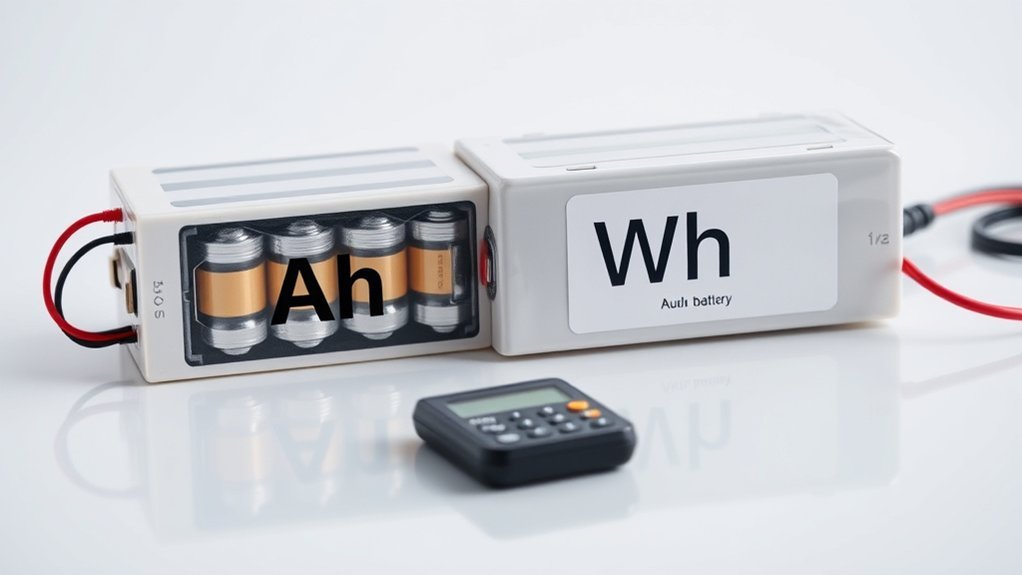
When selecting a battery for a specific application, understanding the differences between Ah and Wh is essential to making an informed decision. Ampere-hours (Ah) measure a battery’s capacity based on current delivery over time, which depends heavily on battery chemistry and manufacturing standards. Watt-hours (Wh), on the other hand, account for voltage, offering a more extensive energy content measure. This distinction is critical because two batteries with identical Ah ratings can have different Wh values if their voltages differ, affecting performance. When choosing a battery, consider the application’s voltage requirements and energy needs. Battery chemistry influences these parameters, and adherence to manufacturing standards ensures reliability and consistency. Ultimately, Wh provides a more complete picture of usable energy, especially when comparing batteries across different chemistries.
Converting Between Ah and Wh: A Simple Guide for Better Battery Comparison
Understanding how to convert between Ah and Wh is essential for effective battery comparison, as each unit reflects different performance aspects. We’ll review the conversion formulas and clarify their application, enabling precise assessments. Practical tips will help you interpret these metrics confidently across diverse lithium battery specifications.
Understanding Battery Units
Converting between ampere-hours (Ah) and watt-hours (Wh) is essential for accurately comparing lithium batteries, as these units measure different aspects of battery capacity. Ah quantifies charge storage, reflecting the total current a battery can deliver over time, while Wh accounts for energy content, integrating voltage into the measurement. Understanding this distinction requires awareness of battery chemistry, as different chemistries operate at varying nominal voltages, influencing Wh calculations. Additionally, charging cycles impact capacity retention, affecting both Ah and Wh ratings over time. A battery with high Ah capacity might have a lower Wh if its voltage is reduced, which can occur with aging or specific chemistries. Consequently, an in-depth comparison considers both units, factoring in chemistry and cycle life to assess true performance.
Conversion Formulas Explained
To accurately compare lithium batteries, it’s essential to understand how to convert between ampere-hours (Ah) and watt-hours (Wh), as these units measure different aspects of capacity. Conversion hinges on battery chemistry and voltage, which influence energy density. The key formulas are:
- Wh = Ah × Voltage
- Ah = Wh ÷ Voltage
- Voltage varies with battery chemistry, impacting the actual energy stored.
Understanding these formulas allows us to evaluate how charging cycles impact total capacity. A higher Wh rating indicates more energy, essential for applications with intensive use or high discharge rates. Accurate conversions help compare batteries effectively, ensuring we select the right chemistry and capacity for longevity and performance, especially when considering the effects of repeated charging cycles.
Practical Comparison Tips
When comparing lithium batteries, applying straightforward conversion methods between ampere-hours (Ah) and watt-hours (Wh) helps guarantee accurate assessments of capacity. To do this effectively, consider the voltage at which the battery operates, as Wh equals Ah multiplied by voltage. This ensures precise evaluations of energy content, directly impacting battery longevity and charging efficiency. Recognizing that higher Wh ratings typically indicate longer-lasting batteries with improved longevity, helps optimize performance assessments. Additionally, understanding the relationship between Ah and Wh allows us to better analyze how charging efficiency varies across different battery chemistries and configurations. Ultimately, mastering these conversions enables more informed decisions, ensuring that the chosen battery aligns with the specific demands of the application, maximizing both lifespan and overall performance.
Real-World Examples: How Capacity and Energy Impact Battery Performance
Understanding how capacity and energy influence lithium battery performance requires examining real-world applications. Higher capacity (Ah) ensures longer usage between charges, critical for devices prioritizing runtime, while energy (Wh) determines total power delivery, impacting overall device efficiency. Consider these examples:
- Electric vehicles with high Wh ratings deliver extended range but demand rigorous battery safety protocols.
- Portable electronics with high Ah ratings optimize usability, yet require effective recycling strategies for sustainability.
- Grid storage systems rely on large Wh capacities to stabilize energy supply, emphasizing the importance of durability and safety.
In all cases, balancing capacity and energy affects not only performance but also safety considerations and lifecycle management, highlighting the need for precise engineering and responsible recycling strategies.
When to Prioritize Ah Over Wh: And Vice Versa in Your Battery Selection
Choosing between Ah and Wh depends critically on usage duration and device power demands. For applications requiring extended operation at moderate power, prioritizing Ah guarantees sustained capacity, whereas high-power devices benefit from Wh-focused selections. Understanding these factors helps optimize battery choice for specific performance criteria.
Usage Duration Considerations
Determining whether to prioritize ampere-hours (Ah) or watt-hours (Wh) in your lithium battery selection hinges on the specific usage duration requirements of your application. Longer durations demand a focus on capacity metrics that optimize battery lifespan and charging efficiency.
Consider these factors:
- If your device requires sustained operation over extended periods, prioritize Ah, as it directly relates to the charge capacity and impacts battery longevity.
- For applications where total energy delivery matters, Wh provides a clearer picture of overall power, influencing how efficiently the battery can sustain performance.
- Shorter usage intervals with frequent recharges favor Wh, as it better reflects energy consumption rates, affecting overall system efficiency and lifespan.
Both metrics help tailor your choice to maximize lifespan and charging efficiency based on duration needs.
Device Power Requirements
When selecting a lithium battery for a specific device, it’s crucial to evaluate the device’s power requirements to decide whether Ah or Wh should take precedence. Devices that demand consistent current over extended periods typically prioritize Ah, which indicates capacity. Conversely, devices requiring high energy delivery in short bursts depend more on Wh, reflecting the overall energy content. Battery chemistry influences this choice; for example, lithium iron phosphate (LiFePO₄) offers stable voltage and safety, favoring capacity-focused applications, while lithium cobalt oxide (LiCoO₂) provides higher energy density suitable for Wh calculations. Manufacturing processes also impact this decision, as they determine the precision in controlling capacity and energy delivery. Accurate assessment ensures maximum performance, aligning battery selection with specific power profiles.
The Future of Lithium Batteries: Why Both Ah and Wh Will Remain Important
As lithium battery technology continues to evolve, both ampere-hours (Ah) and watt-hours (Wh) will remain essential metrics for evaluating performance and suitability. Advances in battery chemistry and manufacturing processes drive innovations that impact both metrics differently. Ah provides insight into the battery’s capacity, critical for understanding how much charge can be stored, while Wh accounts for voltage, reflecting usable energy. This duality ensures batteries can be optimized for diverse applications, from high-drain devices to energy storage solutions.
Both Ah and Wh are vital for assessing lithium battery performance and application suitability.
- We’re witnessing breakthroughs that enhance capacity without sacrificing safety or longevity.
- Manufacturing innovations allow for more precise energy density control, balancing Ah and Wh.
- Future developments will demand a thorough understanding of both metrics to meet evolving performance expectations.
Tips for Consumers: Choosing the Right Battery Based on Ah and Wh Ratings
Understanding the differences between Ah and Wh ratings is key to selecting the right battery for specific applications. When choosing a lithium battery, consider the battery chemistry, as it influences capacity and discharge characteristics, affecting both Ah and Wh values. Wh ratings provide a more complete measure of energy content, especially across different voltages, making them essential for comparing batteries for high-drain devices. Manufacturing standards guarantee consistency and quality, impacting both ratings’ reliability. Consumers should evaluate their device’s power requirements and match them with batteries that meet or exceed these specifications. Ultimately, understanding how Ah reflects current capacity and Wh represents total energy helps you make informed decisions, ensuring ideal performance and safety. Proper selection depends on analyzing these ratings within the context of the device and its intended use.
Frequently Asked Questions
How Do Temperature Changes Affect Ah and Wh Ratings?
Temperature effects cause capacity fluctuations in lithium batteries, impacting Ah and Wh ratings. As temperatures rise or fall, the chemical reactions slow or accelerate, leading to reduced capacity and efficiency, which emphasizes the importance of ideal operating conditions for accurate performance.
Are Ah and Wh Ratings Standardized Across Battery Brands?
Like knights in shining armor, battery ratings aren’t fully standardized across brands due to varying chemistry and manufacturing processes. While Ah and Wh provide useful data, differences in charging cycles and chemistry mean ratings can differ considerably, demanding careful comparison.
Can Two Batteries With the Same Ah Have Different Wh Capacities?
Yes, two batteries with the same Ah can have different Wh capacities because battery chemistry influences energy density; additionally, varying charging cycles affect overall efficiency and lifespan, impacting total energy storage despite identical Ah ratings.
How Do Aging and Usage Impact Ah and Wh Measurements?
Aging and usage cause capacity fading, impacting both Ah and Wh measurements. Charge cycles accelerate this decline, leading to reduced energy storage, so batteries’ effective capacity diminishes over time, affecting performance and lifespan.
Is One Rating More Reliable for Long-Term Battery Performance?
Wh ratings are generally more reliable for long-term performance evaluation because they account for energy density and efficiency across different battery chemistries, while manufacturing standards influence the consistency of Ah measurements, which can vary with aging and usage.
Conclusion
In the relentless pursuit of ultimate battery performance, understanding Ah and Wh isn’t just helpful—it’s revolutionary. Mastering these metrics can transform your power management, making you a true energy sage. Ignoring their significance could leave you stranded in the dark, helpless before the next device drain. Embrace the details, compare intelligently, and empower your choices. Because in this electrified age, knowing your battery’s capacity and energy content is the difference between mere usage and total domination of power.