Charting the landscape of lithium batteries is like navigating a course through a complex maze, where each turn reveals new technical considerations. As we compare 12V, 24V, and 48V systems, it’s clear that their differences extend beyond mere voltage — impacting capacity, efficiency, and application suitability. Understanding these nuances is vital for optimizing performance and safety, but the choices aren’t always straightforward. Let’s explore how each voltage level aligns with specific power demands and what factors influence the best fit for your needs.
Key Takeaways
- Higher voltages (24V, 48V) offer increased power capacity and efficiency, suitable for larger applications.
- 12V batteries are simpler to install and ideal for small-scale uses like marine or portable electronics.
- 48V systems reduce wiring complexity and costs but require more advanced thermal management and safety measures.
- Lower-voltage batteries have easier recycling processes and generally lower initial costs.
- Proper voltage selection depends on load requirements, system efficiency, safety, and long-term sustainability.
How Do 12V, 24V, and 48V Lithium Batteries Differ in Design and Construction
While 12V, 24V, and 48V lithium batteries share core electrochemical principles, their design and construction differ considerably to accommodate their voltage and power requirements. Variations in battery chemistry are minimal, as most utilize lithium-ion cells, but the configuration of cells markedly impacts overall voltage. Higher voltages are achieved by connecting cells in series, increasing complexity in thermal management; larger packs generate more heat, demanding advanced cooling solutions. Construction choices—such as cell grouping, casing, and internal wiring—are tailored to optimize thermal performance and reduce thermal runaway risks. These design adaptations ensure reliable operation across different voltages, balancing safety, efficiency, and longevity, while addressing the specific thermal management challenges associated with each voltage level.
Which Applications Are Best Suited for 12V, 24V, and 48V Lithium Batteries

Different voltage levels in lithium batteries align with specific application requirements, making them suitable for various industries and device types. For instance, 12V batteries are ideal for small-scale applications like RVs, marine, and portable electronics, where battery safety is paramount due to lower energy density. 24V batteries are commonly used in electric bikes, solar systems, and light commercial equipment, balancing power and safety considerations. Meanwhile, 48V batteries are preferred for larger-scale applications such as electric vehicles and energy storage systems, where efficiency and capacity are critical, but proper management guarantees safety. Considering environmental impact, higher voltage systems necessitate rigorous safety protocols to prevent hazards, while also supporting sustainable energy solutions. Selecting the appropriate voltage level hinges on application size, safety standards, and environmental considerations.
Comparing Performance: Capacity, Power Output, and Efficiency Across Voltage Levels
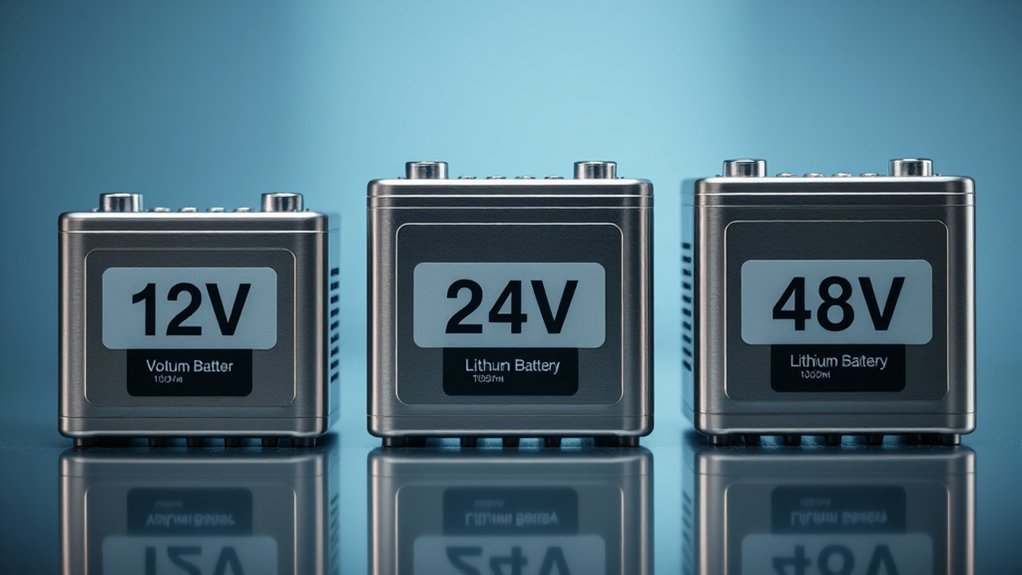
When comparing 12V, 24V, and 48V lithium batteries, their performance characteristics—namely capacity, power output, and efficiency—must be evaluated in relation to their voltage levels. Higher voltage systems typically deliver greater power output and can support larger loads more efficiently, which can positively influence overall battery lifespan through reduced stress and heat generation. Conversely, lower-voltage batteries may have a more limited capacity but often exhibit a lower environmental impact during manufacturing and disposal. Efficiency tends to improve with increased voltage due to reduced current draw, minimizing energy losses. Accordingly, selecting the appropriate voltage level involves balancing capacity needs with environmental considerations, as higher voltages often lead to better performance metrics but may pose greater environmental challenges in production and recycling processes.
Cost, Installation, and Maintenance Considerations for 12V, 24V, and 48V Systems
Choosing the appropriate voltage system involves analyzing not only performance metrics but also the associated costs, installation complexity, and ongoing maintenance requirements. Higher-voltage systems like 48V typically reduce wiring costs and improve efficiency but may incur higher initial equipment expenses. Installation complexity varies, with 12V systems generally easier to set up but requiring more batteries and wiring, influencing overall costs. Maintenance considerations include monitoring battery health to maximize battery lifespan and facilitate recycling considerations; higher-voltage systems often demand more specialized maintenance. Additionally, lower-voltage systems tend to have simpler recycling processes, whereas higher-voltage setups may involve more complex disposal procedures. Ultimately, balancing upfront costs with long-term maintenance and recycling requirements is essential to selecting a system aligned with operational needs and sustainability goals.
How to Choose the Right Lithium Battery Voltage for Your Specific Power Needs
Selecting the appropriate lithium battery voltage requires a detailed understanding of your specific power demands and system design considerations. We must evaluate the total power load, current draw, and efficiency goals to determine whether 12V, 24V, or 48V systems are most suitable. Higher voltages typically reduce current, improving system efficiency and battery safety by decreasing heat and potential wiring issues. Charging protocols also vary; higher-voltage systems demand precise control to prevent overcharging and ensure longevity. Safety features, such as thermal management and proper BMS (Battery Management System), become increasingly critical with voltage increases. Ultimately, matching voltage to your load profile ensures maximum performance, safety, and lifespan, making thorough analysis of your power needs essential before selection.
Frequently Asked Questions
What Safety Precautions Should I Follow When Handling Different Lithium Battery Voltages?
We follow strict safety protocols, avoiding short circuits and physical damage, and always wear protective gear. Proper battery disposal and secure storage are essential, especially for higher voltages, to prevent leaks, fires, or accidents during handling.
How Does Battery Lifespan Vary Between 12V, 24V, and 48V Systems?
We find that 12V batteries last about 2,000 cycles, while 48V systems can exceed 3,000, due to voltage stability and capacity variations. These factors influence lifespan, with higher voltages generally offering longer, more reliable performance over time.
Are There Compatibility Issues With Existing Power Systems When Upgrading Voltages?
Voltage compatibility is essential for system integration; upgrading voltages may require new components or modifications to guarantee seamless operation, preventing compatibility issues. We recommend thorough technical assessments to verify that existing power systems can safely accommodate higher voltage lithium batteries.
What Environmental Factors Affect the Performance of Various Lithium Battery Voltages?
Like delicate dancers, lithium batteries perform best on the right stage, where temperature sensitivity and charging protocols align. Extreme temperatures and improper charging disrupt harmony, reducing efficiency and lifespan across all voltages, demanding precise environmental control.
Can These Batteries Be Used Interchangeably in Mixed Voltage Systems?
We can’t use these batteries interchangeably in mixed voltage systems due to voltage compatibility issues, which hinder proper operation and safety. Standardization efforts aim to streamline compatibility, but current battery voltages require careful system design to guarantee safety and efficiency.
Conclusion
In selecting the appropriate lithium battery voltage, it’s vital to match system demands with your application’s power profile. While higher voltages offer increased capacity and efficiency, they also come with added complexity and cost. We believe that understanding your specific load requirements and safety considerations guarantees peak performance. Don’t overlook the importance of proper sizing and integration—these factors are key to maximizing reliability and longevity, regardless of voltage choice.