Ensuring the safe use of lithium batteries requires strict adherence to established protocols for handling, charging, and disposal. These batteries, while efficient, pose risks if not managed properly, from fire hazards to chemical leaks. By understanding the specific safety measures and potential hazards involved, we can minimize risks and guarantee safe operation. The following guidelines will provide a thorough overview of best practices—but it’s vital to stay informed about evolving safety standards.
Key Takeaways
- Use chargers specifically designed for lithium batteries and follow manufacturer guidelines during charging.
- Store batteries in a cool, dry place away from flammable materials and avoid physical damage.
- Inspect batteries regularly for swelling, leaks, or corrosion, and replace damaged units immediately.
- Fully discharge batteries before disposal and recycle them through certified programs to prevent environmental hazards.
- Keep batteries away from conductive objects to prevent short circuits and potential thermal runaway.
What Are Lithium Batteries and Why Are They Safe or Risky?
Lithium batteries are rechargeable energy storage devices that use lithium ions to transfer charge between electrodes, making them highly efficient and compact. Their battery lifespan depends on factors like charge cycles, temperature, and usage patterns. Proper management can extend their operational life, but degraded batteries may pose safety risks due to potential thermal runaway or leakage. Recycling procedures are essential for safe disposal, preventing environmental harm and recovering valuable materials like lithium, cobalt, and nickel. These processes involve disassembly and material separation, reducing the risk of hazardous exposure. Understanding both the longevity of lithium batteries and effective recycling is crucial for safety, environmental sustainability, and maximizing their functional lifespan. This knowledge helps prevent accidents and promotes responsible handling throughout the battery’s lifecycle.
How to Properly Handle and Store Lithium Batteries
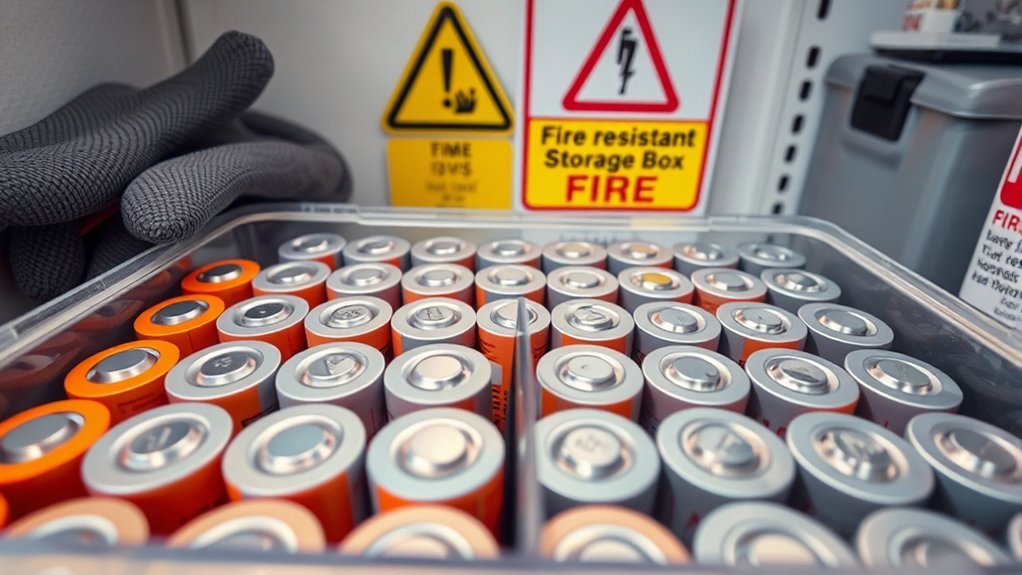
Handling and storing lithium batteries properly is essential to prevent accidents and prolong their lifespan. Proper handling involves avoiding punctures, impacts, and short circuits, which can cause thermal runaway. Storage safety requires keeping batteries in a cool, dry environment away from flammable materials. When not in use, store batteries in a fire-resistant container and avoid exposure to extreme temperatures. Recycling lithium batteries responsibly through authorized programs reduces environmental impact and conserves resources. The table below illustrates key considerations:
| Handling Precautions | Storage & Recycling |
|---|---|
| Avoid physical damage | Store in a cool, dry place |
| Prevent short circuits | Use fire-resistant containers |
| Do not disassemble or puncture | Recycle via certified programs |
| Keep away from conductive materials | Prioritize battery recycling |
Adhering to these practices guarantees safety and supports sustainable battery management.
What Are the Signs of a Damaged or Faulty Lithium Battery?

Identifying signs of a damaged lithium battery is essential for safety. Look for abnormal swelling, excessive heat during operation, or signs of leaking and corrosion. Recognizing these indicators early can prevent potential hazards and guarantee proper handling.
Unusual Swelling or Bloating
When a lithium battery begins to swell or bloat, it signals a serious internal failure that requires immediate attention. This battery expansion results from gas buildup inside the cell due to failure of the separator or electrolyte degradation, often caused by overcharging, manufacturing defects, or internal short circuits. Swelling causes the metal casing to deform, creating visible bulges or blisters. Such signs indicate that the battery’s internal chemistry is compromised, increasing the risk of rupture or fire. Recognizing these warning signs early is vital; avoid puncturing or applying pressure to the swollen battery. Proper disposal and replacement are essential. Swift action prevents further damage and safeguards against hazardous incidents associated with faulty lithium batteries.
Excessive Heat During Use
Excessive heat during use is a clear indicator that a lithium battery may be damaged or faulty. When thermal regulation fails, heat dissipation becomes inefficient, causing the battery’s temperature to rise abnormally. This overheating can result from internal short circuits, compromised cell integrity, or manufacturing defects. Signs include the battery feeling hot to the touch, rapid temperature increase during operation, or persistent warmth even after use. Faulty batteries may also exhibit sudden temperature spikes without load changes. Monitoring temperature closely during use is crucial for safety. Proper heat dissipation mechanisms are essential to prevent thermal runaway. If you notice abnormal heat, discontinue use immediately and inspect the battery for damage to avoid potential hazards.
Leaking or Corrosion Signs
Leaking or corrosion on a lithium battery’s surface often signals internal damage or deterioration. Such signs compromise safety and indicate the need for immediate action.
- Visible Leakage: Fluid or gel exuding from the battery suggests internal breaches.
- Corrosion: White, green, or bluish deposits on terminals indicate chemical reactions, requiring corrosion prevention measures.
- Swelling or Deformation: Physical expansion signals overcharging or internal failure.
- Unusual Odors: Sharp, chemical smells point to potential leaks or thermal runaway.
Addressing these issues involves proper disposal, supporting battery recycling efforts, and preventing further corrosion. Regular inspection helps detect early signs of damage, ensuring safe usage and reducing environmental impact through responsible disposal.
How to Charge Lithium Batteries Safely
To charge lithium batteries safely, we must use chargers specifically designed for lithium chemistry, which guarantees proper voltage regulation. Overcharging poses significant risks, so it’s crucial to disconnect the battery once it reaches full capacity. Adhering to manufacturer guidelines minimizes the risk of thermal runaway and prolongs battery lifespan.
Use Correct Charger
Have you ever wondered why using the correct charger is essential for lithium battery safety? Proper charger compatibility guarantees voltage and current regulation, minimizing risks of overheating or damage. Using incompatible chargers can lead to reduced battery lifespan and safety hazards. To promote maximum performance and safety, follow these key practices:
- Confirm that the charger matches the battery’s voltage and current specifications.
- Use chargers from reputable manufacturers with certified safety standards.
- Avoid third-party chargers lacking proper charger compatibility and safety features.
- Promote battery recycling by choosing chargers that facilitate proper disposal and recycling of lithium batteries.
Adhering to these guidelines helps maintain battery integrity, supports safe battery recycling, and prevents hazards associated with improper charging.
Avoid Overcharging Risks
Overcharging lithium batteries can cause significant safety risks, including thermal runaway, capacity degradation, and fire hazards. To mitigate these risks, it’s essential to follow proper charging etiquette, such as unplugging devices promptly once fully charged. Using chargers with built-in overcharge protection guarantees the battery remains within safe voltage limits. Additionally, responsible battery recycling prevents improper disposal, which can lead to environmental hazards and safety concerns. Avoid leaving batteries connected to chargers indefinitely, as sustained overcharge can accelerate wear and compromise safety. Regularly monitoring charging cycles and adhering to manufacturer recommendations help maintain battery integrity. By practicing proper charging etiquette and guaranteeing safe disposal through battery recycling, we minimize overcharging risks and extend the lifespan of lithium batteries.
What Are Common Mistakes to Avoid When Using Lithium Batteries?
Mistakes in handling lithium batteries can lead to significant safety risks and reduced performance. Common errors include improper charging practices, neglecting safe storage, incorrect disposal, and failure to take battery recycling into account.
- Overcharging or charging at incorrect voltages can cause thermal runaway and potential fires.
- Storing batteries in high-temperature environments increases degradation and safety hazards.
- Disposing of batteries improperly, without following recycling protocols, risks environmental contamination.
- Ignoring battery condition or attempting to repair damaged units compromises safety and device performance.
Avoid these pitfalls by adhering to manufacturer guidelines, practicing safe storage, and prioritizing battery recycling. Preventative measures ensure longevity, safety, and environmental protection when using lithium batteries.
When and How to Dispose of Lithium Batteries Responsibly
Proper disposal of lithium batteries is essential to prevent environmental contamination and guarantee safety. When batteries reach the end of their useful life, following established disposal guidelines ensures responsible handling. We recommend avoiding landfill disposal, as lithium can leak and cause soil and water pollution. Instead, prioritize battery recycling programs designed for lithium-ion batteries, which recover valuable materials and reduce environmental impact. Before disposal, verify batteries are fully discharged and protected against accidental short circuits. Contact local recycling centers or authorized collection points for proper disposal procedures. Adhering to these guidelines minimizes fire risks and promotes sustainable resource management. Recognizing when and how to dispose of lithium batteries responsibly is a critical step in maintaining safety and environmental integrity.
What Should You Do in Case of a Lithium Battery Fire or Accident?
When a lithium battery fire or accident occurs, immediate action is crucial to minimize damage and guarantee safety. Efficient emergency response and fire suppression are essential. First, evacuate the area to prevent inhalation of toxic fumes. Second, activate the fire suppression system if available, using Class D fire extinguishers designed for combustible metals. Third, disconnect the power source carefully to prevent further electrical hazards. Fourth, contact emergency services trained in lithium battery fires, as standard extinguishers may be ineffective or dangerous. Avoid using water, which can exacerbate the fire, and do not attempt to extinguish large fires without professional assistance. Proper emergency response protocols ensure safety and reduce the risk of escalation during lithium battery accidents.
Frequently Asked Questions
Can Lithium Batteries Be Stored Long-Term Without Degradation?
Lithium batteries can be stored long-term without significant degradation if we maintain ideal storage conditions, avoiding extreme temperatures and full charges, as improper storage accelerates battery aging and reduces capacity over time.
Are There Specific Brands Known for Safer Lithium Batteries?
We trust brands with strong reputations and safety certifications, focusing on proven quality, rigorous testing, and compliance with industry standards. We prioritize these factors to guarantee the safest, most reliable lithium batteries for our applications.
How Do Temperature Extremes Affect Lithium Battery Safety?
Temperature extremes compromise lithium battery safety by impairing temperature management and thermal stability, leading to increased risks of thermal runaway, capacity loss, and potential fires. Maintaining ideal temperature ranges is essential for safe, reliable battery operation.
What Are the Legal Regulations for Lithium Battery Transportation?
We adhere to strict hazard classification and packaging requirements when transporting lithium batteries, ensuring compliance with international regulations like ICAO and DOT, to guarantee safety and legal conformity during shipment and handling processes.
Can Lithium Batteries Be Recycled at Home Safely?
We can’t recycle lithium batteries safely at home due to risks involved in battery disposal and the need for specialized recycling methods. Always follow proper procedures and consult certified facilities for safe lithium battery recycling.
Conclusion
Together, we hold the key to safe lithium battery use—like a lighthouse guiding ships through treacherous waters. By following strict handling, charging, and disposal protocols, we illuminate a path away from danger. Each precaution acts as a beacon, preventing mishaps and safeguarding lives. With vigilance and respect for these powerful energy sources, we guarantee they serve us reliably—rather than becoming a storm we cannot control. Let’s stay vigilant, and keep our journey safe and steady.