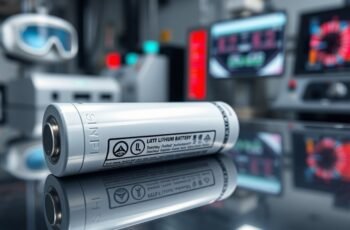
Imagine a small, powerful energy reservoir that can ignite with the slightest misstep—this is the reality of lithium batteries. Their widespread use demands strict safety protocols, as improper handling can lead to fires, leaks, or chemical hazards. Understanding these risks and implementing best practices is vital for safe operation and disposal. To guarantee your safety and that of others, it’s essential to follow precise guidelines, which we will explore thoroughly.
Key Takeaways
- Use chargers specifically designed for lithium batteries with proper voltage and safety features.
- Store batteries in a cool, dry environment away from direct sunlight and extreme temperatures.
- Regularly inspect batteries for swelling, damage, or leaks, and handle damaged units with caution.
- Avoid puncturing, crushing, or exposing batteries to fire or high-impact conditions.
- Dispose of batteries responsibly through certified recycling centers to prevent environmental hazards.
How Lithium Batteries Work and Why Safety Matters
Although lithium batteries are widely used for their high energy density and rechargeability, understanding their internal chemistry is essential for ensuring safety. Lithium-ion battery chemistry involves the movement of lithium ions between the anode and cathode during charge and discharge cycles. This process facilitates efficient energy storage, making these batteries ideal for portable electronics and electric vehicles. The electrolyte enables ion transfer while maintaining electrical isolation between electrodes. Precise control of this chemistry prevents unstable reactions that could lead to thermal runaway or fires. Safety measures hinge on understanding how battery chemistry influences internal pressures, temperature responses, and degradation. By comprehending these mechanisms, users and engineers can better manage risks and improve battery safety protocols, ensuring reliable energy storage with minimized hazards.
Recognizing Common Lithium Battery Hazards

Recognizing the common hazards associated with lithium batteries is essential for preventing accidents and ensuring safe handling. Understanding hazard identification involves evaluating risks linked to various battery chemistries and failure modes. Common hazards include:
Understanding lithium battery hazards is key to safe handling and accident prevention.
- Thermal runaway caused by internal short circuits
- Chemical leaks resulting from damaged casing or electrolyte degradation
- Fire and explosion risks from overcharging or puncture
- Capacity loss and swelling due to improper storage or aging
These hazards stem from specific battery chemistries, which influence vulnerability to these failures. Accurate hazard identification requires awareness of these potential issues to implement effective safety measures. Recognizing signs of damage or malfunction early helps avoid catastrophic failures and maintains overall safety during lithium battery use.
Proper Handling and Usage of Lithium Batteries

Proper handling and usage of lithium batteries are critical to preventing accidents and prolonging their lifespan. Adhering to safety certifications ensures the batteries meet rigorous safety standards, reducing risks associated with thermal runaway or leakage. We recommend avoiding puncturing, crushing, or exposing batteries to extreme temperatures, as physical damage accelerates capacity loss and shortens battery lifespan. Always store batteries in a cool, dry environment and use compatible, certified chargers to prevent overcharging or undercharging. Proper handling includes inspecting batteries regularly for signs of swelling or corrosion, which indicate potential failure. By following these precautions, we guarantee maximum performance, maintain safety integrity, and extend the functional life of lithium batteries.
Best Practices for Charging Lithium Batteries Safely
Using the correct charger designed for lithium batteries is essential to prevent potential hazards. We must also monitor the charging process to avoid overcharging, which can lead to thermal runaway. Adhering to manufacturer specifications guarantees safe and efficient charging cycles.
Use Correct Charger
To guarantee lithium batteries charge safely, selecting the correct charger is essential. Proper charger compatibility ensures that voltage, current, and connectors match the battery’s specifications, preventing damage or safety hazards. Using a charger designed for lithium batteries optimizes charging speed without compromising safety or longevity.
Key considerations include:
- Confirm that the charger’s output voltage and current align with the battery manufacturer’s recommendations
- Verify compatibility with specific battery chemistries and capacities
- Use chargers with built-in safety features such as temperature monitoring and overvoltage protection
- Avoid third-party chargers lacking certified safety standards
Adhering to these guidelines ensures safe, efficient charging, reducing the risk of overheating, swelling, or fire. Proper charger selection is fundamental to maintaining battery integrity and safety.
Avoid Overcharging
Overcharging lithium batteries can considerably compromise their safety and lifespan, so it’s vital to monitor the charging process carefully. Overcharging causes excessive internal heat, accelerating capacity degradation and reducing overall battery lifespan. To prevent this, always use chargers with built-in overcharge protection and adhere to manufacturer specifications. Maintaining ideal charging speed is imperative; slow, controlled charging minimizes thermal stress and prolongs battery health. Avoid leaving batteries connected after reaching full charge, as continuous charging can lead to overvoltage conditions. Regularly inspect charging equipment for faults or damage. By controlling charging speed and preventing overcharge, we guarantee maximum safety, preserve battery capacity, and extend the effective lifespan of lithium batteries.
How to Store Lithium Batteries to Prevent Accidents
Proper storage of lithium batteries is essential to prevent thermal runaway and leaks. We recommend keeping batteries in a cool, dry environment and utilizing approved, non-conductive containers. Adhering to these guidelines minimizes risk and maintains battery integrity over time.
Store in Cool, Dry Place
Storing lithium batteries in a cool, dry environment considerably reduces the risk of thermal runaway and leakage. Proper temperature regulation minimizes the thermal stress that can compromise battery integrity. Moisture control is critical, as humidity accelerates corrosion and internal short circuits. To optimize safety, consider these guidelines:
- Maintain storage temperatures between 15°C and 25°C to prevent overheating or freezing.
- Keep batteries in a low-humidity environment to inhibit moisture ingress.
- Use silica gel packs or dehumidifiers to further control ambient humidity levels.
- Avoid exposure to direct sunlight and high temperatures, which can increase internal pressure and risk of failure.
Implementing these measures ensures stable chemical conditions, prolongs battery lifespan, and reduces the likelihood of accidents associated with improper storage.
Use Proper Battery Containers
Using the right battery containers is essential for preventing accidents during storage. We recommend using a dedicated battery case designed specifically for lithium batteries, which provides insulation and containment in case of damage or leakage. The container materials must be non-conductive, such as plastic or rubber, to prevent accidental short circuits. Metal containers are not suitable, as they can create a conductive environment that increases fire risk. Properly sealed battery cases prevent exposure to moisture and contaminants that could lead to corrosion or thermal runaway. Make certain the container is sturdy and resistant to impact, and always store batteries upright to minimize pressure on terminals. Selecting appropriate battery containers greatly reduces the risk of fire, leaks, and other safety hazards associated with lithium battery storage.
Signs of Damaged or Faulty Lithium Batteries
Identifying signs of a damaged or faulty lithium battery is essential for safety. Early detection prevents potential hazards related to compromised battery lifespan and voltage fluctuations. Key indicators include abnormal swelling, which suggests internal damage, and persistent overheating during use or charging. Sudden drops in voltage or inconsistent voltage fluctuations can signal internal degradation. Additionally, a noticeable decrease in battery capacity or rapid discharge rates may point to deterioration.
- Visible swelling or bulging of the battery casing
- Unexpected heating or overheating during operation
- Unstable voltage levels or frequent voltage fluctuations
- Significant reduction in overall battery lifespan or capacity
What to Do in Case of a Lithium Battery Fire or Spill?
When a lithium battery catches fire or spills, immediate and proper action is crucial to minimize hazards and guarantee safety. Our emergency response procedures prioritize rapid containment while avoiding further chemical exposure. First, we ensure safety equipment such as fire extinguishers rated for electrical or chemical fires (Class D or ABC) is readily accessible. Do not attempt to extinguish a lithium battery fire with water, as it may intensify the reaction. Instead, use a dry, non-conductive agent like a Class D fire extinguisher or sand to smother the flames. If a spill occurs, isolate the area and wear appropriate personal protective equipment, including gloves and eye protection. Prompt, precise response reduces risk and prevents escalation.
Choosing Safe Lithium Battery Products and Brands
Selecting lithium battery products from reputable brands is essential to guarantee safety and reliability. Brand reputation indicates consistent quality control and adherence to industry standards, reducing risks of malfunction. Always verify that products have relevant product certifications, such as UL or IEC listings, confirming compliance with safety regulations. Trusted brands typically conduct rigorous testing for thermal stability, cycle life, and overcharge protection. Consider these factors:
- Certification seals from recognized safety organizations
- Transparent manufacturing processes
- Industry reputation and user reviews
- Established quality assurance protocols
Tips for Recycling and Disposing of Lithium Batteries Properly
Proper recycling and disposal of lithium batteries are critical to prevent environmental contamination and guarantee safety. Effective battery recycling involves removing lithium, cobalt, and other hazardous materials to reduce pollution and recover valuable components. When disposing of lithium batteries, always adhere to disposal safety guidelines by transporting them in non-conductive, sealed containers to prevent short circuits or fires. Never puncture, crush, or incinerate batteries, as this can lead to chemical leaks or explosions. Local recycling centers or authorized collection points should handle lithium battery disposal, ensuring compliance with regulations. Additionally, avoid discarding batteries in regular trash, as improper disposal poses risks to both health and environment. Proper battery recycling and disposal safety practices are essential for minimizing hazards associated with lithium battery waste.
Frequently Asked Questions
Can Lithium Batteries Be Safely Used in Extreme Temperatures?
We believe lithium batteries aren’t ideal in extreme temperatures due to limited temperature resilience. Proper battery insulation and temperature management are essential for safety and performance, preventing overheating or freezing that could compromise battery integrity and lifespan.
What Are the Long-Term Storage Effects on Lithium Battery Safety?
Long-term storage can lead to battery degradation if storage precautions aren’t followed, risking safety issues like capacity loss or potential leaks. We recommend maintaining ideal voltage, cool temperatures, and periodic checks to guarantee lithium battery safety over time.
Are Counterfeit Lithium Batteries More Prone to Safety Issues?
Counterfeit lithium batteries are like ticking time bombs, markedly increasing safety risks due to compromised battery integrity. These counterfeits often lack proper safety features, making them more prone to overheating, leakage, or explosions, endangering users and devices alike.
How Does Age Affect Lithium Battery Safety and Performance?
As lithium batteries age, degradation increases, leading to reduced performance and heightened age-related risks such as overheating or failure. We recommend monitoring usage, avoiding extreme temperatures, and replacing batteries proactively to guarantee safety and peak functionality.
What Are the Legal Regulations for Lithium Battery Transportation?
We understand the rules of the road; lithium battery transportation requires strict legal compliance with international standards like IATA and UN regulations, ensuring safe handling, packaging, and labeling to prevent accidents and meet legal requirements during transit.
Conclusion
By adhering to these lithium battery safety tips, we minimize risks and guarantee reliable performance. Proper handling, storage, and disposal are essential steps in preventing hazards like fires or chemical leaks. Are we truly doing enough to prioritize safety in our daily use? Continuous awareness and adherence to best practices safeguard not only ourselves but also the environment. Let’s commit to responsible usage—because safety isn’t just a guideline, it’s a necessity for sustainable technology.