With over 10 million EV batteries projected to reach end-of-life annually by 2030, effective recycling becomes critical to resource sustainability. We recognize that current methods—pyrometallurgical, hydrometallurgical, and mechanical—each have distinct advantages and limitations. As technology advances, emerging approaches promise more efficient recovery and environmental benefits. Understanding these options is essential for optimizing recycling strategies, yet many challenges remain that require careful consideration before implementation.
Key Takeaways
- Recycling methods include pyrometallurgical, hydrometallurgical, and mechanical processes to recover valuable materials like lithium, cobalt, and nickel.
- Emerging technologies such as automation, AI, and direct recycling aim to improve efficiency and sustainability.
- Selection of recycling options depends on battery type, design, health status, and regional regulatory frameworks.
- Proper end-of-life management reduces hazardous waste and conserves critical resources, supporting a circular EV battery economy.
- Challenges include high processing costs, low recovery rates, and inconsistent regional incentives affecting recycling adoption.
What Are the Main Methods for Recycling EV Lithium Batteries?
Recycling EV lithium batteries involves several primary methods, each designed to efficiently recover valuable materials while minimizing environmental impact. These methods primarily focus on processes such as pyrometallurgical and hydrometallurgical techniques, which optimize material recovery based on battery lifespan and composition. Recycling regulations play a vital role in establishing standardized procedures, ensuring safe handling and environmental compliance. Properly managing the end-of-life cycle through these techniques reduces hazardous waste and conserves critical resources like lithium, cobalt, and nickel. The selection of a suitable process depends on factors like battery design, state of health, and regulatory frameworks. By adhering to these methods, we can enhance recovery efficiency, reduce environmental footprint, and support sustainable EV battery lifecycle management.
Mechanical Recycling: How Does It Work and What Are Its Benefits?
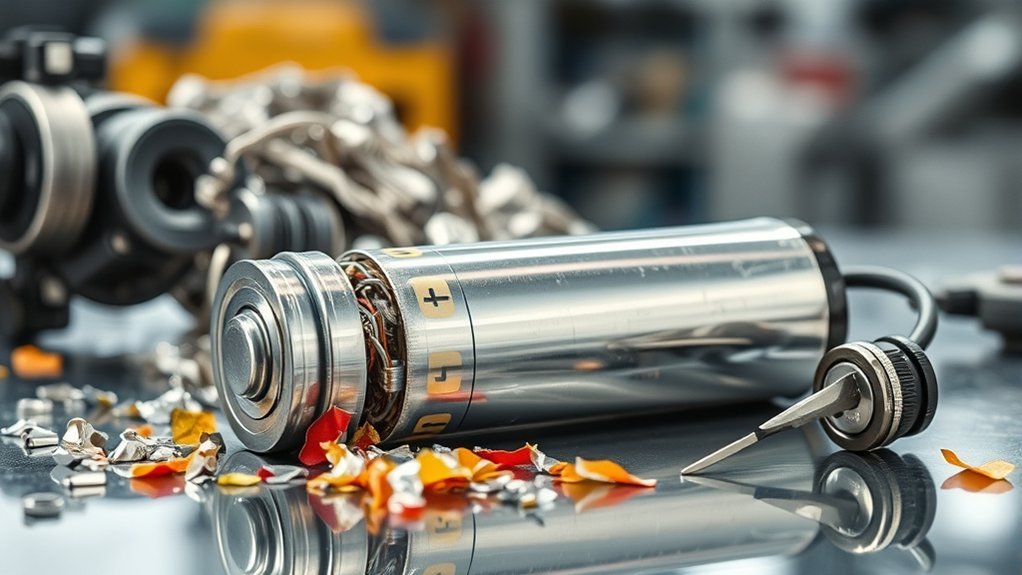
Mechanical recycling involves physically separating battery components through processes like crushing and sorting, enabling material recovery without chemical treatment. This method minimizes environmental impact by reducing hazardous waste and energy consumption. By focusing on efficient separation, we can improve resource recovery and support sustainable battery lifecycle management.
Mechanical Separation Process
When lithium-ion batteries reach the end of their life cycle, mechanical separation processes offer an efficient method for recovering valuable materials. This method involves disassembling batteries into their constituent components—casing, electrodes, and separators—using specialized equipment. The process is critical for maximizing material recovery, especially given the battery’s lifespan constraints and evolving recycling regulations. Mechanical separation allows for the effective sorting and size reduction of components, facilitating subsequent chemical processing or direct material reuse. It minimizes environmental impact by reducing waste and avoiding hazardous chemical use. As recycling regulations become more stringent, the importance of precise, efficient mechanical separation grows, ensuring compliance and optimizing resource recovery. This process is foundational for sustainable EV battery recycling, balancing technical efficacy with regulatory demands.
Environmental Advantages
By leveraging mechanical recycling processes, we can substantially reduce the ecological impact of end-of-life lithium-ion batteries, supporting sustainable practices aligned with renewable energy goals. Mechanical recycling minimizes hazardous waste and conserves raw materials, lowering the need for mining activities that threaten ecological balance. This method enhances resource efficiency, reduces energy consumption, and decreases greenhouse gas emissions associated with processing.
| Material Recovered | Recycling Method | Environmental Benefit |
|---|---|---|
| Lithium | Mechanical crushing | Limits mining and reduces ecological impact |
| Cobalt | Separation & sorting | Preserves critical raw materials |
| Copper | Shredding & separation | Lowers energy use, supports renewable energy |
| Aluminum | Mechanical separation | Reduces waste and pollution |
Chemical Recycling Techniques: Unlocking Valuable Materials Safely

Chemical recycling techniques offer a promising pathway for recovering valuable materials from spent lithium-ion batteries while minimizing environmental impact. These methods enable selective extraction of critical components, such as lithium, cobalt, and nickel, through processes like hydrometallurgy and direct chemical leaching. Effective electrolyte management is essential, as it prevents hazardous byproducts and enhances recovery efficiency. By carefully controlling chemical reactions, we can extend battery lifespan during recycling, reducing the need for extensive material processing. This approach not only conserves resources but also improves safety by safely breaking down battery components. Overall, chemical recycling provides a precise, scalable solution that promotes sustainable resource recovery, aligning with industry goals for environmentally responsible EV battery disposal.
Emerging Technologies in Lithium Battery Recycling: What’s Next?
Emerging recycling technologies are transforming how we recover lithium and other critical materials, emphasizing efficiency and environmental impact. Automated processing systems are advancing, enabling faster and more precise separation of materials. These innovations aim to enhance sustainable recovery methods, reducing waste and energy consumption in lithium battery recycling processes.
Innovative Recycling Methods
What if the future of lithium battery recycling lies in groundbreaking technologies that can profoundly improve efficiency and sustainability? Emerging methods like direct recycling and solvent-based processes aim to recover valuable materials while preserving battery components, reducing waste and energy consumption. These innovations address challenges around battery lifespan and evolving recycling regulations, enabling more effective resource recovery with minimal environmental impact.
| Technology | Advantage | Limitation |
|---|---|---|
| Direct Recycling | Retains cathode structure, reduces processing steps | Limited to specific chemistries |
| Solvent-Based Processes | Higher purity recovery, adaptable to new chemistries | Complex solvent management |
| Pyrometallurgical Methods | Well-established, scalable | Energy-intensive, lower material purity |
Automated Processing Technologies
Automated processing technologies are transforming lithium battery recycling by enhancing efficiency, safety, and consistency in material recovery. These systems leverage advanced robotics, AI, and sensor integration to precisely sort, dismantle, and process battery components, markedly reducing manual labor and error. As battery lifespan varies, automated methods enable tailored processing parameters, optimizing recovery rates for different battery ages and chemistries. Furthermore, these technologies help manufacturers comply with evolving recycling regulations by ensuring traceability and standardized procedures, minimizing environmental impact. The integration of automation not only accelerates throughput but also enhances safety by limiting human exposure to hazardous materials. Overall, automated processing technologies represent a vital step toward more sustainable, compliant, and efficient lithium battery recycling, addressing the increasing demand driven by expanding EV adoption.
Sustainable Material Recovery
As the demand for sustainable practices in lithium battery recycling intensifies, innovative technologies are emerging to enhance material recovery and reduce environmental impacts. These advancements focus on maximizing battery longevity and optimizing reuse strategies. Key approaches include:
- Selective leaching techniques that improve efficiency in recovering critical materials like lithium, cobalt, and nickel.
- Hydrometallurgical processes that allow for cleaner, lower-energy extraction, supporting reuse strategies.
- Direct recycling methods that preserve electrode materials, extending battery lifespan and reducing waste.
- Modular refurbishing systems that enable rapid reuse, maintaining high battery performance and minimizing resource consumption.
Together, these emerging technologies aim to close material loops, promote sustainability, and foster a more circular economy in EV battery lifecycle management.
Challenges and Limitations of Current Recycling Options
Despite advancements in recycling technologies, current lithium battery recovery methods face significant challenges that limit their effectiveness. One major obstacle is the battery lifespan, which often results in batteries reaching end-of-life before efficient recycling processes are established. This short window hampers large-scale collection and increases residual waste. Additionally, recycling incentives remain inconsistent across regions, discouraging widespread participation. Limited economic viability of existing methods, due to high processing costs and low recovery rates for critical materials like lithium and cobalt, further constrains progress. These technical and economic limitations hinder all-encompassing recycling efforts, emphasizing the need for improved technologies and policy frameworks that encourage greater collection and recovery, ultimately making lithium battery recycling more sustainable and efficient.
How to Choose the Right Lithium Battery Recycling Solution for Your Needs
Choosing the appropriate lithium battery recycling solution requires a thorough assessment of your specific needs, including the volume of batteries generated, the types involved, and your operational capabilities. For instance, larger volumes may necessitate centralized recycling facilities, while smaller batches could be managed through mobile or on-site options. Key considerations include compatibility with existing battery storage and charging infrastructure to guarantee seamless integration. Additionally, evaluating the safety standards and environmental compliance of potential solutions is essential.
Assess your battery volume, types, and infrastructure to choose safe, compliant recycling solutions that fit your operational needs.
- Assess battery volume and turnover rate.
- Determine battery types and chemistries.
- Match recycling methods with your storage and charging infrastructure.
- Prioritize solutions with robust safety and environmental protocols.
This analytical approach helps optimize resource allocation, minimize downtime, and align recycling processes with operational capacity.
Frequently Asked Questions
What Environmental Impacts Are Associated With Battery Recycling Processes?
We recognize that battery recycling can cause environmental pollution if not managed properly, but it considerably promotes resource conservation by reclaiming valuable materials, reducing the need for raw mining, and minimizing ecological footprints in the process.
How Cost-Effective Are Different Lithium Battery Recycling Methods?
We find that lithium battery recycling methods vary in cost-effectiveness, driven by economic analysis and market trends; some techniques offer high recovery efficiency and lower costs, while others require substantial investment, shaping industry adoption and future sustainability strategies.
Are There Regional Differences in Recycling Regulations and Infrastructure?
Regional policies greatly influence lithium battery recycling, with infrastructure disparities creating challenges; developed regions often have advanced regulations and facilities, whereas others face gaps that hinder efficient recycling, emphasizing the need for harmonized standards and infrastructure investment worldwide.
What Safety Precautions Are Necessary During Battery Recycling?
During battery recycling, we prioritize safety by wearing appropriate gear and managing fire hazards diligently. We analyze risks thoroughly, ensuring proper ventilation and handling procedures to prevent accidents, emphasizing safety gear and fire hazard controls for effective, secure recycling processes.
How Do Recycling Technologies Handle Different Battery Chemistries?
We handle different battery chemistries through advanced recycling technologies focused on battery separation and chemical recovery, ensuring efficient material extraction and minimizing cross-contamination, which optimizes resource reuse and supports sustainable recycling practices.
Conclusion
As we explore these recycling options, one thing becomes clear: the future of EV battery recovery hinges on innovation and adaptation. Each method offers unique advantages, yet challenges remain—unseen hurdles that could reshape the landscape. Imagine a breakthrough that seamlessly integrates efficiency with sustainability, opening a new era for resource recovery. The path ahead is complex, but with continued research, we’re poised to transform waste into a crucial resource—if we’re willing to push the boundaries of what’s possible.