Did you know that improper handling of lithium polymer batteries accounts for over 30% of related safety incidents? Ensuring their safe use requires strict adherence to technical guidelines, from proper charging and storage to damage management. Understanding these safety protocols is essential to prevent hazards like thermal runaway or fires. As we explore these critical tips, you’ll learn how to minimize risks and maintain operational safety in your applications.
Key Takeaways
- Use only compatible, high-quality chargers and avoid overcharging or complete discharges to prevent thermal runaway.
- Handle damaged batteries with protective gear and dispose of them promptly at certified recycling centers.
- Store batteries in a cool, dry, fire-resistant container at around 50% charge and away from flammable materials.
- Regularly inspect for swelling, cracks, or other damage, and disconnect immediately if a battery shows signs of failure.
- Wear chemical-resistant gloves and use fire-resistant mats when handling batteries to minimize fire and chemical hazards.
Understanding Lithium Polymer Batteries and Their Safety Risks
Although lithium polymer batteries offer high energy density and lightweight design, they also pose significant safety risks if not properly handled. Understanding their safety begins with examining battery manufacturing and chemical composition. Lithium polymer cells are produced through precise manufacturing processes that guarantee uniform electrode layers and sealed electrolyte environments. Their chemical composition typically involves a lithium-ion-based cathode and a polymer electrolyte, which differs from traditional liquid electrolytes. This solid or gel-like polymer reduces leakage risks but introduces sensitivity to physical damage and temperature extremes. Variations in chemical composition or manufacturing defects can lead to internal short circuits, thermal runaway, or fires. Recognizing these factors helps us appreciate the importance of strict quality control and proper handling to mitigate safety hazards associated with lithium polymer batteries.
Proper Charging and Discharging Practices for Safety
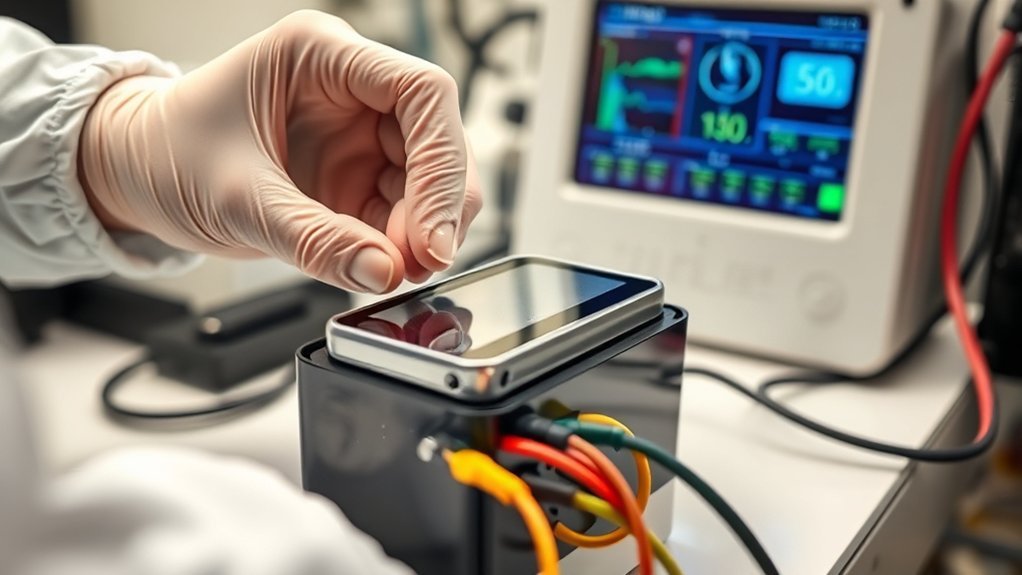
Ensuring proper charging and discharging practices is critical for lithium polymer battery safety. We recommend always using a compatible, high-quality charger to prevent overvoltage or undervoltage conditions. Additionally, avoiding complete discharge extends battery lifespan and minimizes the risk of thermal runaway.
Use Correct Charger
Using the correct charger is essential for maintaining the safety and longevity of lithium polymer batteries. Compatibility between the charger and the battery’s specifications ensures proper voltage and current delivery, preventing risks like overheating or voltage surges. Selecting a charger designed specifically for lithium polymer cells guarantees consistent charging speed, reducing the likelihood of thermal runaway. Mismatched chargers can cause uneven charging, degradation, or even catastrophic failure. Always verify the charger’s voltage, current output, and connector type align with the battery’s requirements. Using chargers with appropriate charging speed ensures efficient energy transfer without stressing the battery. Adhering to charger compatibility guidelines minimizes safety hazards, prolongs battery life, and maintains ideal performance during use.
Avoid Over-Discharging Battery
Have you ever considered what happens to a lithium polymer battery when it’s over-discharged? Over-discharging reduces the battery’s effective capacity and can damage internal components, making it unsafe and unreliable. When the voltage drops below the recommended minimum, voltage regulation becomes compromised, risking cell imbalance and potential failure. To prevent this, we must monitor the battery’s voltage closely and avoid discharging it below the specified cutoff voltage, typically around 3.0V per cell. Proper management of discharging cycles preserves the battery’s capacity and maintains safe operation. Using a charger with built-in cutoff features helps safeguard against over-discharge. Consistent adherence to these practices ensures the battery remains safe, functional, and durable over its lifespan.
How to Store Lithium Polymer Batteries Safely
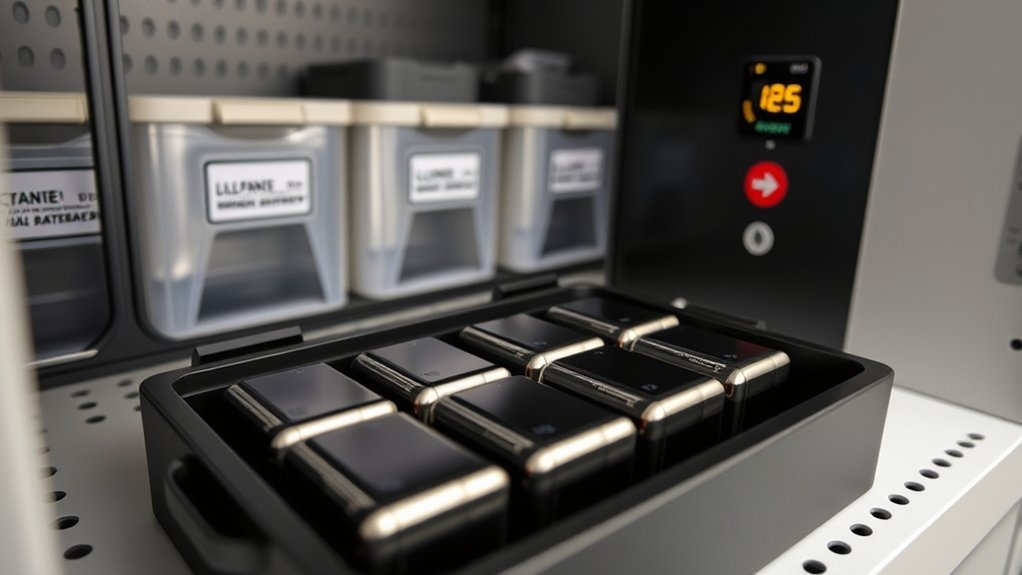
Proper storage of lithium polymer (LiPo) batteries is essential to maintain their safety and longevity. When storing, prioritize a suitable storage environment that is cool, dry, and away from direct sunlight. Guarantee the battery packaging is secure, ideally in non-conductive, fire-resistant containers to prevent accidental short circuits. We recommend:
Store LiPo batteries in a cool, dry, fire-resistant container at 50% charge for safety and longevity.
- Maintaining a temperature between 3°C and 25°C to prevent capacity loss or thermal runaway.
- Storing batteries at a state of charge around 50% to minimize chemical degradation.
- Keeping batteries in a well-ventilated area, away from flammable materials, to reduce risk in case of leakage or thermal event. Properly organized battery packaging and controlled storage environment are key to preventing damage and ensuring safety during periods of inactivity.
Identifying and Handling Battery Damage or Swelling
When inspecting lithium polymer batteries, it’s vital to recognize signs of damage or swelling promptly, as these can indicate internal failure or safety risks. Battery swelling, often visible as an outward bulge or deformation, results from gas buildup caused by internal damage or thermal instability. Damage identification requires careful visual examination; look for cracks, punctures, or warping of the battery casing. Swelling may occur without obvious external damage but should still be treated seriously. If you detect swelling or any irregularity, do not attempt to use or charge the battery. Handle it with protective equipment and isolate it from other devices. Promptly disposing of damaged batteries prevents potential thermal runaway and guarantees safety. Accurate damage identification is vital for preventing accidents and maintaining safe battery use.
Using Protective Equipment and Safety Devices
We prioritize wearing protective gloves to prevent skin contact with hazardous materials during battery handling. Using fire-resistant mats provides a critical barrier in case of thermal runaway or fire. Employing proper circuit breakers guarantees immediate disconnection of power during fault conditions, enhancing safety.
Wear Protective Gloves
Have you ever considered how protective gloves can prevent skin contact with hazardous materials during battery handling? Selecting the appropriate glove materials—such as nitrile, neoprene, or latex—is vital for chemical resistance and durability. Regular gloves inspection is essential to guarantee integrity, checking for tears, punctures, or degradation that could compromise protection.
Key points include:
- Use gloves made from chemical-resistant materials suitable for lithium polymer batteries.
- Inspect gloves thoroughly before each use, focusing on seams and surface integrity.
- Replace gloves immediately if any damage or wear is detected to maintain safety.
Proper glove use minimizes skin exposure risks, reducing potential chemical burns or irritation during handling and maintenance.
Use Fire-Resistant Mats
Using fire-resistant mats during lithium polymer battery handling adds a critical layer of safety by providing a designated, non-flammable surface for work and storage. These mats serve as an essential component of battery containment, preventing the spread of fire in case of thermal runaway or accidental ignition. Fire-resistant mats are engineered to withstand high temperatures, reducing the risk of combustible material igniting beneath the battery. They facilitate safer handling by clearly delineating the workspace and minimizing surface contamination risks. Proper use of these mats ensures that any potential battery failure remains confined, reducing hazards to personnel and property. Incorporating fire-resistant mats into your safety protocol enhances overall risk management and reinforces effective battery containment during all stages of lithium polymer battery management.
Employ Proper Circuit Breakers
Employing proper circuit breakers is essential for safeguarding lithium polymer batteries against electrical faults. Correct circuit breaker selection ensures effective overcurrent protection, preventing damage from short circuits or overloads. When choosing a circuit breaker, consider the battery’s maximum current, voltage rating, and response time. Properly rated devices can interrupt excessive current flow before thermal or electrical failure occurs.
Key points to ensure safety include:
- Verifying circuit breaker specifications match the battery’s electrical parameters.
- Installing circuit breakers in series with the battery for immediate disconnection during faults.
- Regularly testing the circuit breaker’s functionality to maintain reliable overcurrent protection.
This approach minimizes risks, enhances safety, and maintains ideal battery performance.
Best Practices for Disposal and Recycling
Proper disposal and recycling of lithium polymer batteries are essential to prevent environmental contamination and guarantee safety. We recommend adhering to established disposal procedures, which involve safely discharging the battery and transporting it to certified recycling facilities. Battery recycling processes recover valuable materials such as lithium, cobalt, and nickel, reducing the need for raw material extraction. It’s imperative to avoid discarding batteries in regular trash, as improper disposal can lead to fire hazards and chemical leaks. Always use designated collection points or authorized e-waste recyclers that comply with local regulations. Following these best practices ensures responsible management of lithium polymer batteries, minimizes environmental impact, and promotes safe recycling protocols. Proper disposal procedures are critical for both safety and sustainability.
Frequently Asked Questions
Can Lithium Polymer Batteries Be Used Underwater Safely?
We advise against using lithium polymer batteries underwater unless they’re properly waterproofed. With effective underwater waterproofing and advanced battery sealing techniques, they can be safely used, but standard batteries are not designed for submerged applications.
What Are the Signs of a Potential Thermal Runaway?
We warn you, thermal runaway is like a volcano erupting—look for thermal indicators like swelling, discoloration, or a strange smell, and watch for battery venting, which signals the critical moment before catastrophic failure.
How Do Temperature Variations Affect Battery Safety?
Temperature fluctuations directly impact battery safety by compromising thermal stability, increasing risks of thermal runaway. We monitor and regulate temperature to prevent these variations, maintaining ideal conditions that guarantee safe operation and prolong battery lifespan.
Are There Specific Safety Concerns for High-Capacity Batteries?
Like Pandora’s box, high-capacity batteries pose safety risks if mishandled. We must prioritize proper battery disposal and adhere to charging precautions to prevent thermal runaway, fires, or explosions, safeguarding both users and the environment.
Can Counterfeit Lithium Polymer Batteries Pose Safety Risks?
Counterfeit lithium polymer batteries pose significant safety risks due to substandard manufacturing standards, increasing the likelihood of thermal runaway, fires, and explosions. We advise sourcing batteries from reputable suppliers to mitigate counterfeit risks and guarantee safety.
Conclusion
In summary, prioritizing safety when handling lithium polymer batteries is essential, as improper use can lead to severe hazards. Did you know that over 90% of battery-related fires are caused by mishandling or damage? By following proper charging, storage, and disposal protocols, we drastically reduce risks of thermal runaway and environmental harm. Staying vigilant and using protective measures ensures safe operation and prolongs battery lifespan, safeguarding both users and the environment.