Like a compass guiding explorers through uncharted territory, understanding where to find lithium-ion battery recycling facilities near us is vital for responsible disposal. As electronic waste grows, selecting certified, compliant centers becomes essential to prevent environmental harm and recover valuable materials efficiently. The challenge lies in identifying these facilities and ensuring proper handling protocols are followed. To navigate this complex landscape, it’s important to weigh key factors that guarantee safety, sustainability, and compliance—insights that can greatly influence our collective impact.
Key Takeaways
- Locate certified recycling facilities through industry databases, government websites, or industry certifications like R2 and e-Stewards.
- Ensure the facility follows proper safety and environmental protocols for lithium-ion battery disassembly and processing.
- Confirm that the recycling process minimizes hazardous waste, emissions, and environmental impact.
- Check for recycling incentives, transparent pricing, and payment options to make recycling affordable.
- Prioritize facilities demonstrating transparency, responsible disposal practices, and advanced recovery techniques for valuable materials.
How to Find Local Lithium-Ion Battery Recycling Facilities Near You
Finding local lithium-ion battery recycling facilities requires a targeted approach, as proper disposal is essential for environmental safety and compliance with regulations. To locate these facilities, we analyze regional waste management programs and industry certifications emphasizing battery safety protocols. Many centers offer recycling incentives, encouraging responsible disposal by providing monetary or service-based benefits. These incentives not only promote environmental stewardship but also guarantee safe handling of potentially hazardous materials. Industry databases and government websites are valuable tools for identifying certified recyclers committed to safety standards. By focusing on facilities that prioritize battery safety and offer attractive recycling incentives, we can streamline the process of responsible disposal, reduce environmental risks, and support sustainable practices in lithium-ion battery management.
Key Factors to Consider When Choosing a Recycling Center
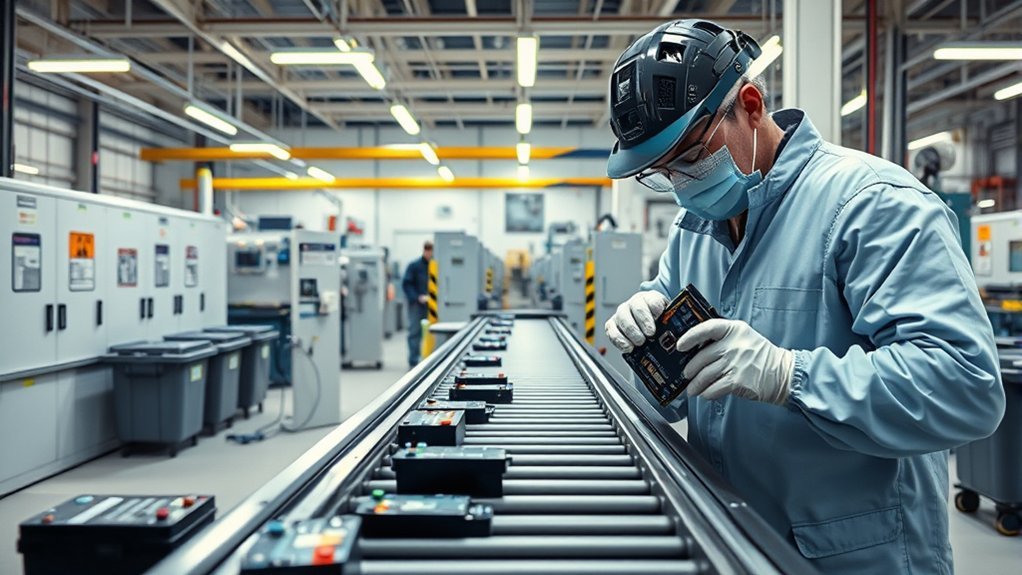
When selecting a recycling facility, we must evaluate their certification and compliance with industry standards to guarantee responsible handling. Transparency in their recycling processes is vital for verifying environmental and safety practices, while cost and payment options directly impact overall affordability. Carefully examining these factors helps us identify centers that prioritize ethical, effective, and economical lithium-ion battery recycling.
Certification and Compliance Standards
Ensuring a recycling center meets rigorous certification and compliance standards is essential to guarantee environmentally responsible and legally compliant lithium-ion battery disposal. Certification guarantees adherence to strict recycling regulations, emphasizing battery safety and environmental protection. Reputable centers often hold certifications like R2 or e-Stewards, indicating compliance with industry standards. These standards verify that hazardous materials are managed properly, preventing risks like thermal runaway or toxic leaks. The table below highlights key standards and their focus areas:
| Certification | Focus Area | Regulatory Compliance |
|---|---|---|
| R2 | Environmental safety, worker safety | Recycling regulations adherence |
| e-Stewards | Hazardous waste handling | International and local laws |
| ISO 14001 | Environmental management | Global environmental standards |
| OSHA | Worker safety | Occupational safety laws |
Recycling Process Transparency
Transparency in the recycling process is a critical factor that directly influences trust and accountability in selecting a lithium-ion battery recycling center. When evaluating facilities, we prioritize those that openly detail their procedures, emphasizing battery safety protocols and handling practices. Clear documentation of each step ensures proper management of hazardous materials, reducing risks of leaks or fires. Recycling innovations, such as advanced separation techniques and environmentally friendly processes, demonstrate a center’s commitment to efficiency and sustainability. Transparent centers also provide insights into how they recover valuable materials, ensuring minimal environmental impact. This openness fosters confidence that the process adheres to safety standards and regulatory compliance, ultimately safeguarding both workers and the environment. Choosing a transparent facility aligns with responsible recycling and technological progress.
Cost and Payment Options
Cost and payment options are fundamental considerations that directly impact the overall feasibility of lithium-ion battery recycling efforts. Guaranteeing battery safety during transport and processing can influence costs, as centers with advanced safety protocols may charge premiums. Recycling incentives offered by government programs or manufacturers can offset expenses, making recycling more economical. Some facilities provide transparent pricing structures, allowing us to assess total costs upfront, while others may include hidden fees. Payment flexibility, such as pay-per-collection or bulk discounts, can also enhance affordability. Evaluating these options helps assure that recycling is both safe and financially viable, encouraging higher participation rates. Ultimately, understanding the interplay between cost, safety, and incentives guides us toward choosing a recycling center that balances economic efficiency with environmental responsibility.
Steps to Prepare Your Batteries for Recycling Safely

To guarantee safe recycling, we must properly discharge lithium-ion batteries to eliminate residual energy that could cause hazards. Additionally, wearing appropriate protective gear minimizes exposure to harmful materials during handling. Adhering to these steps reduces risks and prepares batteries for secure recycling processes.
Properly Discharge Batteries
Before recycling lithium-ion batteries, it’s essential to properly discharge them to prevent potential hazards. Proper discharge minimizes risks during handling and addresses common recycling myths about battery safety. To prepare your batteries effectively, consider these steps:
- Fully charge the battery to its maximum capacity before discharging, ensuring complete energy transfer.
- Use a resistor or specialized battery discharger to safely drain the power, avoiding shortcuts or improper methods.
- Store the battery in a cool, dry environment during the process to reduce thermal risks.
- Confirm the battery’s voltage has dropped below safety thresholds, typically under 3 volts, before disposal.
This systematic approach ensures safe battery storage and aligns with best practices, dispelling myths about hazards linked solely to battery presence during recycling.
Use Protective Gear
Handling lithium-ion batteries safely requires us to wear appropriate protective gear, as it markedly reduces the risk of injury from potential leaks, fires, or accidental sparks. Protective clothing, such as gloves and long sleeves, guards against chemical exposure, while safety goggles protect our eyes from possible electrolyte splashes. Proper gear guarantees we minimize contact with hazardous materials and avoid static discharge, which could ignite flammable vapors. The table below highlights essential protective equipment:
| Equipment | Purpose |
|---|---|
| Protective clothing | Prevents chemical burns and skin contact |
| Safety goggles | Shields eyes from electrolyte splashes |
| Gloves | Reduces chemical exposure and static buildup |
| Respirator | Filters out harmful vapors if necessary |
Utilizing this gear systematically enhances safety during battery handling and prepares us for secure recycling.
What Materials Are Recovered From Lithium-Ion Battery Recycling?
When recycling lithium-ion batteries, a range of valuable materials are recovered through specialized processes. These recycling innovations enable us to extract key components, essential for sustainable resource management. The primary materials include:
- Lithium – recovered as high-purity lithium carbonate or hydroxide, fundamental for new battery production.
- Cobalt and Nickel – separated and refined for reuse, critical in maintaining battery chemistry performance.
- Graphite – reclaimed as a conductive material for electrode manufacturing.
- Other metals – such as manganese and aluminum, recovered for various industrial applications.
These recovered materials support the circular economy, reduce reliance on mining, and improve sustainability. Understanding the efficiencies of these processes highlights how advancements in recycling innovations are transforming battery lifecycle management.
Understanding the Recycling Process and Environmental Benefits
Recycling lithium-ion batteries involves a series of carefully engineered processes designed to efficiently recover valuable materials while minimizing environmental impact. These processes prioritize battery safety by controlling thermal and chemical hazards, preventing incidents during disassembly and material extraction. The recycling steps typically include discharging, dismantling, and mechanical or pyrometallurgical treatments to separate metals and components. Environmentally, these methods considerably reduce hazardous waste and lower the need for virgin resource extraction, decreasing ecological disruption. Proper recycling minimizes emissions and prevents toxic substances from leaching into ecosystems. By optimizing safety protocols and refining recovery techniques, we can enhance the environmental benefits of lithium-ion battery recycling, supporting sustainable resource management and reducing the overall ecological footprint associated with battery production and disposal.
How to Verify a Recycling Facility’s Credentials and Compliance
Ensuring a recycling facility’s credentials and compliance is fundamental to maintaining safety standards and environmental integrity. Proper verification ensures that battery safety protocols are adhered to, minimizing risks of hazards like fires or toxic leaks. To assess a facility’s legitimacy, consider these key steps:
- Check Certifications: Confirm possession of ISO 14001 or R2/RIOS certifications, indicating adherence to environmental standards.
- Review Regulatory Compliance: Verify compliance with local, national, and international regulations governing battery recycling.
- Assess Safety Protocols: Ensure the facility implements strict safety procedures to prevent accidents and protect workers.
- Evaluate Environmental Impact Measures: Confirm the facility’s commitment to minimizing environmental impact through proper waste handling and emissions control.
These steps ensure responsible recycling, prioritizing battery safety and environmental sustainability.
Tips for Responsible Disposal and Supporting a Circular Economy
Practicing responsible disposal of lithium-ion batteries is essential for minimizing environmental impact and supporting a circular economy. Ensuring battery safety during disposal prevents incidents like thermal runaway and hazardous leaks. We recommend following manufacturer guidelines and utilizing certified recycling facilities to guarantee proper handling. Supporting recycling innovation is key to improving recovery rates of valuable materials, such as lithium, cobalt, and nickel, reducing reliance on virgin resource extraction. Proper disposal reduces toxic waste and encourages the development of advanced recycling techniques, which can recover a higher percentage of materials more efficiently. By choosing responsible disposal methods and advocating for continuous recycling innovation, we contribute to a sustainable, closed-loop system that benefits both the environment and the economy.
Frequently Asked Questions
Are There Any Costs Associated With Lithium-Ion Battery Recycling Services Near Me?
We find that costs vary based on the recycling process, but generally, there’s minimal or no charge due to recycling incentives and cost comparisons promoting environmentally responsible disposal; we recommend checking local facilities for specific fee details.
How Long Does the Lithium-Ion Battery Recycling Process Typically Take?
We typically complete lithium-ion battery recycling within a few days, depending on the recycling methods used and battery complexity, aiming to maximize battery lifespan recovery through efficient, environmentally responsible processes that minimize downtime and resource waste.
Can I Recycle Damaged or Leaking Lithium-Ion Batteries Safely?
Like handling a delicate glass sculpture, we advise against recycling damaged or leaking lithium-ion batteries ourselves. For battery safety, follow established recycling procedures with trained professionals, ensuring proper containment and disposal to prevent hazards.
Are There Age Restrictions for Batteries Accepted at Recycling Centers?
Recycling centers typically do not impose age restrictions on batteries, focusing instead on battery safety and adherence to recycling regulations. We recommend checking specific center policies, as compliance guarantees proper handling of all lithium-ion batteries regardless of age.
What Should I Do if I Can’t Find a Nearby Recycling Facility?
Since over 80% of lithium batteries are recyclable, if nearby facilities are unavailable, consider alternative disposal methods like battery donation programs or contacting regional waste authorities, which often provide detailed guidance and safe collection options.
Conclusion
By choosing certified recycling centers that prioritize safety and transparency, we protect both the environment and public health. While the process may seem complex, understanding the technical steps involved underscores our role in sustainable innovation. Just as a well-engineered battery delivers power efficiently, responsible disposal guarantees those materials can be reborn into new products. Ultimately, our commitment to proper recycling balances technological progress with ecological preservation, fostering a circular economy that benefits us all.