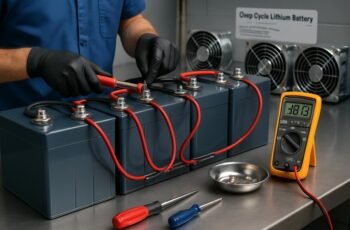
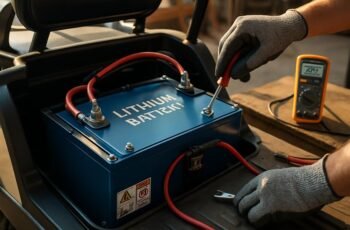
We maintain motorcycle lithium batteries with a disciplined, technically precise approach: monitor voltage, verify tight connections, and manage temperatures with an appropriate charger. We’ll use smart chargers compatible with LiFePO4, NMC, or other chemistries, avoid fixed-voltage units, and store at 40–60% SoC in cool environments. If we notice swelling, unusual heat, or voltage drops, we act fast and document outcomes to guide future care. There’s more to optimize before we proceed.
Key Takeaways
- Regularly check voltage, terminal tightness, and signs of overheating or swelling to determine maintenance or replacement needs.
- Use a compatible smart charger with CV/CC profiles, temperature sensing, and correct termination for lithium chemistries.
- Store battery at 40–60% SoC in a cool, dry place and disconnect loads to prevent deep discharge during inactivity.
- Follow chemistry-specific charging practices (LiFePO4, NMC, or LTO) and avoid overcharging or improper charging temperatures.
- Maintain seasonal maintenance cadence: inspect corrosion, verify charger compatibility, and monitor temperature and cranking amps.
What a Motorcycle Lithium Battery Is and Why Maintenance Matters
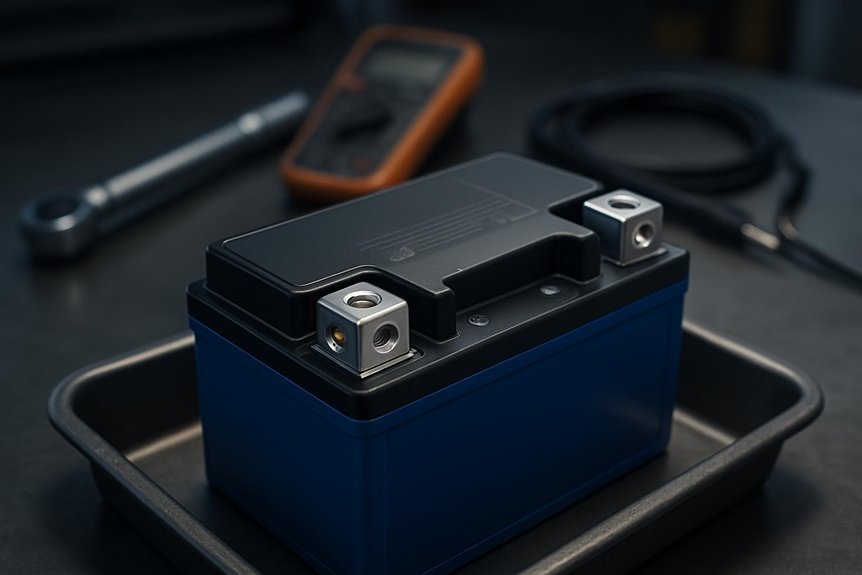
A motorcycle lithium battery is a compact, rechargeable energy source that powers the engine’s starting system and onboard electronics. We explain what it is and why maintenance matters because performance hinges on chemistry and condition. Our focus is on reliability, efficiency, and safety, not guesswork. These batteries use lithium-based cells to deliver high energy density with lighter weight than lead-acid equivalents, enabling quicker starts and crisper electronics response. Key considerations include battery materials, which determine capacity, cycle life, and thermal behavior. We also monitor electrolyte safety, as proper handling and charging temperatures prevent gas buildup and corrosion. Regular checks on voltage, connection tightness, and thermal management reduce failure risk. By understanding composition and safeguards, we preserve performance, extend life, and minimize unexpected downtime.
Signs Your Battery Needs Attention and When to Replace
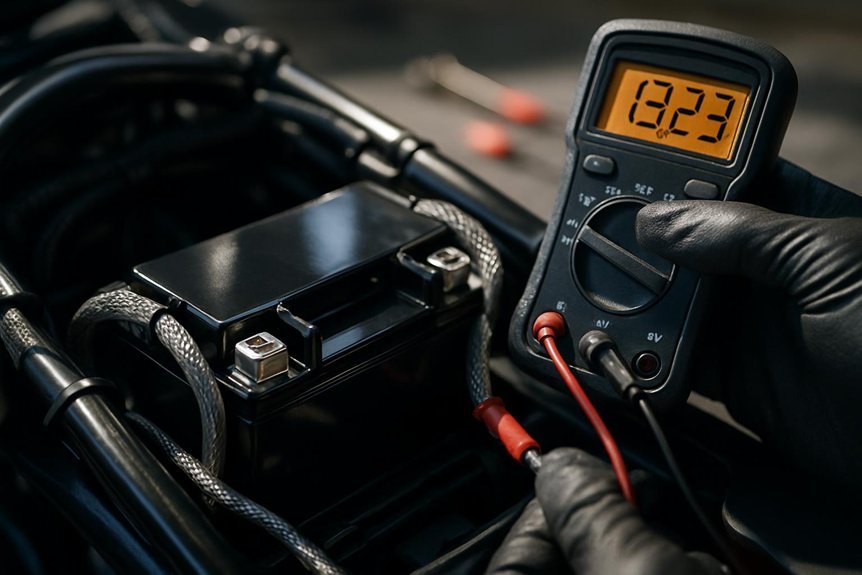
Are you noticing subtle tells that your battery’s health is slipping? We’ll read the signs, interpret the data, and act proactively. We monitor cranking strength, voltage under load, and cold-start performance as primary indicators. We also track charging cycles and electrolyte-agnostic symptoms like excessive heat or swelling, which signal degradation beyond simple cycles. When readings fall outside baseline ranges, we evaluate whether a battery replacement is warranted or if maintenance actions suffice. We establish notification timing thresholds to trigger timely action, avoiding ride disruption. Remember, early detection saves performance and reliability. If uncertainty persists after testing, opt for replacement rather than risking failure on the road.
| Indicator | Recommended Action |
|---|---|
| Low cranking amps | Replace |
| Sustained low voltage | Replace |
| Excessive heat | Replace |
| Visible swelling | Replace |
| Post-maintenance instability | Check/test |
Charging Lithium Batteries by Chemistry: Quick-Start Guide
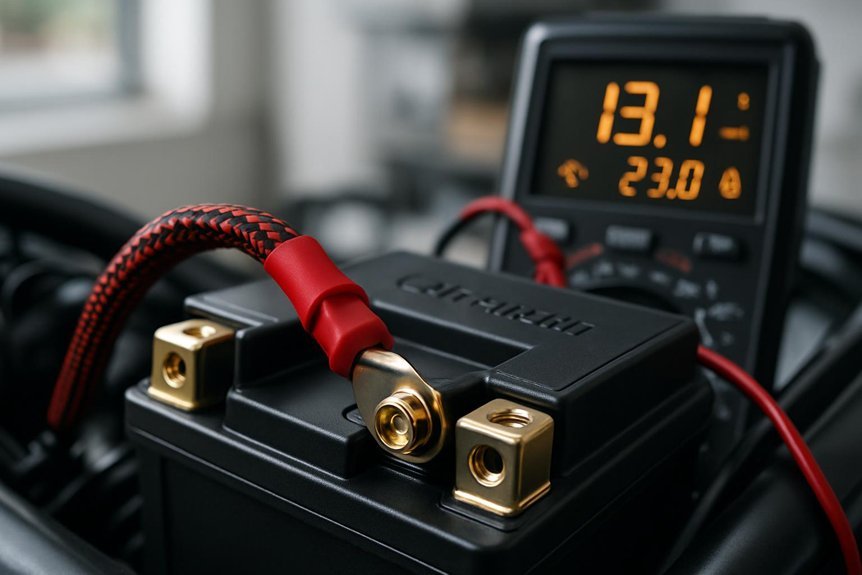
We’ll outline proper charge practices tailored to each chemistry, so you know exactly what to do for your battery type. We’ll highlight chemistry-specific trends that influence charging behavior and performance, helping you anticipate needs over time. Finally, we’ll cover safe handling guidelines to prevent risks during charging and maintenance.
Proper Charge Practices
Charging lithium batteries by chemistry isn’t a one-size-fits-all process; proper practices depend on the cell type and pack design. We approach charging with a methodical framework: verify charger compatibility, monitor voltage and current limits, and respect termination criteria at full charge. Always use chargers specified for the battery chemistry and maintain appropriate temperature ranges during charging. We prioritize staged charging, gentle current ramping, and timer-based safeguards to prevent overcharging. Temperature affects impedance and acceptance rate, so we adjust procedures for ambient conditions and pack heat. When using portable chargers, ensure they deliver stable current and protect against short circuits. Be mindful of cold weather charging, which can reduce capacity and increase internal resistance; plan warm-up or preconditioning as needed to preserve longevity. Regular inspection complements disciplined charging practices.
Chemistry-Specific Trends
Chemistry-specific trends influence charging strategies, and recognizing these differences helps optimize longevity and performance. We focus on how chemistry dictates charging voltage ceilings, temperature windows, and current tapering, guiding our quick-start approach. By analyzing chemistry-specific behavior, we tailor procedures to minimize degradation and maximize cycle life. Trends analysis shows LiFePO4, NMC, and LTO chemistries each favor distinct charge profiles; we adapt our limits accordingly and document observed effects for future reference.
| Chemistry | Typical Charge Profile | Key Considerations |
|---|---|---|
| LiFePO4 | Moderate voltage taper | Thermal sensitivity, balanced aging |
| NMC | Higher voltage threshold | Monitor impedance, avoid overcharge |
| LTO | Low voltage ceiling, fast taper | Ultra-low internal resistance caution |
Safe Handling Guidelines
Safe handling is essential when charging lithium motorcycle batteries by chemistry. We establish clear procedures to minimize hazards and maximize performance. Before we begin, inspect connectors, cables, and enclosure seals for damage, wear, or corrosion. We verify the charger matches the battery’s chemistry and voltage, and we set current limits within manufacturer recommendations. During handling, we maintain dry, clean surfaces and avoid vapors, moisture, or metal contact with exposed terminals. We perform a controlled ramp-up, monitor temperature, and pause if temperatures exceed safe thresholds. Always use safe handling practices, including grounded containment and proper ventilation. Put on protective gloves to reduce skin exposure to electrolyte and thermal considerations, and remove jewelry. Document cycle counts, charge states, and any deviations for traceability.
Choosing the Right Charger for Your Bike’s Lithium Chemistry
We’ll start by matching charger output to your bike’s lithium chemistry to guarantee safe, efficient charging. Understanding battery chemistry compatibility helps us avoid overcharging or undercharging, which can shorten pack life. We’ll outline the required charger specifications and how to verify compatibility with your bike’s cells and BMS.
Battery Chemistry Compatibility
Have you chosen the right charger for your bike’s lithium chemistry? We’ll approach battery chemistry with exacting standards, focusing on compatibility considerations to prevent degradation or safety risks. Different lithium chemistries demand specific charging profiles, termination voltages, and temperature handling. Our goal is to match charger circuitry to the battery’s chemistry, avoiding cross-chemistry mismatches. By confirming polarity, voltage limits, and current limits, we minimize heat generation and maximize cycle life. We assess chemistry labels, datasheets, and manufacturer recommendations before connecting gear. In practice, compatibility considerations include balanced charging, cell balancing, and appropriate cutoff thresholds. We document each adjustment and test under controlled conditions. Remember, incorrect charging can compromise capacity, integrity, and safety.
| Charger Type | Chemistry Fit | Key Parameter |
|---|---|---|
| Smart Charger | Yes | CV/CC, temp |
| Basic Charger | Limited | Fixed voltage |
| 4‑Step Charger | Broad | Multi‑stage |
Charger Output Requirements
Do you know the exact output your lithium battery chemistry requires? We’ll guide you through selecting a charger that delivers the correct charger output without overloading or undercharging. First, verify the battery’s nominal voltage and capacity, then match the charger’s voltage to that specification, plus a suitable current range for safe charging. We emphasize constant-current/constant-voltage profiles that terminate at the recommended termination voltage. Consider ambient conditions and charging duration to gauge practical current limits. Compatibility considerations include ensuring the charger’s connector, termination algorithm, and float maintenance align with your bike’s battery management system. Avoid chargers that advertise high amperage without proper regulation, as heat and sulfation risk increase. We recommend chargers with automatic shutoff or profiling to protect longevity and performance.
Smart Storage Habits to Extend Lithium Battery Life
Smart storage habits are essential to preserve a lithium battery’s capacity and lifespan. We’ll outline proactive practices you can adopt to maximize reliability during inactive periods. Keep the battery between 40–60% state of charge for long-term storage, and recharge periodically to prevent deep discharge. Store in a cool, dry environment away from heat sources and metal contacts. Disconnect loads, and protect terminals with insulated caps. Use a smart storage routine that checks voltage, temperature, and self-discharge indicators, avoiding aggressive cycling. If winterizing a bike, remove the battery and place it on a drip tray to prevent condensation damage. Regularly verify shelf health with a suitable tester.
| Category | Action | Metric |
|---|---|---|
| SoC level | 40–60% | Target range |
| Temperature | cool storage | 5–15°C |
| Maintenance | periodic checks | Monthly |
A Month-by-Month Maintenance Routine for Motorcycle Lithium Batteries
What’s the best way to structure ongoing care for a motorcycle lithium battery throughout the year? We present a month-by-month maintenance routine that’s precise and actionable. January through March focuses on a baseline maintenance schedule: verify terminals, inspect for corrosion, and confirm charger compatibility. April to June emphasize seasonal checks, ensuring the battery remains a healthy load, voltage within spec, and electrolyte-free seals intact. July through September prioritizes charge discipline, avoiding deep discharge and using a smart charger when idle. October to December revisit storage posture, rechecking cranking amps, insulation, and connector integrity before winter dormancy. This routine balances proactive diagnostics with reactive refinements, reducing failure risk. Follow the cadence, document deviations, and adjust the maintenance schedule as conditions demand.
Frequently Asked Questions
Can Lithium Batteries Be Jump-Started Safely?
Yes, we can jump-start lithium batteries, but with cautions. We assess start up safety, avoid high current surges, and limit cranking time. We monitor wires and connectors, minimize jump start risks, and disable sensitive electronics before reconnecting.
Do Lithium Batteries Require a Trickle Charge Option?
Yes, lithium batteries benefit from a trickle charge option for long-term maintenance. We recommend a controlled, low-current trickle and regular checks with maintenance probes to monitor voltage and health, preventing parasitic drains and ensuring reliable performance.
How Often Should I Cycle Maintenance Probes on Lithium Packs?
We should cycle maintenance probes every 6 months, executing maintenance cycles and probe calibration to verify accuracy. We’ll document results, verify tolerances, and adjust procedures as needed to keep lithium packs performing reliably and safely.
Are There Lithium Alternatives for Vintage Bikes?
“Picture a road lit by possibility.” We say yes; there are vintage battery alternatives for classic bikes, including lead-acid and NiMH packs. We recommend evaluating fit, weight, and cold-crank performance for reliable, proactive power sources.
What Signs Indicate a Battery Pack Imbalance?
Imbalance indicators include fluctuating cell voltages, sudden capacity loss, and uneven discharge rates; monitor with a balancer. We’ll flag red flags promptly and guarantee charging safety, using controlled, gradual charging to prevent heat buildup and potential cell damage.
Conclusion
We’ve walked you through the arcana of Lithium motorcycle batteries, and yes, it all matters to your ride’s reliability. So here’s the satire-in-precision takeaway: treat every terminal as a jury, every voltage reading as testimony, and every storage moment as a deposition in calm. If we ignore the signs, we’ll be left with a dead battery and a very loud, very expensive lesson. Stay vigilant, measure often, and ride with confidence—preferably powered by well-managed chemistry.