You probably don’t realize how many subtle symptoms indicate a lithium battery’s decline, not a simple charge issue. We’ll walk through quick external checks, open-circuit voltage, and impedance tests to separate causes like imbalance, electrolyte degradation, or BMS faults. If heat climbs or voltages behave oddly, we’ll target controlled testing, calibration, and safe storage strategies. Stay with us as we outline practical fixes, priorities, and when professional help becomes essential to prevent rapid failure.
Key Takeaways
- Identify common symptoms: unexpected heat, rapid capacity loss, hard-to-charge behavior, swelling, or abnormal voltage readings during tests.
- Verify external factors: check connections, corrosion, charger compatibility, and ambient conditions before internal testing.
- Use baseline health metrics: measure open-circuit voltage, internal impedance, capacity, and cycle count for aging and fault localization.
- Diagnose with controlled tests: perform load tests, temperature differentials, and model charge-discharge curves to isolate fault zones.
- Plan maintenance and safety: follow cooling, storage, and discharge guidelines; seek professional help for rapid degradation or swelling.
Lithium Battery Problems and How to Diagnose Them
What are the telltale signs a lithium battery isn’t behaving? We examine symptoms methodically, focusing on diagnostic accuracy. We distinguish diagnostic myths from verifiable indicators, so you don’t chase unreliable results. Voltage readings alone aren’t definitive; we assess load response, internal resistance, and charge/discharge curves to identify underlying causes. Surface-ageing signs—capacity loss, increased self-discharge, and voltage sag under load—can reflect aging vs. damage, but only when corroborated by cycle history and heat profiles. We prioritize repeatable tests and controlled conditions. Safe handling remains critical: protect against short circuits, proper ventilation, and thermal management during testing. By framing symptoms in terms of aging vs. damage, we guide diagnostics toward durable, evidence-based conclusions, avoiding assumptions and accelerating correct remediation.
Quick Diagnostic Checklist for Any Lithium Battery
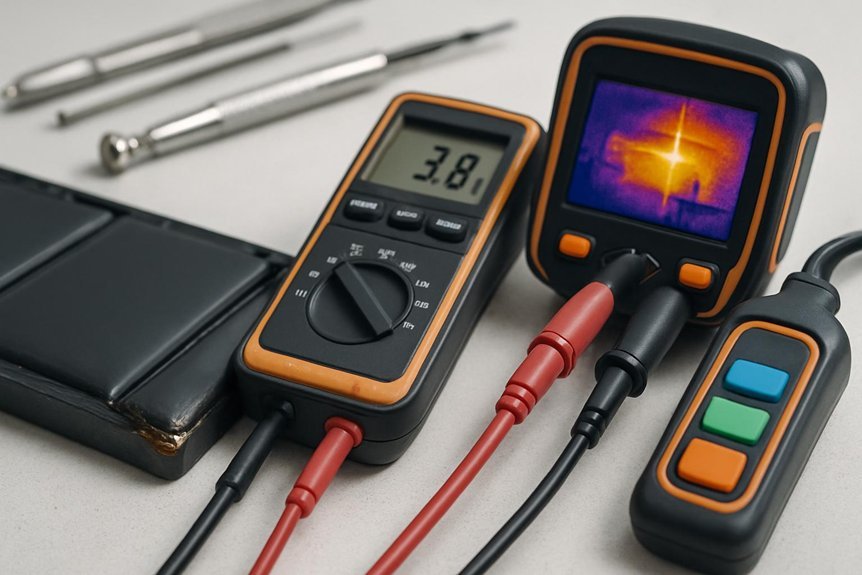
We’ll walk you through a quick diagnostic checklist for any lithium battery, focusing on common symptoms and the steps that verify operation. If you notice reduced capacity, swelling, heat, or inconsistent voltage, we’ll outline precise tests to pinpoint causes. This framework keeps diagnostics concise, actionable, and repeatable for reliable results.
Quick Diagnostic Steps
If your lithium battery isn’t performing as expected, start with a quick, practical diagnostic to pinpoint likely causes without disassembling the pack. We begin with quick diagnostic steps: verify external connections, inspect for corrosion, and confirm charger compatibility. Measure open-circuit voltage and compare to nominal specs; note any deviations. Assess internal impedance with a compatible tester to flag elevated resistance. Check temperature response under light load, then re-test after a brief rest. Review recent usage patterns, cycling history, and storage conditions for rapid symptom mapping correlations. Ensure cell balancing is intact and BMS indicators match readings. Document results succinctly, repeat-critical checks, and isolate likely fault zones before deeper testing. This approach minimizes risk while delivering actionable, repeatable insights for accurate fault isolation.
Common Battery Symptoms
| Symptom | Likely Fault Zone | Quick Verification |
|---|---|---|
| Capacity fade | Cells, aging | Load test, capacity check |
| Heat rise on use | BMS, cell imbalance | Temperature differential test |
| Poor charge acceptance | Anode/cathode, electrolyte | Charge-discharge curve review |
Check Battery Health: Capacity, Voltage, and Cycle Tests
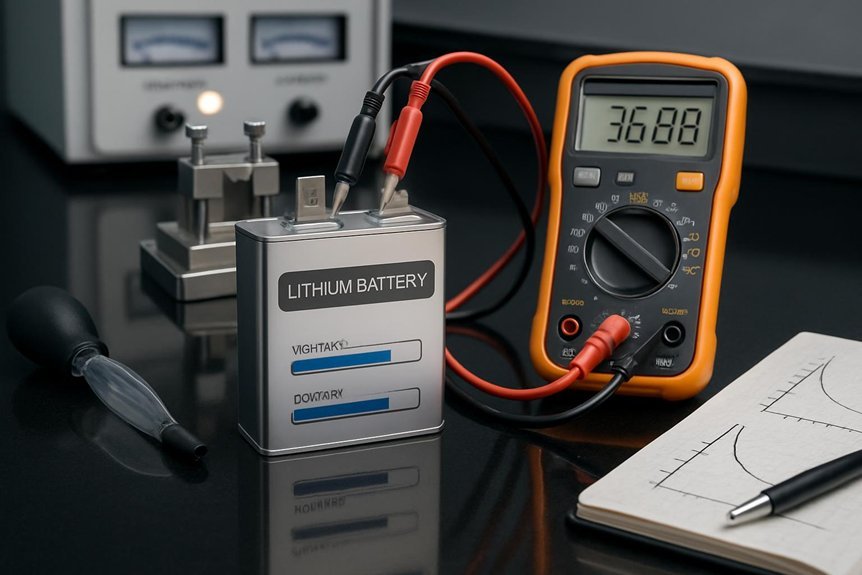
We’ll start with clear Battery Health Metrics, focusing on capacity and voltage checks to establish baselines. We’ll outline how Cycle Test Insights reveal aging patterns and remaining life, guiding maintenance decisions. We’ll keep measurements precise and actionable so you can validate health without guesswork.
Battery Health Metrics
Battery health metrics give us a clear snapshot of a lithium battery’s condition. We assess battery health through three core data points: capacity, voltage, and cycle count. Capacity reveals usable energy relative to design, indicating aging or degradation trends. Voltage checks verify cell balance and ongoing performance under load; abnormal readings flag internal faults or State of Charge discrepancies. Cycle tests measure how many complete charge-discharge cycles the pack endures before capacity falls below thresholds. Together, these metrics guide our maintenance routines, helping us decide when to calibrate, rebalance, or replace cells. We prioritize consistent data collection, documented results, and trend analysis to prevent surprises. Clear reporting strengthens trust with users and supports proactive intervention, reducing risk and extending overall system reliability.
Capacity and Voltage Checks
How do capacity and voltage checks safeguard battery health? We routinely compare actual capacity to rated capacity to reveal capacity trends that signal degradation. We perform controlled discharge and charge cycles to quantify usable energy and detect loss of capacity over time. Voltage checks verify state-of-charge accuracy and identify anomalies from aging, cell imbalance, or internal resistance shifts. We monitor open-circuit voltage and under-load voltage to detect voltage aging, which can precede noticeable capacity loss. Our process emphasizes repeatable test conditions, proper timing, and documentation to distinguish normal variance from meaningful trends. We interpret results against manufacturer specs and historical data, enabling early intervention—like balancing, conditioning, or replacement—before performance suffers. Clear metrics help readers maintain safer, longer-lasting packs.
Cycle Test Insights
Cycle tests tie together capacity and voltage data to reveal how a pack behaves under actual use. We track cycle fatigue by counting usable cycles and noting capacity fade, voltage drop, and resistance shifts. Our approach combines controlled discharge/charge profiles with data logging, giving a clear view of health trends over time. Interpreting results, we compare initial capacity to current, monitor end-of-discharge voltage behavior, and flag early termination risks. By correlating data points, we predict remaining life and plan maintenance before failures arise. Below is a compact table to illustrate key metrics and observations.
| Cycle | Capacity (Ah) | End Voltage (V) |
|---|---|---|
| 1 | 2.50 | 3.60 |
| 2 | 2.45 | 3.58 |
| 3 | 2.40 | 3.56 |
| 4 | 2.35 | 3.54 |
| 5 | 2.30 | 3.52 |
Preventing Overheating: Cooling Tips and Safe Usage
To prevent overheating, we’ll implement practical cooling strategies and safe usage routines that keep lithium batteries within their optimal temperature range. We assess operating temps, ambient conditions, and duty cycles to minimize heat buildup. Implement cooling best practices by elevating airflow, using heat sinks where appropriate, and avoiding occlusion of vents. Monitor charging currents and avoid high-rate discharges in hot environments. Halt operation if surface temps exceed safe thresholds, and stagger aggressive loads to prevent cumulative heat. Store batteries cool and dry, away from direct sunlight, with partial state-of-charge guidance for long-term storage. Be mindful of heat emission risks during fast charging and continuous high-power use; use manufacturer-rated adapters and cables. Regular inspections detect insulation wear or swelling before heat escalates.
Device-Specific Fixes: Smartphones, Laptops, and EVs
Smartphones, laptops, and EVs each demand device-specific fixes that address their unique battery chemistries, form factors, and thermal profiles. We tailor guidance to each platform, focusing on practical, verifiable steps. For smartphones, we emphasize firmware updates, calibrated charging cycles, and maintaining ambient cooling to support Smartphone cooling management. For laptops, we address thermal throttling by inspecting cooling fans, cleaning vents, and ensuring reliable power delivery, i.e., controlling Laptop thermals through firmware settings and performance profiles. For EVs, we outline battery conditioning during charging, temperature management of pack modules, and maintaining vehicle software to optimize state of health. Across all devices, we prioritize safe charging practices, consistent monitoring, and reproducible checks to stabilize performance without compromising longevity.
When to Seek Professional Help and Ongoing Battery Care
When should you call in a pro, and how do you sustain battery health over time? We outline professional maintenance thresholds and ongoing care to prevent failures. If you notice rapid capacity loss, swelling, leakage, overheating, or device shutdowns beyond normal wear, seek expert help promptly. Regular checks, thermal monitoring, and proper charging routines extend life and safety. Follow-up care includes calibrated testing, firmware updates, and safe disposal plans for end-of-life packs. For ongoing care, minimize deep discharges, store at moderate temperatures, and use recommended chargers. Eco friendly disposal is essential when replacing cells. The table below illustrates key actions, signals, and responsibilities.
| Action | Signal | Responsibility |
|---|---|---|
| Inspect | Unusual heat | User/tech |
| Test | Capacity drop | Technician |
| Maintain | Regular cycles | User |
Frequently Asked Questions
Can Battery Swelling Occur Without Overheating?
Yes, swelling can occur without overheating. We’ve observed battery swelling mechanisms driven by gas buildup, pressure, and internal reactions even at moderate temperatures, so swelling without overheating is possible and requires careful inspection and safety precautions.
Do All Quick Chargers Harm Longevity?
Lightning flashes of coincidence show us quick charging myths collide with reality: not all quick chargers harm longevity, but compatibility matters. We say: avoid rogue adapters; verify charger compatibility, monitor temps, and adopt manufacturer guidelines for best results.
Can a Drained Battery Be Safely Recharged?
We can safely recharge a drained battery with proper safety. We ensure controlled charging to protect drained rechargeability and safe recharging, monitor temperature and voltage, and avoid high-rate or damaged packs during initial restoration.
Do Third-Party Chargers Invalidate Warranties?
“Look before you leap.” We say: third party chargers can affect warranty implications; we advise caution, documenting usage, and consulting your manufacturer. We’re precise: using uncertified chargers may void coverage, so verify compatibility and keep receipts.
Is Battery Health Affected by Daily Temperature Changes?
Yes, battery health is affected by daily temperature changes. We notice temperature sensitivity during daily cycling; performance drops when ambient temps swing. We optimize charging strategies to mitigate effects and extend life across varied temperatures.
Conclusion
We’ve covered clear steps to diagnose and fix common lithium battery problems, from external checks to temperature tests and device-specific tips. If you’re tempted to throw in the towel, don’t—controlled testing and proper cooling often revive performance without costly parts. When rapid degradation, swelling, or leakage appears, seek professional help promptly. With routine care, proper storage, and mindful charging, you’ll extend life, reduce risk, and keep devices safer and more reliable.