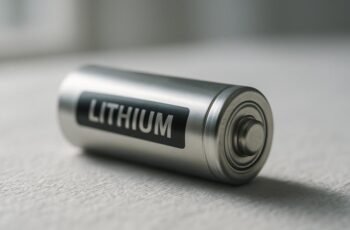
We’ll approach lithium battery care with a precise, structured method, focusing on health metrics like capacity fade, internal resistance, and SOC indicators to separate calendar from cycle aging. Our guidance covers temperature-aware charging, moderate currents, and recalibrating end-of-charge thresholds for ambient conditions. We’ll also emphasize regular inspections, firmware checks, and periodic diagnostics, paired with proper storage at 40–60% SOC in a cool, ventilated space. The specifics will matter as we outline practical steps for sustained performance.
Key Takeaways
- Maintain partial state of charge (40–60%) during storage, in a cool, dry, ventilated enclosure with regular SOC and voltage checks.
- Use smart charging: moderate bulk currents, taper to safe termination, monitor temperature to prevent heat-driven degradation.
- Monitor and track battery health: track capacity fade, internal resistance, SOC hysteresis, and correlate with cycles and calendar aging.
- Regularly inspect and refresh connections, seals, and BMS firmware; log usage, temps, and events for early warning.
- Manage thermal and daily care routines: balance heat sources, avoid hotspots, perform controlled load tests, and recalibrate thresholds as needed.
Foundations of Lithium Battery Health: Why Capacity Fades
Lithium battery capacity fades primarily due to the cumulative effects of chemical and mechanical changes inside the cell, not merely how long it sits on a shelf. We approach this topic with the foundations of lithium as our guide, outlining how active materials, electrode integrity, and electrolyte stability govern capacity fade. We quantify loss mechanisms, including SEI growth, lithium plating risk, and structural degradation, linking them to usable capacity over cycles. We emphasize measurement rigor, state-of-health tracking, and consistent test conditions to distinguish calendar from cycle aging. This framing helps readers anticipate performance shifts and set expectations for diagnostics. By grounding our discussion in precise physics and chemistry, we prepare for smarter charging strategies that support longer life.
Smarter Charging for Longer Life
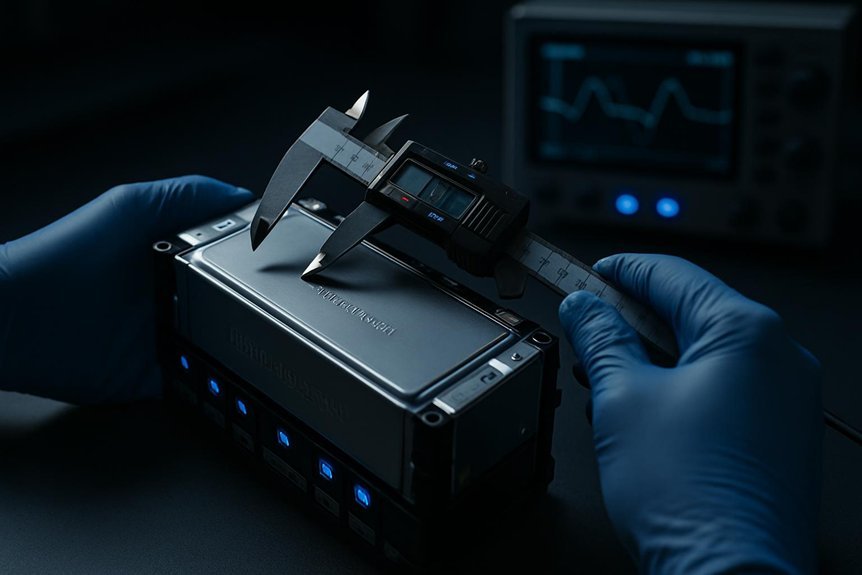
We’ll outline smart charging habits, focusing on how to maintain battery health through appropriate thresholds and monitoring metrics. We’ll discuss setting optimal charge limits, balancing fast charging with long-term health, and tracking battery health indicators to adjust practices. These points establish a precise framework for extending life while preserving performance.
Smart Charging Habits
Smart charging habits maximize lithium battery life by controlling charge rate and termination, temperature, and timing. We approach charging as a system, balancing current profiles, voltage limits, and rest periods to minimize stress. Our practice is to use moderate, stable currents during bulk charging, then taper to termination currents that prevent overcharge without sacrificing cell health. We monitor temperature to avoid elevated heat that accelerates degradation, pausing or slowing charging as needed. Timing strategies include aligning charging with low-temperature windows and avoiding extended idle charge cycles that promote self-discharge. We emphasize smart charging as a preventive discipline, not a one-off action, ensuring consistent state of health. This discipline relies on recognizing optimal thresholds to sustain performance and longevity.
Optimal Charge Thresholds
Why seek a precise charge threshold? We establish optimal charge and threshold governance to balance capacity, cycle life, and safety. Our approach uses quantified targets, not guesswork, ensuring predictable performance. We calibrate charge endpoints to minimize stress at high and low states, while preserving usable energy. We implement thresholds that accommodate temperature, state of health, and application duty cycles. Our method reduces irreversible degradation by limiting overcharge risk and deep-discharge exposure. We document the rationale, measurement, and tolerances so maintenance remains reproducible. This discipline enables smarter charging, longer life, and reliable operation.
- Define target voltage range for end-of-charge
- Adjust thresholds with temperature feedback
- Align thresholds to SOC band limits
- Monitor drift and recalibrate periodically
- Record threshold governance decisions
Battery Health Metrics
Battery health metrics tie directly to our charging strategy, providing concrete signals to optimize longevity. We monitor battery health through lifecycle metrics that reflect capacity fade, internal resistance shifts, and state-of-charge hysteresis. By tracking these indicators, we quantify aging patterns and adjust profiles to minimize degradation. We assess charging efficiency by comparing energy input to usable capacity gain over cycles, refining voltage and current ramps accordingly. Thermal behavior analysis reveals hotspots, ambient influence, and cooling adequacy, guiding thermal management tweaks to avoid accelerated wear. We correlate discharge depth, cycle count, and calendar aging to forecast remaining life and plan preventive actions. Informed adjustments based on these metrics improve reliability, performance, and overall endurance of the system.
Storage Rules to Preserve Capacity

Are you wondering how to maximize lithium battery life during storage? We outline disciplined rules to protect capacity during shelf time. We describe practical storage practices, focusing on minimizing degradation mechanisms and preserving chemistry integrity for later use. We emphasize consistent state of charge targets, and controlled environmental conditions to reduce stress on cells. We discuss indicators of storage hazards and steps to prevent them, ensuring reliability when reactivating packs. Our guidance stays within the scope of storage, avoiding temperature-performance implications here, while maintaining technical rigor for readers seeking concrete actions.
- Maintain a partial state of charge around 40–60%
- Store in a cool, dry, ventilated enclosure
- Use a battery management system to monitor voltage and health
- Inspect connectors and seals for corrosion or damage
- Periodically refresh and recheck state of charge and voltage safety margins for capacity preservation
How Temperature Impacts Performance
We know temperature directly influences lithium-ion cell chemistry, affecting capacity, impedance, and cycle life. We’ll outline how the Temperature Influence On Cells, the optimal Operating Range, and the Effects Of Cold And Heat shape performance and reliability. By keeping operation within the recommended range, we minimize degradation and maximize consistent behavior across real-world conditions.
Temperature Influence On Cells
Temperature profoundly affects lithium battery cells: as temperature rises, reaction rates increase, but excessive heat accelerates degradation; at low temperatures, capacity and power fade due to slowed ion transport and higher internal resistance.
We describe how temperature influences performance, focusing on tradeoffs and control strategies that improve longevity.
- cooling efficiency impacts heat removal during high-load events
- ambient temp considerations affect initial calibration and safety margins
- thermal gradients drive uneven aging across packs
- charge/discharge rates must align with temperature windows
- insulation and airflow management reduce hotspots and improve stability
Optimal Operating Range
What is the best operating range for lithium batteries, and how does temperature shape performance within it? We define the best range as the temperature window where capacity retention, cycle life, and internal resistance are balanced for reliable operation. Within this range, we maintain steady charge-discharge efficiency and predictable impedance trends. Temperature influences kinetics: elevated temperatures accelerate reactions, increasing self-discharge and aging rate, while lower temperatures slow ion transport, reducing available capacity and power delivery. Our guidance emphasizes staying within the recommended band for routine usage patterns, avoiding excursions that push stress limits. By aligning charging, discharging, and storage with the best range, we minimize degradation mechanisms and maximize longevity. Monitor ambient and device temperatures, adjust usage patterns accordingly, and implement thermal management strategies to sustain performance.
Effects Of Cold And Heat
Original Text:
Cold or hot conditions alter lithium battery performance by reshaping reaction kinetics and transport processes. We, as caretakers of the cell, examine how temperature affects capacity, impedance, and cycle life. Temperature stability governs charge efficiency, while extreme cold impedes ion mobility and increases internal resistance. Heat accelerates degradation mechanisms, but proper warmth distribution preserves usable capacity. We monitor thermal pathways to prevent localized hot spots and ensure uniform aging. Our approach integrates controlled temperature exposure, preventing cold exposure damage and avoiding overheating. By balancing heat sources with cooling, we sustain optimal performance and safety. Maintain consistent practice across use cases to extend longevity and reliability for devices and packs alike.
- Temperature stability and impedance
- Cold exposure effects on capacity
- Warmth distribution and uniform aging
- Heat sources and cooling strategies
- Consistent thermal management practices
Quick Firmware Checks and Basic Diagnostics
We can perform quick firmware checks and basic diagnostics to confirm the pack’s software state and health. We’ll outline a concise, repeatable workflow that supports early issue identification without unnecessary steps. First, verify firmware version against the manufacturer’s baseline and note the firmware update cadence to determine if an update is overdue. Next, perform baseline diagnostic checks across core subsystems: cell balance, BMS communications, thermistor readings, voltage rails, and state of charge accuracy. Check for error codes, log timestamps, and recent events. Validate charger and load responses under light and moderate load conditions. Document any deviations and correlate them with recent usage. Conclude with a clear, actionable status: OK, Attention, or Update Required, and schedule follow-up checks accordingly.
Daily Care Routines That Matter
Daily care routines build on the quick firmware checks and diagnostics by establishing steady, observable habits that preserve pack health. We outline practical steps that support reliable operation and longevity, focusing on process consistency and data logging.
- daily calibration: perform at regular intervals to confirm voltage and state readings align with expected ranges
- check battery compatibility: verify cell chemistry, capacity, and BMS firmware align with the pack specification
- monitor temperature trends: record ambient and pack temps to detect abnormal shifts
- maintain clean connections: inspect terminals, seals, and connectors for corrosion or looseness
- document usage patterns: log cycles, charges, and discharges to identify emerging risks early
Troubleshooting Signs of Degraded Performance
What quick indicators reveal degraded performance, and how should we interpret them? We observe fewer usable amp-hours, elevated internal resistance, and faster voltage sag under load. These signals form a troubleshooting brief: we should quantify capacity loss, monitor IR trends, and compare to baseline specs. Degraded performance indicators include reduced peak power, longer charge times, and greater temperature rise during operation. If state-of-charge estimations drift or the pack reports erratic cell voltages, investigate cell balance and BMS integrity. Conduct controlled load tests, measure voltage recovery, and log cycle counts versus design life. Interpret results against manufacturer curves and environmental factors; isolate cooling, ventilation, or thermal runaway risks. Document findings, implement corrective actions, and schedule follow-up tests to verify restoration or plan replacement.
Frequently Asked Questions
Can Battery Usage Patterns Affect Long-Term Cycle Life?
Yes, usage patterns affect cycle life, we observe cycle life impact from charging speed effects and environmental factors, while maintenance implications include firmware update frequency and chemistry differences, and we mitigate degradation risks through disciplined charging and mindful usage.
Do All Lithium Chemistries Require Identical Maintenance?
Yes, not all chemistries require identical maintenance. We emphasize maintenance nuances, chemistries variance, battery usage, cycle life, firmware updates, charging speed, environmental factors, and degradation patterns, while we tailor guidance to each chemistry’s specifics.
How Often Should Firmware Be Updated for Optimal Health?
We should aim for a firmware cadence of monthly updates, with an update frequency that matches device usage patterns and critical‑bug fixes. We monitor degradation signals and adjust cadence to maintain optimal health and performance.
Is Charging Speed a Major Factor in Wear?
Charging speed does impact wear, yes. We’ll note fast charging vs slow charging, and heat generation impact, as our precise assessment. We’re telling you honestly: faster charging accelerates degradation, while slower charging preserves longevity and overall battery health.
What Environmental Factors Most Degrade Lithium Batteries?
Environmental factors most degrade lithium batteries are temperature fluctuations, high humidity, and prolonged exposure to heat or cold. We emphasize controlled environments, stable temperatures, and proper storage practices to minimize degradation and extend overall lifecycle. We’ll guide you through ideal environmental conditions.
Conclusion
We’ve seen how careful monitoring, temperature-aware charging, and periodic diagnostics keep lithium batteries healthier longer. As we pair calendar and cycle aging insights with steady BMS checks, coincidences emerge: a small cutoff of heat now mirrors a longer life later; a precise SOC refresh aligns with reproducible capacity. So, we stay disciplined—documenting metrics, calibrating thresholds, and maintaining connections—because each mindful step nudges performance upward, and every test unexpectedly confirms our framework’s reliability.