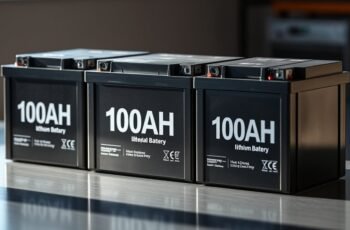
It’s a coincidence that many overlook the nuanced differences between deep cycle lithium and AGM batteries when selecting energy storage solutions. These distinctions—ranging from chemistry to lifespan—significantly impact long-term performance and cost-effectiveness. Understanding these technical variances is essential for making informed decisions, especially for off-grid or backup applications. As we explore their design, longevity, costs, and suitability, you’ll see why choosing the right battery type can shape your system’s efficiency and reliability.
Key Takeaways
- Lithium batteries have a longer cycle life (5,000+ cycles) compared to AGM (500-1,000 cycles).
- Lithium offers higher energy density, longer runtimes, and faster charging than AGM.
- AGM batteries are more affordable upfront but have shorter lifespan and efficiency.
- Lithium provides better safety, thermal stability, and environmental benefits over AGM.
- Lithium is better suited for off-grid, renewable, and high-demand applications; AGM is ideal for short-term backup.
How Do Deep Cycle Lithium and AGM Batteries Differ in Design and Chemistry?
While both deep cycle lithium and AGM batteries are designed for repeated discharges, their fundamental differences lie in their internal chemistry and construction. Deep cycle lithium batteries utilize lithium iron phosphate (LiFePO4) chemistry, which offers enhanced battery safety owing to thermal stability and reduced risk of thermal runaway. AGM batteries, on the other hand, employ absorbed glass mat technology with lead-acid chemistry, making them more susceptible to acid leaks but generally safer in terms of spill containment. Environmentally, lithium batteries produce fewer hazardous emissions during operation and have a lower overall environmental impact due to longer lifespan and higher efficiency. Conversely, AGM batteries contain toxic lead and acids, requiring careful disposal to mitigate environmental harm. These chemistry and design distinctions directly influence safety protocols and environmental considerations.
Which Battery Type Offers Better Longevity and Cycle Life?
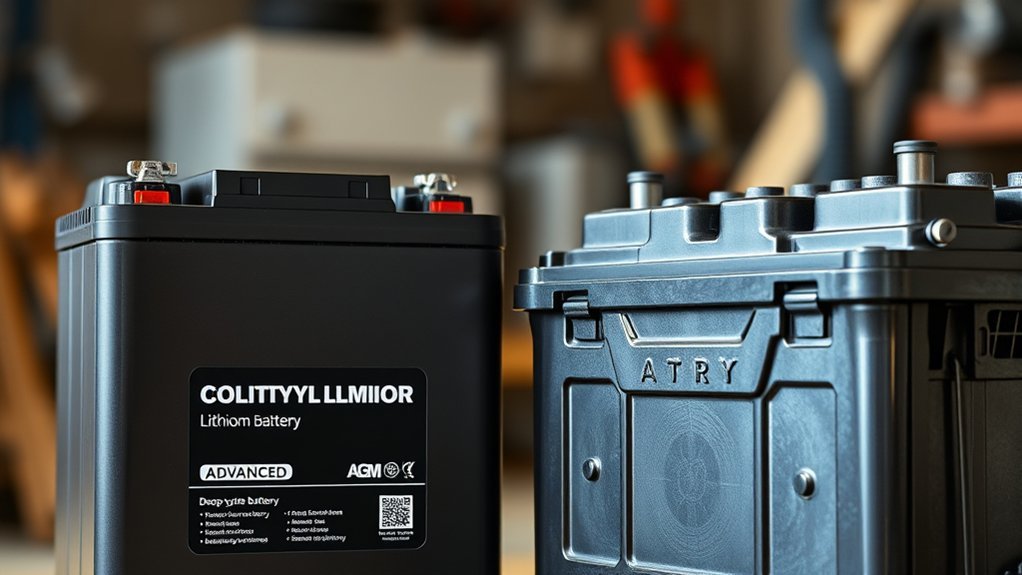
The longevity and cycle life of deep cycle batteries are critical factors influencing their overall performance and value. Lithium batteries generally outperform AGM in cycle life, often exceeding 5,000 cycles compared to 500-1,000 for AGM. This extended cycle life means fewer replacements and enhanced sustainability through better battery recycling practices, reducing environmental impact. The durability of lithium batteries allows for deeper discharge cycles without compromising lifespan, whereas AGM batteries degrade faster under similar conditions.
| Battery Type | Typical Cycle Life | Environmental Impact |
|---|---|---|
| Lithium | 5,000+ cycles | Lower, due to recyclability |
| AGM | 500-1,000 cycles | Higher, due to shorter lifespan |
How Do Cost and Budget Fit Into Choosing Between Lithium and AGM?
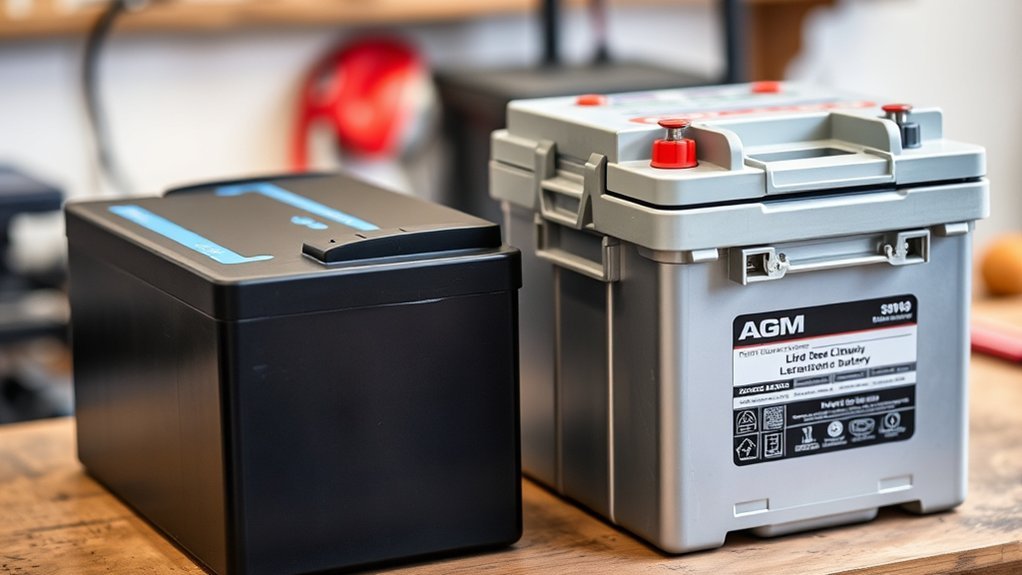
Cost considerations play an essential role in selecting between lithium and AGM batteries, as upfront investment markedly influences long-term value. Lithium batteries generally have higher initial costs but offer longer lifespan and greater efficiency, reducing replacement expenses. Conversely, AGM batteries have lower upfront costs but may incur higher total costs over time due to shorter cycle life.
Lithium batteries cost more upfront but offer greater longevity and efficiency compared to AGM options.
When evaluating options, consider:
- Total Cost of Ownership: Lithium’s durability can offset initial expense through fewer replacements.
- Environmental Impact: Lithium batteries are more recyclable, minimizing waste, whereas AGM batteries involve lead-acid components with greater disposal concerns.
- Battery Recycling: The sustainability of lithium batteries aligns with increasing environmental regulations, potentially reducing future liabilities.
Ultimately, budget constraints and environmental priorities shape the most suitable choice.
What Are the Performance and Efficiency Benefits of Lithium vs. AGM Batteries?
When comparing lithium and AGM batteries, performance and efficiency differences markedly impact their suitability for various applications. Lithium batteries offer higher energy density, enabling longer runtimes and more efficient power use, which improves overall system performance. They also charge faster and maintain consistent voltage output, optimizing efficiency during operation. AGM batteries, while reliable, generally exhibit lower charge acceptance and energy density, limiting their efficiency in high-demand scenarios. Battery safety is essential; lithium batteries incorporate advanced management systems to prevent overheating, whereas AGM batteries are inherently safer but more sensitive to deep discharges. Recycling considerations are also important; lithium batteries pose more complex disposal challenges, emphasizing the need for responsible recycling practices. These factors collectively influence the performance and efficiency benefits of each battery type in various applications.
Which Battery Is Better Suited for Different Off-Grid and Backup Power Applications?
Choosing the appropriate battery type for off-grid and backup power systems depends on specific operational demands and environmental conditions. Lithium and AGM batteries each excel in different applications:
- Renewable energy systems benefit from deep cycle lithium batteries due to higher efficiency, longer lifespan, and better charge retention, making them ideal for long-term off-grid setups.
- Portable devices and short-term backup systems often favor AGM batteries for their lower upfront cost and maintenance-free operation.
- For environments with frequent cycling and high discharge rates, lithium batteries provide superior performance, whereas AGM batteries may suit less demanding, intermittent use cases.
Ultimately, selecting between these options hinges on application-specific factors like cycle life, environmental conditions, and power needs, especially when integrating renewable energy sources or powering portable devices.
Frequently Asked Questions
How Do Temperature Ranges Affect Lithium and AGM Battery Performance?
Temperature fluctuations impact lithium and AGM batteries differently, affecting temperature stability and battery longevity. Lithium batteries perform better in extreme temperatures, maintaining stability, whereas AGM batteries degrade faster, emphasizing the importance of controlled environments for ideal performance and durability.
Are Maintenance Requirements Different for Lithium Versus AGM Batteries?
Coincidentally, lithium batteries require less maintenance, extending battery lifespan and reducing overall costs, while AGM batteries need regular checks and top-ups. This difference influences long-term cost considerations and maintenance planning for peak performance.
How Do Charging Times Compare Between Lithium and AGM Batteries?
Charging speed for lithium batteries is faster due to superior power efficiency, reducing overall charging time compared to AGM batteries. This efficiency allows us to optimize charging cycles, improving performance and minimizing downtime for various applications.
What Are the Environmental Impacts of Manufacturing Lithium and AGM Batteries?
Like opening Pandora’s box, manufacturing lithium and AGM batteries presents environmental concerns, with resource extraction and recycling challenges. Lithium’s extraction impacts water and ecosystems, while AGM production involves hazardous materials, urging us to weigh environmental costs carefully.
Can Lithium Batteries Be Safely Used in Extreme Weather Conditions?
We find lithium batteries generally safe in extreme weather, but their longevity can be affected. Cost considerations include potential performance degradation in cold or hot conditions, so proper insulation and management are essential for ideal operation.
Conclusion
In our analysis, choosing between deep cycle lithium and AGM batteries hinges on balancing initial investment with long-term performance. Lithium offers a sophisticated, durable solution that excels over time, whereas AGM remains a practical choice for short-term or budget-conscious needs. We encourage you to evaluate your specific application, anticipated cycle life, and energy demands carefully. Ultimately, selecting the right battery type aligns with your operational goals and sustainability priorities, guiding you toward an informed, strategic decision.