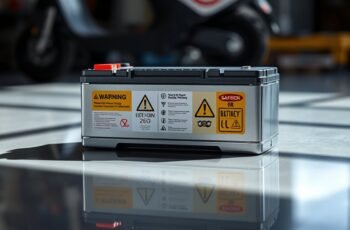
Many people overlook the fact that not all lithium batteries are created equal, and choosing uncertified options can pose serious safety risks. Proper handling and storage are essential to prevent hazards like overheating or fires. Understanding the safety standards and maintenance tips helps guarantee safe operation, but what steps should you take if something goes wrong? Staying informed could be the difference between a minor issue and a major emergency—so, let’s explore what you need to know.
Key Takeaways
- Use manufacturer-approved chargers and avoid unattended charging to prevent overheating and thermal runaway.
- Store batteries in a cool, dry, well-ventilated area away from flammable materials.
- Regularly inspect for damage, swelling, or corrosion, and handle with protective gloves.
- Follow proper disposal procedures at certified recycling centers to prevent environmental hazards.
- Keep batteries upright and away from extreme temperatures to prevent leaks and puncture damage.
Understanding Lithium Battery Safety Standards for Golf Carts
Understanding lithium battery safety standards for golf carts is essential to guarantee safe operation and prevent accidents. These standards are established through rigorous testing and adherence to manufacturer certifications, ensuring batteries meet strict safety criteria. Proper compliance minimizes risks such as overheating, leaks, or fires. Responsible battery recycling is also critical, as it prevents environmental hazards and promotes sustainable disposal practices. Reputable manufacturers obtain certifications from recognized authorities, confirming their batteries conform to safety, performance, and environmental standards. By prioritizing certified products and understanding safety standards, we can substantially reduce hazards associated with lithium batteries. This cautious approach safeguards users, maintains equipment integrity, and aligns with industry best practices, ultimately fostering a safer and more sustainable golf cart operation.
How to Properly Handle and Store Lithium Batteries

Proper handling and storage of lithium batteries are essential steps in maintaining safety and preventing accidents. Always store batteries in a cool, dry, well-ventilated area away from flammable materials, and keep them upright to avoid leaks. When handling, wear protective gloves and avoid puncturing or exposing batteries to extreme temperatures. Follow strict charging precautions: use only manufacturer-approved chargers, monitor charging sessions, and never leave batteries unattended while charging. Responsible battery disposal is critical — never discard lithium batteries in trash; instead, take them to approved recycling centers. Proper storage also involves disconnecting batteries when not in use for extended periods. Adhering to these practices minimizes risks and guarantees safe operation of your golf cart’s lithium batteries.
Recognizing and Preventing Common Lithium Battery Hazards
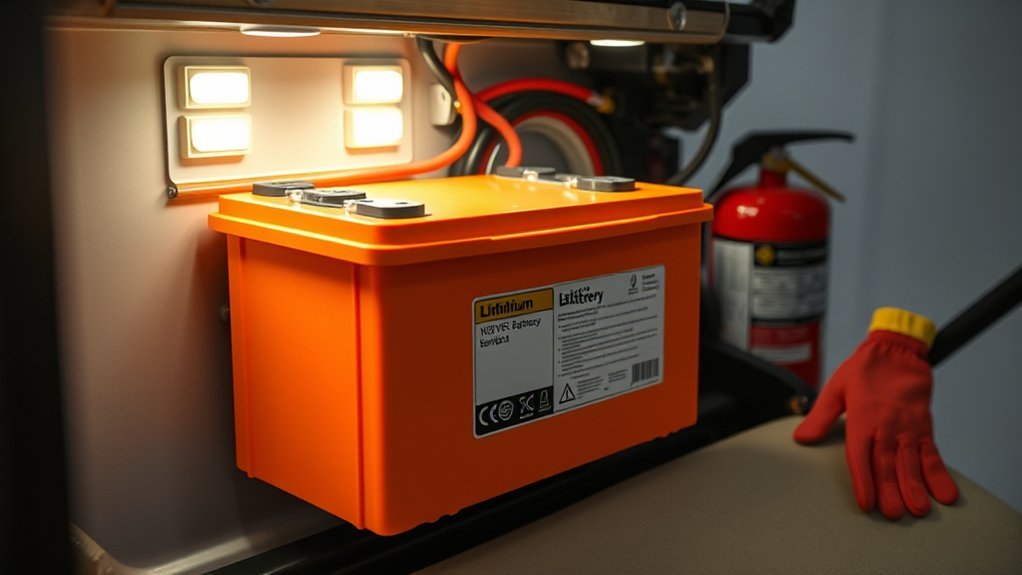
While lithium batteries offer numerous advantages, they also present specific hazards that require vigilant recognition and prevention. Identifying risks early can prevent serious incidents. Key hazards include thermal runaway, puncture damage, and improper battery disposal, which can lead to fires. To mitigate these dangers, always handle batteries with care, avoiding physical damage or exposure to extreme temperatures. Confirm proper battery disposal methods are followed, preventing environmental harm and potential hazards. Fire prevention measures include keeping batteries away from flammable materials and monitoring for signs of overheating or swelling. Regular inspections are essential for early hazard detection. Being cautious and proactive helps safeguard users and property, reducing the risk of accidents related to lithium battery hazards in golf carts.
Essential Maintenance Tips to Keep Your Lithium Battery Safe
Regular maintenance is essential to guarantee your lithium battery remains safe and performs at its best. We recommend adhering to charging best practices, such as avoiding overcharging and always using the manufacturer’s charger. Proper charging prevents thermal issues and prolongs battery life. Additionally, responsible battery recycling is indispensable; never dispose of lithium batteries with regular waste. Instead, take them to certified recycling centers to prevent environmental hazards and recover valuable materials. Regular inspections for signs of damage or corrosion are also critical, ensuring early detection of potential safety issues. By following these maintenance tips, you minimize safety risks and optimize the longevity of your lithium battery. Consistent, cautious care is the foundation of safe and reliable golf cart operation.
What to Do in Case of a Lithium Battery Emergency
In the event of a lithium battery emergency, immediate and decisive action is vital to guarantee safety and prevent property damage. If you suspect a fire or battery malfunction, prioritize fire safety by evacuating the area and alerting emergency services. Do not attempt to extinguish a lithium battery fire with water; instead, use a Class D fire extinguisher or smother with sand. Once safe, handle damaged batteries with caution, avoiding puncture or further damage. Proper battery disposal is essential—do not discard lithium batteries with regular waste. Contact authorized disposal facilities to ensure environmentally safe battery disposal. Always follow safety protocols, prioritize ventilation, and keep a fire extinguisher nearby to mitigate risks effectively.
Frequently Asked Questions
Are Lithium Batteries Environmentally Friendly Compared to Traditional Batteries?
Lithium batteries generally have a lower environmental impact than traditional batteries, but recycling processes are essential. We advise caution, as improper disposal can harm ecosystems; responsible recycling minimizes environmental damage and promotes sustainability.
How Long Can a Lithium Golf Cart Battery Typically Last?
Coincidentally, lithium golf cart batteries typically last 5 to 10 years with proper charging best practices and battery recycling. We advise cautious use, regular maintenance, and adherence to manufacturer guidelines to maximize lifespan and guarantee safety.
Can Lithium Batteries Be Safely Used in All Weather Conditions?
Lithium batteries can generally be used in all weather conditions, but proper thermal management is essential to prevent overheating or freezing. Additionally, responsible battery recycling guarantees safety and environmental protection, especially in extreme temperatures.
What Are the Signs of a Failing Lithium Golf Cart Battery?
We notice signs like battery overheating and voltage decline, which hint at potential issues. These subtle warnings demand our cautious attention, as ignoring them risks further damage or safety concerns with your lithium golf cart battery.
Are There Specific Safety Certifications for Lithium Golf Cart Batteries?
Yes, lithium golf cart batteries should meet safety certifications like UL or IEC standards, emphasizing proper storage safety and responsible battery recycling practices. We advise cautious handling, adherence to certification guidelines, and proper disposal to prevent hazards.
Conclusion
By following these safety tips, we guarantee our lithium batteries remain a reliable engine in our golf carts, not a ticking time bomb. Think of safety as the steering wheel—it’s what keeps us on course and prevents disaster. We must stay vigilant, handle with care, and respect the batteries’ power. Only then can we confidently enjoy our rides, knowing we’ve minimized risks and kept our journey smooth and secure.