You probably don’t realize that a single weak cell can drag the entire pack down and shorten life, even if others seem fine. We’ll outline a methodical approach to LiPo balancing that starts with accurate voltage sensing and ends with verified, stable results. We’ll cover safe current limits, proper tools, and field-balancing tips, then explain how to verify balance and maintain storage routines. Stay with us as we map practical steps and the decisions behind them.
Key Takeaways
- LiPo balancing equalizes cell voltages to ensure uniform state of charge and protect pack life, capacity, and charging consistency.
- Signs of imbalance include voltage spread, uneven discharge, and temperature differentials; halt operation and recheck connections if observed.
- Balanced cells improve performance via uniform voltage, better current sharing, cooler operation, longer flight times, and extended cycle life.
- Practical balancing steps: measure cell voltages, identify imbalances, adjust as needed, calibrate readings, and document all steps and results.
- Field balancing and post-balance care involve safe isolation, conservative currents, rechecks after rest, disciplined storage, and ongoing maintenance documentation.
What LiPo Balancing Is and Why It Matters
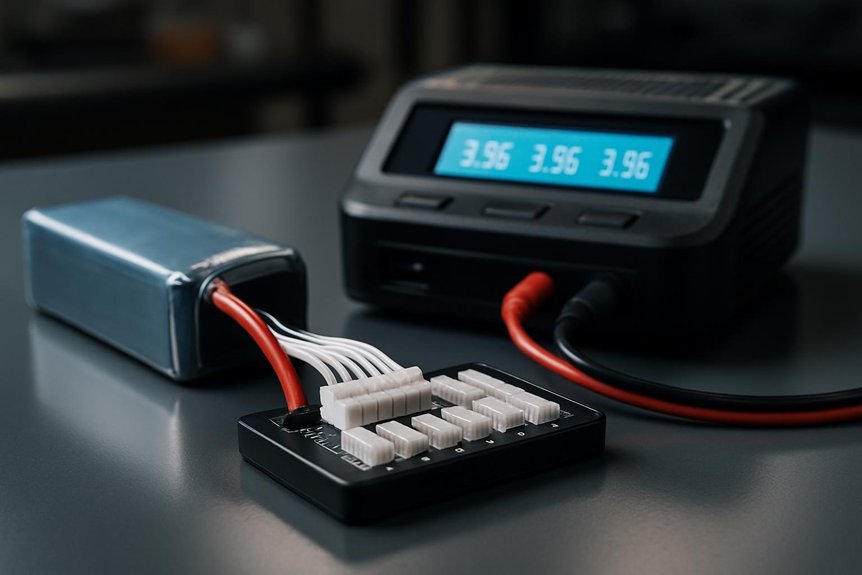
LiPo balancing is the process of equalizing the voltage across all cells in a pack so each cell reaches the same state of charge. We approach this topic with exactitude, outlining why balance matters and how it affects performance and safety. Balancing prevents skewed cell voltages that can reduce capacity, distort end-of-discharge voltage, and shorten pack life. In practice, we monitor individual cell voltages and implement corrective charging or discharging to align them, ensuring the pack’s nominal rating remains accurate. This keeps pack impedance predictable and charging cycles consistent. We acknowledge ongoing discussions, including unnecessary jargon and theoretical debate, but we favor clear, evidence-based routines over speculative claims. By maintaining balance, we sustain efficiency, reliability, and longevity in LiPo systems.
Signs Your LiPo Cells Are Unbalanced
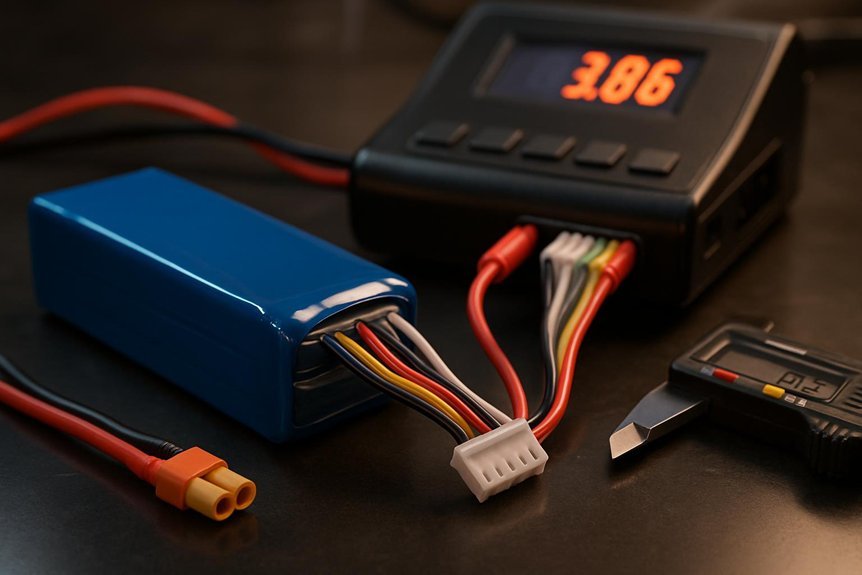
Are our cells telling a different story than the pack as a whole? Yes, and recognizing the mismatch helps prevent failures. We monitor for voltage dispersion, inconsistent discharge, and rising temperature differentials among cells. Uneven cell behavior indicates a potential imbalance that can escalate under load. We verify with precise measurements, compare individual cell voltages to the pack average, and note any drift during charging. If symptoms appear, we halt use and recheck connections, cell resistance, and balance lead integrity. Unrelated topic, the analogy of an off topic pairing reminds us that signals outside expected patterns can reveal faults. Addressing imbalance promptly reduces stress on the pack and preserves safety.
| Symptom | Action |
|---|---|
| Voltage spread | Rebalance, inspect wiring |
| Temperature delta | Stop, reassess cooling |
How Balanced Cells Extend Flight Time and Longevity
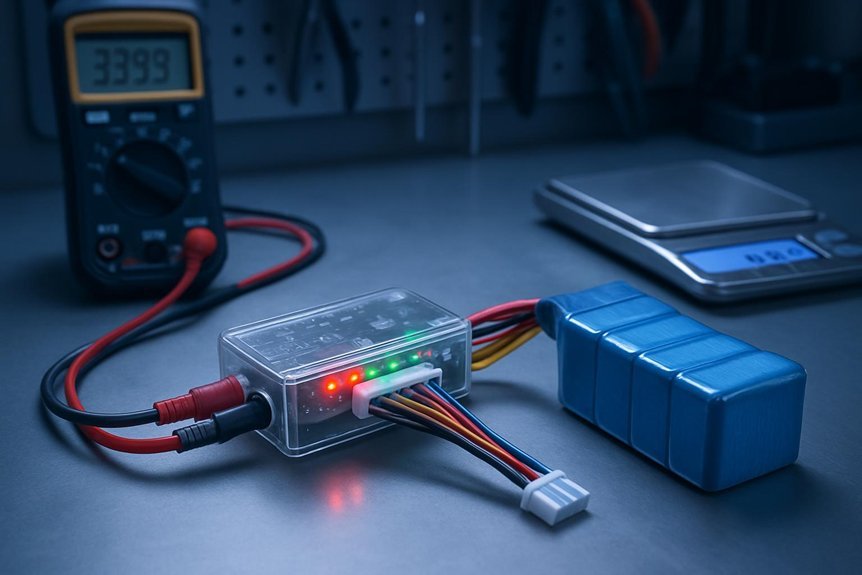
We know that balanced cells deliver uniform voltage, reducing peak stress across the pack. When cells stay aligned, overall discharge efficiency improves, yielding longer flight times per charge. By maintaining balance, we also curb premature aging, extending cycle life and reliability for future flights.
Balanced Cells, Longer Flights
Balanced cells directly influence both available capacity and charge-discharge efficiency, which translates to longer flight times and reduced wear over a season. We approach balancing as a control process that preserves usable energy while minimizing cycle stress. By aligning cell voltages, we ensure each cell contributes proportionally to total pack capacity, sustaining consistent discharge behavior under load. Balanced chemistry reduces internal resistance disparities, improving current sharing and thermal stability during high-demand maneuvers. Our procedure emphasizes accurate cell voltage measurement, synchronized balancing actions, and verification under representative load profiles. We monitor each cell during charging and discharging to confirm convergence within tight tolerances, avoiding premature aging. This discipline enhances aerial performance by maintaining uniform cell health, enabling predictable power delivery, and extending the time between formal pack reconditioning cycles.
Extends Longevity Through Balance
Extending longevity comes from keeping the balance within tight, repeatable tolerances, so cells share load uniformly across every flight. We target precise cell voltages and equalized capacity, reducing premature aging and thermal stress. By maintaining balanced packs, we lower internal resistance differentials that degrade cells unevenly and shorten cycle life. Our approach quantifies tolerances, monitors balancing efficiency, and verifies that each cell reaches target state-of-charge within tight margins. Addressing longevity myths helps readers avoid overconfidence in single-parameter fixes. Balancing ethics guide safe practices, ensuring full disclosure of limitations and honest risk assessment. In practice, we document cell variance, apply controlled balancing currents, and perform post-balance verification to confirm sustained uniformity.
| Column A | Column B |
|---|---|
| Balance target | Verification metric |
| Current draw | Temperature check |
How to Balance LiPo Cells at Home: A Practical Guide
Balancing LiPo cells at home is a precise, repeatable process that guarantees each cell reaches the same voltage and the pack remains safe. We approach balancing with a structured workflow: measure each cell’s voltage, identify imbalances, and apply targeted adjustments until all cells converge to the target. Calibration methods are essential for accuracy; we verify readings against known references and account for drift caused by temperature or aging. We document deviations, then perform controlled equalization steps to minimize risk. When imbalances persist, careful cell swapping within the pack can restore uniform capacity distribution, provided pack integrity is maintained. We maintain strict safety protocols, monitor cell temperatures, and recheck voltages after each step. This disciplined method yields reliable results without compromising pack health.
Choosing Balancing Chargers and Tools: What You Need
Selecting the right balancing charger and the accompanying tools starts with understanding your pack’s specifics and your balance goals. We’ll outline essential gear and how it fits into a precise workflow, focusing on reliability and accuracy. Choosing balancing involves selecting a charger with proper cell count support, accurate voltage sensing, and safe termination types. Tools overview includes temp monitoring, battery holders, insulated tweezers, and a multimeter for cross-checks. We emphasize build quality, calibration, and documentation of cycles.
| Item | Purpose |
|---|---|
| Charger with cell-count support | Safe, accurate balancing |
| Temperature probe | Monitor pack health |
| Insulated tweezers | Safe contact with cells |
| Multimeter | Verify voltages post-balance |
Common LiPo Balancing Mistakes: and How to Avoid Them
We’ll outline common LiPo balancing mistakes we see and how to spot them early. We’ll cover patterns like skipped balancing cycles and inconsistent cell readings, with quick correction steps you can apply immediately. Our goal is to give you clear, precise checks and fixes to keep packs balanced and safe.
Common Mistake Patterns
Common LiPo balancing mistakes tend to arise from assuming balance is automatic or unrelated to charging strategy. We’ve observed patterns where technicians overlook pack age, cell count, and cell impedance, treating balance as a one-time check rather than an ongoing discipline. In practice, improper charger selection, inconsistent C-rates, and neglecting full balance at initial conditioning consistently produce drift over cycles. We also see decisions driven by unrelated topic ideas that distract from core requirements, such as cosmetic indicators or generic safety guidelines, rather than data-driven monitoring. Our approach is to quantify each cell, verify voltage differentials, and standardize conditioning intervals. By documenting voltage trends, recording impedance shifts, and enforcing strict cutoff thresholds, we minimize recurrence of these patterns and maintain reliable, balanced packs.
Quick Correction Tips
Ever wonder why LiPo packs drift despite regular balancing? We aim to fix common drift causes with precise, actionable steps. We read the data, identify outliers, and implement targeted corrections. Our approach emphasizes removing variables that skew cell voltages, then validating results with a full balance pass. We address safety misconceptions and charger myths upfront to keep practices robust and repeatable.
- Verify balance lead integrity and contact resistance before every session
- Isolate charging parameters: current, voltage cutoff, and temperature limits
- Recheck cell voltages after initial adjustment, then perform a final balance
- Document each cycle to track drift sources and measure improvement
Field Balancing: Quick Techniques for On-The-Go
When you’re field-balancing a LiPo pack, you gain immediate insight into cell health and pack imbalance without returning to a bench. We approach on-the-go balancing with disciplined steps, clear measurements, and minimal risk. Begin by confirming connector polarity and using a calibrated balance charger or a reliable balance tap. Record individual cell voltages, then compare to pack specs; note any deviations beyond manufacturer tolerances. If a cell drifts, isolate it from the string momentarily using a safe, controlled discharge or charge interval, while monitoring temperature. Apply conservative current limits and avoid rapid swings. Document observations for field troubleshooting, then recheck voltages after a short rest. These on the go tips emphasize safety, repeatability, and rapid diagnostic feedback to maintain pack integrity.
Post-Balance Care and Safe Storage Recap
Post-balance care starts with a disciplined handoff from balancing to storage: we verify cell voltages, record final readings, and confirm that all cells sit within manufacturer tolerances before disconnecting the pack. Our procedure emphasizes traceable data, repeatable steps, and safety checks that prevent drift during storage. We emphasize balanced storage by keeping packs at recommended temperatures and using dedicated storage voltages per cell chemistry. Post balance care involves documenting state-of-charge, inspecting for physical signs of swelling, and ensuring connectors remain clean and secure for next use. Our approach minimizes degradation, preserves pack longevity, and supports consistent performance over cycles.
- Verify final cell voltages and log readings with timestamped records
- Maintain rated storage temperature and stable environment
- Inspect for swelling, corrosion, or loose terminals
- Schedule subsequent voltage checks and rebalancing if needed
Frequently Asked Questions
How Often Should You Balance Lipo Packs in a Season?
We balance how often during a season by following a seasonal cadence: monitor charger indicators, beware of unbalancing from charging behavior, and account for cell chemistry; we adjust as needed, ensuring safe, accurate balancing aligned with pack health.
Can Unbalanced Packs Recover Fully After Balancing?
Unbalanced packs rarely recover fully after balancing; effects linger, and performance may still vary. We’ll treat this like an energy storage problem, methodically verifying cell voltages, temps, and capacity to ensure/guarantee consistent, reliable operation for you, reader.
Do Voltage Ranges Differ for Drones vs. RC Cars?
Yes, voltage ranges differ: drones use drone specific voltages, while RC cars follow RC car charging habits. We, however, adhere to precise, methodical procedures, outlining each test step, ensuring safe cell balance and accurate voltage thresholds for both platforms.
Is Balancing Necessary for All Cell Chemistries Beyond Lipo?
Yes, balancing isn’t universal; for many chemistries it’s optional or unnecessary, but we assess each cell type. We, however, treat unrelated topic chemistry concerns with precision, methodical checks, and documented procedures before charging, discharging, or storage.
What Indicators Show a Balancing Charger Is Failing?
We’ll spot a failing balancing charger by reading consistently high or drifting cell voltages during unbalanced charging, symptoms indicating faulty balance taps, slow balancing, or alarms, and verify with precise differential checks and safe, repeatable tests.
Conclusion
We’ve walked you through balancing LiPo packs, measuring each cell, watching temperature, and sticking to conservative charge limits. It’s all very simple on paper, right? In practice, it’s exacting, tedious, and easily misread—precisely why most of us skip steps and call it “close enough.” So we’ll keep our meters close, our assumptions cautious, and our logs thorough. After all, a balanced pack isn’t luck; it’s discipline masked as routine. Irony, served as reliability.