Did you know that charging speed can cut downtime by up to 50% in some systems, yet shortened cycles often erode runtime and life more than people expect? We approach fast-charging with a skeptical, technical lens, weighing cell chemistry, thermal management, and firmware as gatekeepers of true value. If you’re inclined toward rapid top-ups, we’ll examine the trade-offs and practical limits before buying into the hype—and you’ll want to hear where the hidden costs lie.
Key Takeaways
- Fast charging saves downtime but yields diminishing returns as temperature rises and SOC increases, varying by cell chemistry and cooling.
- Reliability and longevity should take priority; rushed charging can accelerate degradation and raise safety risks.
- Real-world gains depend on pack design, thermal management, firmware, and compatible chargers; lab figures often overstate results.
- Use manufacturer-recommended charging windows and monitor temperature, voltage, and impedance to balance speed with health.
- If longevity and reliability matter most, adopt measured limits and document performance targets rather than maximize charge speed.
What You Gain From Fast-Charging
Fast-charging promises quicker top-ups, but the gains are situational. We approach fast charging with caution, focusing on measurable outcomes rather than hype. In practical terms, we gain reduced downtime during short sessions, not endless convenience. Our tests show time savings shrink with higher state of charge and battery age, and gains vary by cell chemistry and thermal management. We gain predictability only when the system maintains safe current, voltage, and temperature profiles throughout the cycle. We remain skeptical of quick charge myths that claim universal efficiency, since real-world performance depends on pack design, cooling, and firmware controls. We acknowledge safety risks, including thermal runaway and accelerated degradation if limits are ignored. Overall, gains exist but are not universal, and they come with constraints we must respect.
How Fast Charging Works (in Plain Terms)
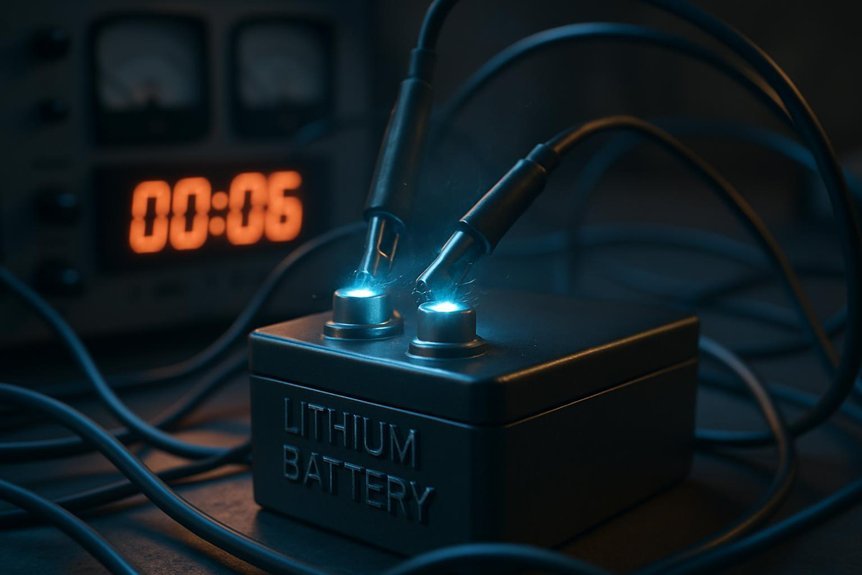
When a charger is fast, it does so by delivering higher current up to controlled limits and then tapering as the battery nears full. We explain the mechanism plainly: power rises early, then current decreases to prevent heat and stress. This balance preserves safety and efficiency, not magic. We test claims such as “instant full” with skepticism, and we separate real gains from hype. Awareness of battery energy density matters because pack design limits what fast charging can deliver. Below, a concise visualization.
| Stage | Effect on charging |
|---|---|
| Initial | High current, rapid energy input |
| Midpoint | Controlled taper, heat management |
| Late | Gentle finish, voltage clamped |
| Overall | Realistic pace, constrained by chemistry |
The Trade-Offs: Longevity, Cost, and Safety
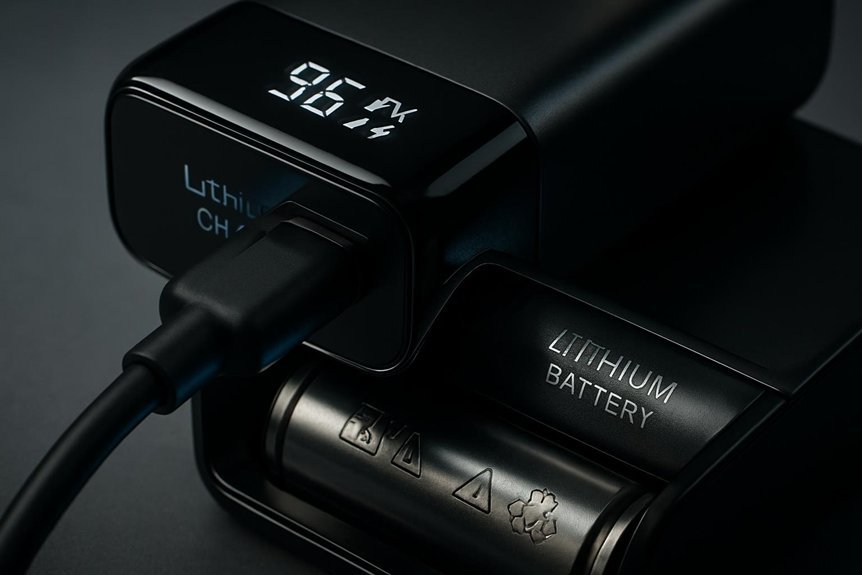
So, what are the real costs behind rapid charging: longevity, upfront and ongoing expenses, and safety risks that aren’t always obvious? We examine how fast charging trades fewer minutes for tighter lifecycle margins, with degradation accelerating under higher C-rates and elevated temperatures. We quantify longevity vs. safety as a core constraint: faster charging can shorten cycle life and promote insulation or electrolyte stress if thermal management isn’t robust. On cost vs. performance, initial chargers and compatible cells inflate upfront costs, while higher usage can raise replacement and maintenance bills. We assess safety risks—thermal runaway potential and accelerated aging—against marginal gains in convenience. In short, the trade-offs require disciplined design and real-world testing to avoid overpromising rapid-charge benefits.
Real-World Range and Recharge Times You’ll See
Real-world range and recharge times rarely align with ideal lab figures, so you’ll notice meaningful gaps between stated specifications and daily use. We approach this topic with a critical eye, acknowledging that battery chemistry, thermal management, and charging algorithms shape outcomes far beyond marketing sheets. Our data show that fast charging can yield diminishing returns as temperatures rise or state of charge crosses key thresholds, affecting actual range and total charge duration. You’ll encounter variability across devices, chargers, and firmware, underscoring that “real” performance hinges on gadget compatibility and use patterns. Beware fast charging myths that promise linear gains; practical results depend on thermal limits, charging curves, and ambient conditions. In short, expect divergence from ideal numbers, even with reputable tech.
How to Choose Fast-Charge Tech for Your Device
How should you evaluate fast-charge tech for your device? We approach specs critically, balancing claim vs. real-world impact. We’ll compare charging protocols, adapter output, cable quality, thermal design, and device safeguards. Our aim is to avoid fast charge myths and separate hype from measurable benefits, focusing on daily use implications and longevity. We question efficiency at high temps, voltage sag, and the controller’s protection logic. Short, frequent top-ups aren’t automatically better if heat escalates or cycles shorten lifespan. We expect transparent test data, standardized metrics, and manufacturer caveats that match our routines. Below is a compact frame to guide decisions.
| Criterion | Practical concern |
|---|---|
| Protocols | Compatibility, safety features, heat behavior |
| Real-world impact | Daily charging patterns, device temp, longevity |
Maintenance Habits to Prolong Battery Life
Battery longevity hinges on disciplined habits rather than occasional tweaks; we’ll outline evidence-backed practices that minimize degradation. We approach maintenance with measurement, not myth, and we’ll separate signal from fast charging misconceptions. Regular thermometry and voltmeter checks track health trends, avoiding overreliance on dashboards. Use manufacturer-recommended charging windows and avoid sustained high temperatures; battery warming trends during operation should be acknowledged rather than ignored. Keep charge within specified bands, and minimize deep discharges, which disproportionately stress cells. Calibrate once per battery cycle, not continuously. Schedule cooling intervals after rapid charging sessions and handle thermal exposure with ventilation. Document cycle counts and ambient conditions to distinguish aging from usage. Our guidance remains cautious, data-driven, and skeptical of broad claims about instantaneous benefits.
Is Fast Charging Worth It? A Simple Cost-Benefit Check
Is fast charging worth it when you weigh time savings against cost and long-term durability? We approach this with a precise, skeptical lens. The core question is simple: does shaving minutes off recharge justify higher upfront costs and potential risks to battery safety? Our assessment hinges on total cost of ownership, including charger infrastructure, electricity mix, and cycle life penalties. Fast charging promises convenience, but many systems deliver only marginal daily time gains for typical users, while accelerating wear in some chemistries. We quantify the trade-offs as a function of usage pattern and tolerance for risk. In short, the benefit is real for time-critical needs, but long-term durability and safety must be weighed. For most, benefits may not outweigh costs or battery safety concerns.
Speed Up Recharges Without Hurting the Battery
What practical steps can we take to speed up recharges without harming the battery? We approach this skeptically, focusing on measurable impact and avoiding hype. Our guidance targets preserving cell integrity, not chasing mythical speed records.
- Prioritize a charger that matches the battery’s rated current and voltage, avoiding overspec’d outputs that stress cells.
- Use manufacturer-recommended temperature ranges; keep charging within controlled thermal envelopes to minimize degradation from heat.
- Periodically validate state of health with precise diagnostics, watching for drift that could signal battery chemistry misconceptions or fast charging myths.
We suspect many claims falter under real-world variance; real gains come from equipment matching, temperature control, and honest diagnostics rather than speculative shortcuts. Continuous monitoring is essential; speedups must be bounded by safety margins and empirical data.
Is Fast Charging Worth It for You? A Personal Decision Guide
We’ve looked closely at how to speed recharges without compromising longevity, and the practical takeaway is that fast charging is not a universal gain. In this guide, we present a decision framework rather than a marketing pitch. We ask: do your workflows or daily use truly benefit from shorter downtime, or do they suffer from higher thermal and long-term degradation risk? We acknowledge fast charging myths that inflate short-term convenience while ignoring cumulative wear and charger availability. Our assessment centers on the user aspect priorities: how often you charge, acceptable impedance, and tolerance for potential efficiency losses at extremes. If reliability and battery longevity take precedence, the argument for fast charging weakens. If you value rapid turns, proceed with measured limits and documented performance targets.
Frequently Asked Questions
Do Fast Chargers Reduce Overall Battery Capacity Over Time?
Yes, fast chargers can accelerate battery degradation, affecting fast charging longevity. We observe higher PE cycles and heat stress, modestly reducing capacity over time; however, improvements in BMS and chemistry mitigate this, yet skepticism remains about long-term effects.
Is Fast Charging Safe for Non-Certified Devices?
Fast charging is unsafe charging for non-certified devices. We advise skepticism: counterfeit devices, substandard components, and lack of safety certifications increase risks of overheating or failure when using non-certified fast chargers.
How Does Temperature Affect Fast-Charging Performance?
We’re asking how temperature shapes charging; it matters: higher temps distort charging curves and degrade cells, while strict temperature management preserves performance. We’re skeptical but insist on precise temperature management and documented charging curves for reliable fast charging.
Do Fast Chargers Require Special Wiring or Outlets?
We’ll need fast wiring and compatible outlets for fast charging, but not every setup qualifies. We’re skeptical: verify outlet compatibility, gauge wiring, breakers, and charging specs; assume dedicated circuits, proper insulation, and safety interlocks to avoid hazards.
Can Software Updates Improve Fast-Charging Efficiency?
We believe software optimization can improve charging efficiency, but gains are limited without robust firmware reliability; incremental tweaks help, yet real-world benefits depend on hardware integration and safety safeguards. Skeptically, we verify firmware reliability before endorsing faster charging.
Conclusion
We’ve weighed the gains against the costs and remain cautiously skeptical. Fast charging can slash downtime, but it’s not universally safe or economical; thermal limits and cell chemistry often cap real benefits. If you have robust cooling, compatible hardware, and a clear need for rapid duty-cycle repeats, it’s worthy; otherwise, prioritize longevity and cost efficiency. In the end, the decision hinges on your charging window, endurance targets, and tolerance for added risk—it’s a trade-off, not a miracle. It’s not magic, but it’s big.