When comparing marine lithium batteries to AGM options, we recognize that each technology offers distinct advantages and challenges rooted in their design and performance characteristics. Lithium batteries provide higher energy density, faster charging, and longer cycle life, but come with higher upfront costs and specific safety considerations. AGM batteries, on the other hand, are more affordable and easier to maintain but have limitations in longevity and efficiency. Understanding these differences is vital for selecting the best power solution for your vessel’s needs.
Key Takeaways
- Lithium marine batteries offer higher cycle life and faster charging compared to AGM batteries.
- AGM batteries are more cost-effective initially but have shorter lifespan and lower efficiency.
- Lithium batteries require specialized chargers and BMS for safety; AGM batteries are compatible with standard lead-acid chargers.
- Lithium batteries provide better temperature resilience and consistent power output for marine applications.
- AGM batteries are easier to recycle but may generate more waste over time; lithium batteries have longer environmental benefits.
How Do Marine Lithium Batteries and AGM Batteries Differ in Composition and Design?
While both marine lithium batteries and AGM (Absorbed Glass Mat) batteries serve as reliable power sources for marine applications, their internal compositions and structural designs are fundamentally different. Marine lithium batteries utilize lithium iron phosphate (LiFePO4) chemistry, offering high energy density, fast charge/discharge rates, and stable thermal behavior. Their design features include multiple cells connected in series or parallel within a compact, lightweight casing, often equipped with advanced BMS (Battery Management Systems) for safety and performance. AGM batteries, on the other hand, rely on a lead-acid chemistry with absorbed fiberglass mats that trap the electrolyte, preventing spillage. Their design emphasizes robustness and maintenance-free operation, with thicker plates and sealed enclosures that enhance durability but limit the rate of energy transfer compared to lithium alternatives.
Which Battery Type Offers Better Performance and Longevity for Marine Use?
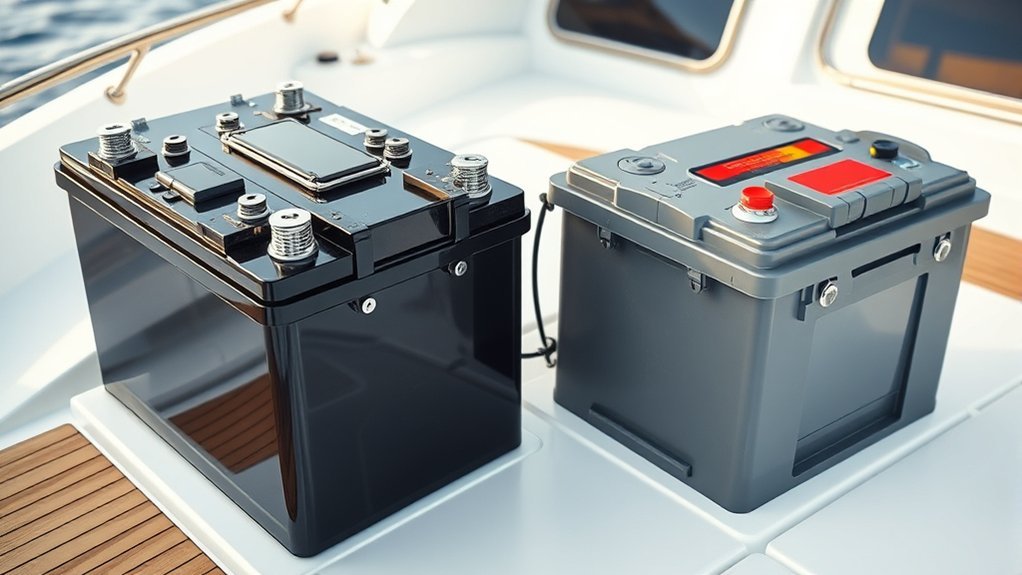
When evaluating performance and longevity for marine applications, lithium batteries generally outperform AGM batteries due to their advanced chemistry and superior cycle stability. Lithium-ion cells maintain higher charge retention over numerous cycles, often exceeding 2000 cycles, compared to AGM’s typical 500-700 cycles. This translates to longer service life and more consistent power output. Additionally, lithium batteries feature faster charging times and better temperature resilience, essential for marine environments. From an environmental standpoint, lithium batteries are more sustainable with improved battery recycling processes, reducing harmful waste. Although they have a higher upfront cost, their extended lifespan diminishes replacement frequency, making them more environmentally and economically efficient in the long run. AGM batteries, while simpler to recycle, generally have a higher environmental impact due to shorter cycle life and lower efficiency.
What Are the Cost Considerations and Maintenance Requirements of Each Battery?
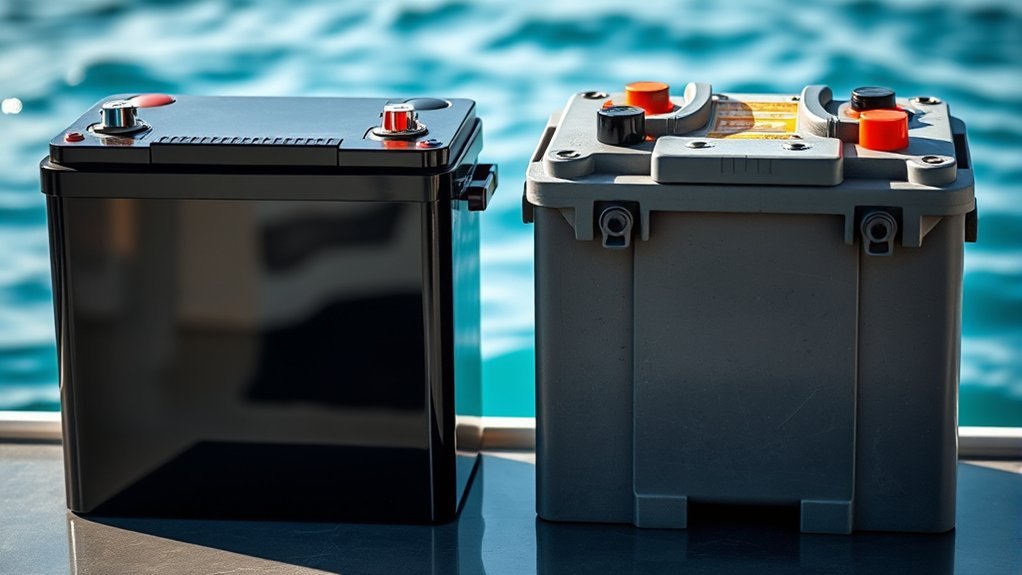
Lithium batteries typically have a higher initial purchase cost compared to AGM batteries, primarily due to their advanced chemistry and more complex manufacturing processes. In regards to cost comparison, lithium batteries demand a larger upfront investment but benefit from longer lifespan and higher cycle counts, which can offset initial expenses over time. Maintenance routines for lithium batteries are minimal; they require no regular topping up of electrolyte and generally need less frequent monitoring. Conversely, AGM batteries require periodic inspection of terminals for corrosion, occasional equalization charging, and careful management to prevent sulfation. While AGM batteries are more affordable initially, their shorter lifespan and more involved maintenance routines may lead to higher long-term costs. Understanding these factors helps in making an informed decision suited to your marine application.
How Do Safety and Charging Compatibility Vary Between Lithium and AGM Marine Batteries?
Safety and charging compatibility are significant considerations when comparing lithium and AGM marine batteries, as each type has distinct electrical and chemical characteristics that influence their integration into marine systems. Lithium batteries typically require specialized chargers with Battery Management Systems (BMS) to prevent overcharging, thermal runaway, and guarantee safe operation. AGM batteries are more tolerant of standard lead-acid chargers but can be damaged by overcharging, which impacts safety and lifespan. Both types pose environmental impact concerns; lithium batteries demand careful recycling processes to minimize ecological harm, whereas AGM batteries contain lead and other hazardous materials. Proper handling and disposal are essential for both, emphasizing the importance of responsible battery recycling. Understanding these differences ensures safe installation and operation tailored to your boat’s power needs.
Which Marine Battery Is Best Suited for Your Boat’s Specific Needs and Budget?
Choosing the right marine battery requires a careful assessment of your boat’s specific electrical demands and your budget constraints. Lithium batteries offer higher energy density, longer cycle life, and faster charging, making them ideal for high-power applications, but they come with a higher upfront cost. AGM batteries are more affordable initially and require less maintenance, suitable for moderate power needs. When considering environmental impact, lithium batteries have advantages due to their longer lifespan, reducing waste and supporting battery recycling efforts. Conversely, AGM batteries are more straightforward to recycle but may generate more waste over time. Ultimately, your choice depends on balancing your power requirements, budget, and commitment to sustainable practices like battery recycling, ensuring you select the most suitable option for your boat’s specific needs.
Frequently Asked Questions
Are Marine Lithium Batteries Environmentally Friendly?
We believe marine lithium batteries are more environmentally friendly overall, thanks to lower emissions and longer lifespan, but they pose recycling challenges due to their chemical composition, impacting the environmental footprint and necessitating responsible disposal practices.
Can Lithium Batteries Be Used With Existing Charging Systems?
We confirm lithium batteries are compatible with existing charging systems, but we must check their specific charging requirements and guarantee battery compatibility to prevent overcharging or damage, which could compromise performance and safety on marine vessels.
How Do Batteries Perform in Extreme Weather Conditions?
In challenging weather, battery safety and weather resilience are paramount; lithium batteries excel with low self-discharge and stable performance, while AGM batteries, though robust, may face capacity decline. Both require proper insulation and management for ideal operation.
What Is the Typical Lifespan Comparison Between the Two?
We find lithium batteries typically last 8-15 years, offering lighter weight and faster charging speeds, while AGM batteries usually last 4-8 years, are heavier, and have slower recharge rates, impacting long-term performance and maintenance needs.
Are There Any Regulatory or Insurance Implications?
Think of batteries as passports; lithium batteries often require special stamps—legal compliance guarantees safety standards, while insurance coverage might demand specific policies. Managing these rules helps prevent surprises, safeguarding your vessel and ensuring smooth sailing through regulations.
Conclusion
In conclusion, choosing between marine lithium and AGM batteries depends on your boat’s power requirements and budget. Lithium batteries, with a lifespan of up to 10 years and a 2000-3000 cycle life, surpass AGM options in durability and performance. While more expensive initially, their advanced BMS and fast charging features make them an attractive option for high-performance uses. Ultimately, understanding your particular needs guarantees you select the most efficient, safe, and eco-friendly marine power solution.