Did you know that using a regular charger on a LiFePO4 battery can lead to significant safety risks or reduced lifespan? Many overlook the importance of matching the charger’s specifications to the battery chemistry, which can result in overcharging or thermal runaway. As we examine the fundamental differences between LiFePO4 chargers and standard devices, it becomes clear why choosing the right equipment is critical for ensuring best performance and safety—something every user should understand thoroughly.
Key Takeaways
- LiFePO4 chargers are specifically designed to regulate voltage and current tailored to LiFePO4 chemistry, unlike regular chargers.
- Regular chargers lack specialized safety features, increasing risks of overcharging, thermal runaway, and battery damage.
- Dedicated LiFePO4 chargers improve battery lifespan, safety, and efficiency through adaptive algorithms and protective circuitry.
- Using the correct charger minimizes safety hazards, capacity loss, and supports proper recycling and environmental practices.
- Genuine LiFePO4 chargers are identifiable by manufacturer labels, specifications, and safety certifications like CE or UL.
How Do Lifepo4 Battery Chargers Differ From Regular Chargers?
Although both Lifepo4 battery chargers and regular chargers serve the fundamental purpose of replenishing battery energy, they differ considerably in their design and operational characteristics. Lifepo4 chargers are specifically engineered to optimize charging safety and extend battery lifespan through precise voltage and current regulation, reducing risks of overcharging and thermal runaway. They incorporate advanced algorithms that adapt to battery conditions, promoting efficient battery recycling by minimizing degradation. In contrast, regular chargers often lack such tailored control, posing safety concerns and potentially shortening battery life. The specialized circuitry in Lifepo4 chargers ensures safe charging processes, vital for environmental sustainability and battery longevity. These distinctions highlight the significance of using appropriate chargers to maintain safety standards and support responsible battery recycling practices.
Why Is Using the Correct Charger Essential for Your LiFePO4 Batteries?
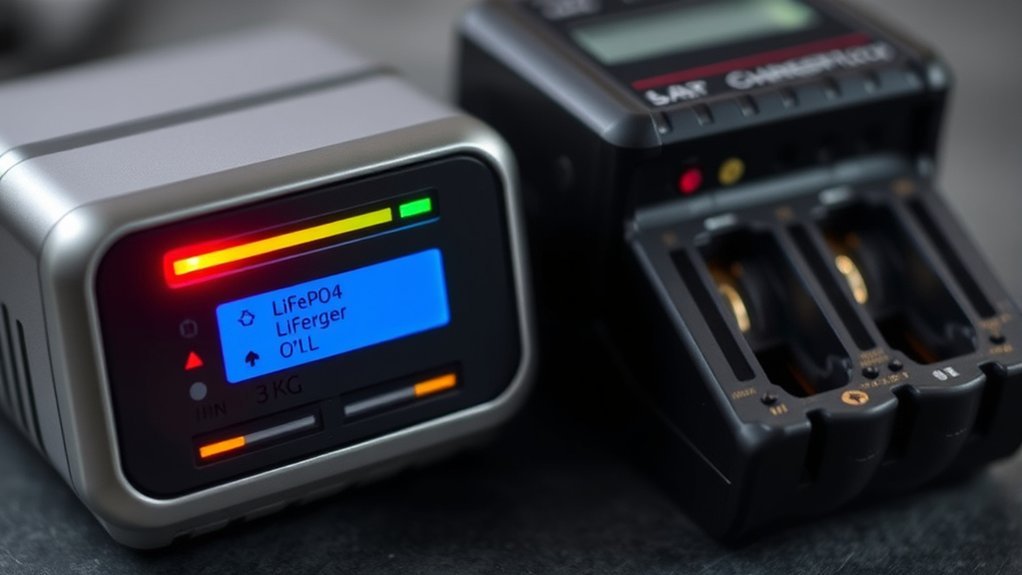
Using the correct charger for your LiFePO4 batteries is vital because it guarantees safe, efficient, and long-lasting performance. An improper charger can compromise charging safety and lead to thermal runaway or capacity loss. Additionally, a suitable charger supports sustainable practices like battery recycling by preventing premature degradation.
Consider these points:
- Optimized Charging Cycles: Correct chargers ensure proper voltage and current, preserving battery health.
- Safety Assurance: They minimize risks of overheating, overcharging, and potential hazards.
- Longevity & Sustainability: Proper charging extends lifespan and reduces waste, aiding in environmentally responsible battery recycling.
Choosing the right charger is essential to protect your investment and promote safety and sustainability.
Key Features to Look for in a LiFePO4 Battery Charger
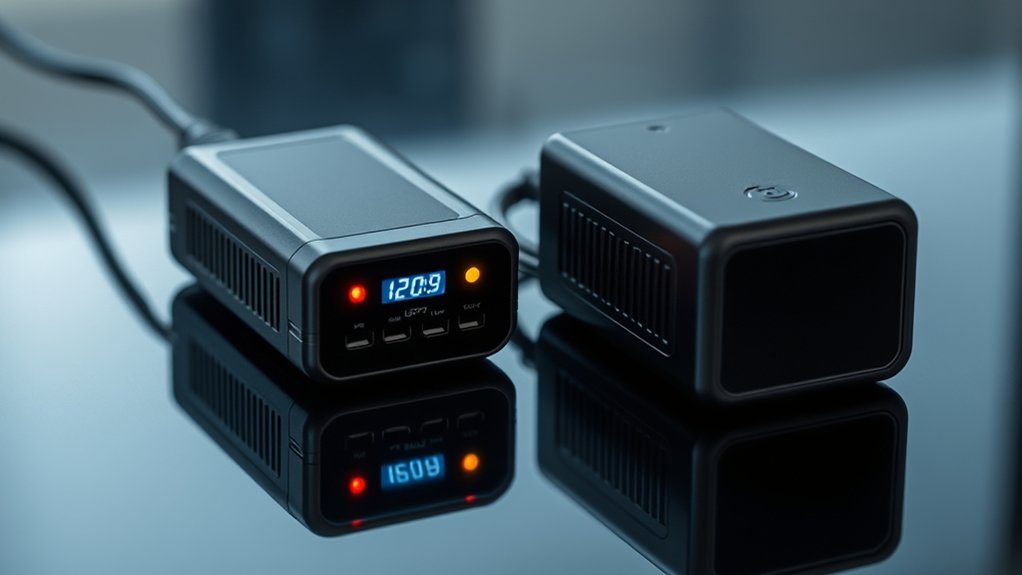
When selecting a LiFePO4 battery charger, identifying key features is essential to guarantee peak performance, safety, and longevity. First, confirm robust battery safety mechanisms are integrated, such as over-voltage, over-current, and temperature protections, to prevent damage and hazards. Compatibility is equally critical; the charger must be specifically designed for LiFePO4 chemistry to deliver appropriate voltage and current profiles, ensuring ideal charging without degrading the battery. Look for chargers with intelligent control systems that adapt to the battery’s state of charge, enhancing efficiency and lifespan. Furthermore, a clear display of charging status and error diagnostics aids in monitoring and maintenance. Prioritizing these features ensures safe, reliable, and efficient operation tailored to LiFePO4 batteries’ unique requirements.
How Do Charging Profiles and Voltages Vary Between LiFePO4 and Regular Chargers?
Charging profiles and voltages differ markedly between LiFePO4-specific chargers and regular chargers designed for other battery chemistries. This distinction stems from the unique battery chemistry of LiFePO4, which requires tailored charging algorithms.
Specifically:
- LiFePO4 chargers employ a CC/CV (constant current/constant voltage) profile optimized for stable voltage levels around 3.65V per cell, preventing overcharging.
- Regular chargers often use generic profiles that may exceed the safe voltage for LiFePO4, risking damage or reduced lifespan.
- Charging algorithms for LiFePO4 prioritize precise voltage regulation and controlled current tapering, ensuring safety and longevity, unlike the broader voltage ranges used for other chemistries.
Understanding these differences highlights why compatible chargers are critical for ideal battery performance.
What Are the Risks of Using a Regular Charger on LiFePO4 Batteries?
Using a regular charger on LiFePO4 batteries risks overcharging them, which can cause internal damage and safety hazards. This improper charging can also accelerate capacity loss, greatly reducing the battery’s overall lifespan. Understanding these risks emphasizes the importance of compatible charging profiles for ideal performance and safety.
Overcharging and Damage Risks
Regular chargers are typically designed for lead-acid or other battery chemistries, which makes their application on LiFePO4 batteries inherently risky. Overcharging can compromise charging safety and damage the battery’s internal structure. Specifically, using a regular charger risks:
- Exceeding recommended voltage levels, leading to thermal runaway or cell degradation.
- Inaccurate current regulation, causing uneven charge distribution and potential capacity loss.
- Overstressing the battery’s voltage limits, which can permanently reduce overall battery capacity and reliability.
Without proper voltage and current controls, regular chargers may overlook the precise charging profile needed for LiFePO4 chemistry. This increases the risk of damage, ultimately impairing the battery’s performance and operational lifespan.
Reduced Battery Lifespan
Applying a charger not specifically designed for LiFePO4 batteries can considerably shorten their lifespan. Using a regular charger risks improper charging parameters, which can degrade the battery’s capacity over time. This happens mainly due to mismatched charging speed and voltage regulation, both critical for maintaining longevity. The table below illustrates how incompatible chargers impact battery health:
| Aspect | Impact of Regular Charger |
|---|---|
| Battery Capacity | Reduced over multiple cycles |
| Charging Speed | Excessively fast or slow, stressing cells |
| Voltage Regulation | Inadequate regulation causing stress |
| Cycle Life | Decreases with improper charging |
| Overall Longevity | Can be notably reduced |
Choosing a dedicated LiFePO4 charger ensures *appropriate* charging, preserving battery capacity and extending lifespan.
Comparing Cost and Efficiency: LiFePO4 Chargers vs Regular Chargers
While LiFePO4 chargers often have higher upfront costs, they tend to deliver greater long-term efficiency compared to standard chargers. This efficiency stems from optimized charging protocols that reduce energy waste and prolong battery lifespan. For example:
LiFePO4 chargers offer better long-term efficiency despite higher initial costs.
- Reduced energy loss during charging improves overall system efficiency.
- Enhanced charging safety minimizes risks associated with overcharging or overheating.
- Facilitated battery recycling processes are easier with stable charging cycles, supporting environmental sustainability.
Although initial investments are higher, the durability and lower energy consumption of LiFePO4 chargers offset these costs over time. Additionally, their precise control supports safer operation and minimizes degradation, making them a smarter choice for long-term energy management and environmentally responsible battery recycling.
How to Identify a Genuine LiFePO4 Battery Charger
To guarantee you’re using a genuine LiFePO4 battery charger, it’s essential to scrutinize key identifiers that distinguish authentic products from counterfeits. Authentic chargers typically include manufacturer labels with clear specifications, such as voltage, current ratings, and charger compatibility details, ensuring proper operation and safety. Check for certifications like CE or UL markings, which validate compliance with safety standards. Be wary of counterfeit chargers, which often lack these identifiers and may pose risks to battery recycling efforts due to poor quality or improper charging profiles. Genuine chargers use proprietary algorithms tailored for LiFePO4 chemistry, preventing damage and ensuring longevity. By verifying these technical details, you can confidently select genuine chargers that support sustainable battery recycling and maximum performance.
Can a Regular Charger Damage Your Lithium Iron Phosphate Batteries?
Using a regular charger on Lithium Iron Phosphate (LiFePO4) batteries can indeed cause damage if the charger’s specifications do not match the battery’s charging requirements. Mismatched voltage or current can compromise battery safety and reduce lifespan.
Consider these risks:
- Overcharging: Excessive voltage can lead to thermal runaway, risking safety hazards.
- Incorrect Charging Speed: Fast charging with incompatible chargers may stress the battery, decreasing its cycle life.
- Voltage Mismatch: Inadequate voltage regulation can cause under or overcharging, damaging internal components.
These issues highlight the importance of using chargers designed specifically for LiFePO4 batteries, ensuring ideal safety and efficient charging. Proper matching safeguards battery integrity and maintains consistent charging speed.
When Should You Upgrade to a Specialized LiFePO4 Charger?
Determining the right moment to upgrade to a specialized LiFePO4 charger hinges on evaluating your battery’s usage patterns and performance. If you notice inconsistent charging, reduced capacity, or frequent issues with battery recycling, it’s a sign that a dedicated charger may be necessary. Specialized LiFePO4 chargers optimize charging safety by precisely managing voltage and current, preventing overcharging and thermal risks. Additionally, as your battery system scales or endures high-cycle applications, the benefits of tailored charging protocols become critical for maintaining long-term health. Upgrading assures more accurate state-of-charge readings, enhances overall safety, and prolongs lifespan—especially crucial when considering the environmental impact of battery recycling. Ultimately, a dedicated charger aligns with best practices for maximizing performance and safety in LiFePO4 systems.
Tips for Maintaining Battery Health With the Right Charging Equipment
Maintaining ideal battery health hinges on selecting the appropriate charging equipment, as improper charging can accelerate capacity loss and shorten lifespan. Using specialized chargers like Lifepo4 chargers ensures optimal voltage regulation, reducing risks associated with overcharging. To maximize battery longevity, consider these tips:
Proper charger selection and voltage regulation are key to preserving battery health and longevity.
- Always choose chargers with built-in protections to enhance charging safety and prevent thermal runaway.
- Regularly monitor charge cycles; deep discharges can harm Lifepo4 cells, so avoid complete discharges when possible.
- Prioritize proper Battery Recycling practices by recycling old or damaged batteries responsibly, preventing environmental harm and ensuring safety.
Adhering to these practices preserves battery performance, promotes safe charging, and supports sustainable Battery Recycling efforts.
Frequently Asked Questions
Can Lifepo4 Batteries Be Charged With Standard Lead-Acid Chargers?
We advise against using standard lead-acid chargers for LiFePO4 batteries, as mismatched charging profiles can reduce battery lifespan and charging efficiency, risking damage or safety hazards. Proper chargers maximize lifespan and guarantee safe, efficient charging.
How Does Charging Time Differ Between Lifepo4 and Regular Chargers?
Charging speed for LiFePO4 batteries is generally faster with specialized chargers, thanks to higher efficiency and optimized current control. Compared to regular chargers, our efficiency comparison shows LiFePO4 charging is quicker, reducing overall charging time substantially.
Are There Safety Features Unique to Lifepo4 Chargers?
We guarantee safety in Lifepo4 chargers through advanced battery management systems and thermal regulation, which prevent overcharging, overheating, and voltage imbalances, providing a safer, more reliable charging process compared to regular chargers.
What Maintenance Is Required for Lifepo4 Chargers?
Ever wondered about maintaining your Lifepo4 charger’s peak performance? We recommend inspecting connections regularly, ensuring proper ventilation, and monitoring charging efficiency to maximize battery lifespan and prevent overheating, ultimately enhancing charger durability and safety.
Do All Portable Chargers Support Lifepo4 Batteries?
Not all portable chargers support LiFePO4 batteries, which can impact battery lifespan and charging efficiency. We recommend verifying compatibility, as specialized chargers optimize performance and longevity for LiFePO4 cells, unlike generic models designed for standard lithium-ion batteries.
Conclusion
In summary, using the right charger isn’t just about convenience; it’s about safeguarding our investment and ensuring ideal performance. A dedicated LiFePO4 charger provides tailored voltage regulation and safety features that generic chargers simply can’t offer, markedly reducing risks like overcharging and thermal runaway. Remember, “A stitch in time saves nine”—investing in proper charging equipment today prevents costly damage and prolongs battery life tomorrow. Prioritize the correct tools for lasting, reliable operation.