When using lithium batteries during camping, safety must be our top priority. These batteries can pose significant risks if mishandled or improperly maintained, potentially leading to fires or damage. Ensuring proper handling, storage, and charging is essential to prevent hazards. As we explore best practices, it’s vital to understand the specific risks involved and how to mitigate them effectively—because overlooking these details could compromise both safety and your outdoor experience.
Key Takeaways
- Always use certified, high-quality lithium batteries and follow manufacturer safety instructions.
- Store batteries in a cool, dry, fire-resistant container away from flammable materials.
- Regularly inspect batteries for damage, swelling, leaks, or unusual odors before use.
- Use compatible chargers and avoid overcharging or deep discharging to prolong battery life.
- Keep emergency fire extinguishing equipment nearby and know proper response procedures for battery fires.
Understand the Safety Risks of Lithium Batteries While Camping
Although lithium batteries offer considerable advantages for camping, they also pose inherent safety risks that must not be overlooked. Understanding these risks involves a focus on battery fire prevention and chemical leakage awareness. Lithium batteries can overheat or short-circuit if damaged or improperly handled, increasing fire hazards. Protecting against thermal runaway is critical, so avoid exposing batteries to extreme heat or punctures. Chemical leakage, caused by damage or manufacturing defects, can release hazardous substances, posing health and environmental risks. Proper storage, regular inspection, and cautious handling are essential to mitigate these dangers. By staying vigilant and understanding the potential safety issues, campers can notably reduce the risk of accidents and ensure safe use of lithium batteries in outdoor environments.
Choose the Right Lithium Battery for Outdoor Use
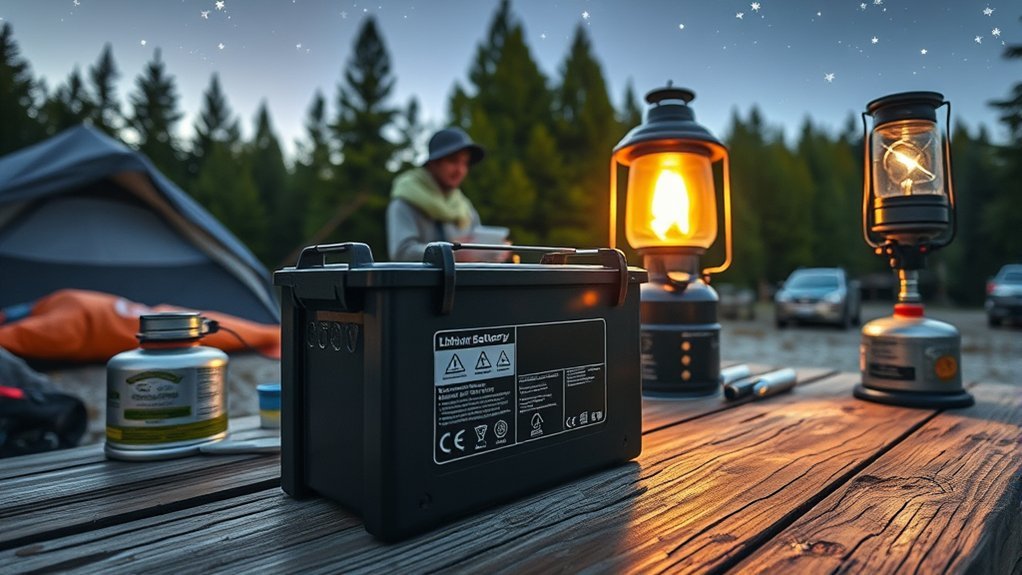
When selecting a lithium battery for outdoor use, we must carefully evaluate capacity to guarantee it meets our power needs without excess weight. Compatibility with our devices is essential to prevent damage or malfunction, and verifying safety certifications helps confirm the battery’s reliability under tough conditions. By prioritizing these factors, we can make informed choices that enhance safety and performance during camping trips.
Battery Capacity Considerations
Selecting the appropriate lithium battery capacity is essential for outdoor applications, as it directly impacts the device’s runtime and safety. Proper capacity planning guarantees that your equipment operates reliably without risking overloading or thermal issues. Larger batteries provide longer battery life but add weight and require careful handling, while smaller capacities may lead to insufficient power during critical moments. We must evaluate your energy needs based on expected usage hours and power draw, then choose a capacity that balances longevity with safety margins. Overestimating capacity can result in unnecessary weight and potential safety concerns, whereas underestimating risks device shutdowns. Accurate capacity planning helps optimize performance, ensures safety, and maintains reliable operation during your outdoor activities.
Compatibility With Devices
How do we guarantee the lithium battery we choose is compatible with our outdoor devices? The key lies in understanding device compatibility and effective power management. First, we verify the voltage and current ratings of our devices match the battery’s output specifications. Using incompatible batteries can lead to overloads or insufficient power, risking damage or failure. Additionally, evaluating the connector types ensures proper physical fit. Power management features, such as built-in protection circuits, help regulate voltage fluctuations and prevent overcharging or discharging, safeguarding both the battery and devices. We must carefully review manufacturer guidelines and technical datasheets to confirm compatibility, rather than relying solely on generic labels. This meticulous approach ensures safe, reliable operation during outdoor excursions.
Safety Certifications and Standards
Ensuring the safety of outdoor lithium batteries begins with verifying that they meet recognized certifications and standards. Certification standards, such as UL, CE, or UN38.3, indicate compliance with rigorous safety and performance criteria. Regulatory compliance is vital, as it guarantees the battery has undergone testing for potential hazards like thermal runaway or overcharging. When selecting a lithium battery for outdoor use, we must prioritize products that display clear certification markings, confirming adherence to these standards. This not only minimizes risks during camping but also guarantees the battery’s reliability in demanding environments. By thoroughly checking for appropriate certifications and regulatory compliance, we can confidently choose a battery that upholds safety, quality, and durability under outdoor conditions.
Properly Handle, Store, and Transport Your Lithium Batteries
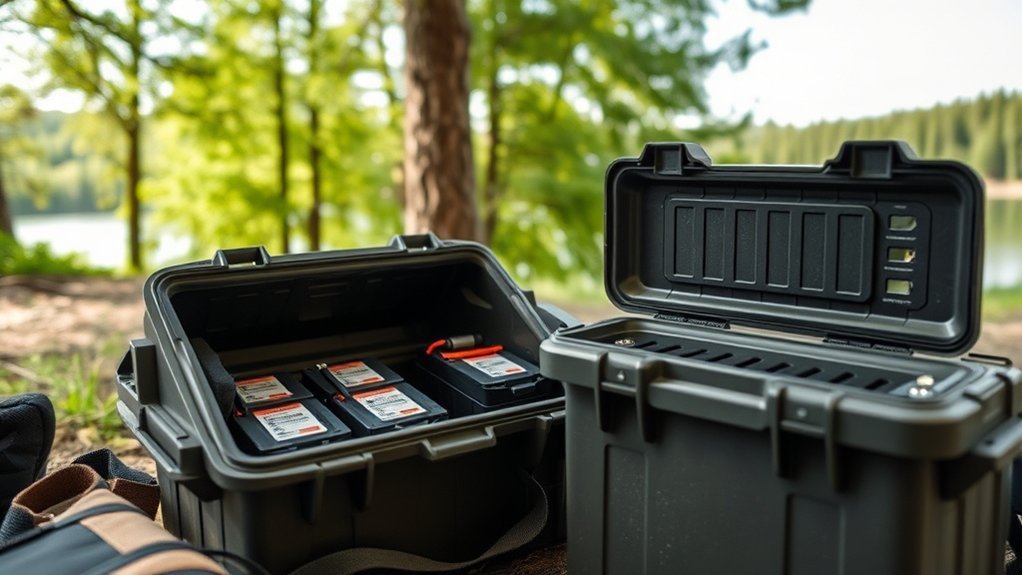
Because mishandling or improper storage can lead to dangerous failures, we must handle lithium batteries with strict caution. Properly insulating the batteries through effective battery insulation reduces the risk of short circuits caused by accidental contact with conductive materials. When storing, use designated storage containers that are non-conductive, fire-resistant, and clearly labeled to prevent accidental activation. Always verify batteries are stored in a cool, dry environment away from heat sources and flammable materials. During transport, secure batteries upright to prevent movement and damage. Avoid stacking or cramming batteries into tight spaces, which could cause physical damage. Consistent adherence to these handling, storage, and transportation protocols minimizes hazards and enhances safety during camping adventures.
Follow Best Practices for Charging and Discharging Lithium Batteries
Proper charging and discharging practices are essential to maintain the safety and longevity of lithium batteries during camping trips. Adhering to specific charging protocols ensures batteries are not overcharged or subjected to excessive voltage, which can cause thermal runaway or damage. Always use chargers compatible with your battery’s specifications, and avoid rapid charging unless explicitly approved. Discharge limits are equally critical; avoiding deep discharges prevents potential capacity loss and internal damage. Monitor voltage levels closely and keep discharges within manufacturer-recommended thresholds. Consistently following these protocols reduces the risk of safety hazards, extends battery lifespan, and maintains reliable performance. Implementing cautious, precise charging and discharging routines is a key component of safe camping with lithium batteries.
Recognize Signs of Damage or Malfunction and When to Replace
Detecting signs of damage or malfunction in lithium batteries is essential for safe camping. Regular visual inspections are key to evaluating battery health and ensuring safety. Look for swelling, cracks, or leaks, which indicate physical damage that can compromise the battery’s integrity. Unusual odors or excessive heat during use are warning signs of internal issues. Battery lifespan varies, but if a battery shows diminished performance or shorter runtime, it’s a sign it may need replacement. Never ignore subtle signs of deterioration, as continued use of damaged batteries can lead to failures or hazards. If any of these signs are present, replace the battery promptly and dispose of it according to proper protocols. Staying vigilant helps prevent accidents and maintains safe camping conditions.
Keep Emergency Equipment Handy and Know What to Do in an Accident
Maintaining quick access to emergency equipment is essential for responding effectively to lithium battery-related incidents during camping. Proper emergency preparedness guarantees swift accident response, reducing injury risk and damage. Always keep a fire extinguisher, first aid kit, and fire-resistant bag nearby. Know how to handle a lithium battery fire: avoid water, use Class D or dry powder extinguishers. In case of leakage or smoke, disconnect the battery immediately and ventilate the area. Prepare a checklist to verify equipment readiness before departure.
| Emergency Equipment | Use Case | Precautions |
|---|---|---|
| Fire Extinguisher | Battery fire | Avoid water, use Class D extinguisher |
| First Aid Kit | Injury management | Cover burns, seek medical care |
| Fire-Resistant Bag | Contain damaged battery | Prevent further hazards |
| Ventilation Fan | Smoke removal | Use in well-ventilated area |
| Emergency Contact List | Call for help | Keep accessible at all times |
Frequently Asked Questions
Are Lithium Batteries Safe to Use in Wet or Humid Conditions?
Lithium batteries aren’t fully water-resistant, so humidity can impact their safety and performance. We recommend using waterproof enclosures and avoiding direct contact with water to prevent potential short circuits or damage in wet or humid conditions.
Can Lithium Batteries Be Stored Long-Term Without Losing Capacity?
Like a fine wine, lithium batteries can age if not stored properly. We recommend ideal storage techniques—cool, dry environments and partial charge—to preserve battery lifespan, minimizing capacity loss during long-term storage.
What Are the Environmental Disposal Requirements for Used Lithium Batteries?
We follow strict disposal regulations, ensuring used lithium batteries undergo proper battery recycling to prevent environmental harm. We handle disposal cautiously, adhering to legal guidelines, and never discard batteries in regular trash to avoid potential hazards and contamination.
How Do Temperature Fluctuations Affect Lithium Battery Safety Outdoors?
Like a conductor in a symphony, temperature fluctuations impact lithium batteries, causing thermal expansion and risking voltage instability. We must monitor outdoor conditions carefully, ensuring safe operation and preventing potential overheating or damage during our adventures.
Are There Specific Brands With Higher Safety Standards for Camping Lithium Batteries?
We recommend choosing brands with strong safety certifications and solid reputation, like Goal Zero or Jackery, as they adhere to rigorous safety standards. Always verify certifications and reviews to guarantee reliable, safe performance during outdoor camping expeditions.
Conclusion
Just as explorers heed the warnings of the sea, we must respect the risks of lithium batteries during camping. Vigilance and proper handling are our compass, guiding us safely through potential hazards. By following these precautions, we prevent disasters and guarantee our journey remains uneventful—like a ship that sails smoothly through treacherous waters. Prioritize safety, stay alert, and let responsible practices be your guiding star in outdoor adventures.