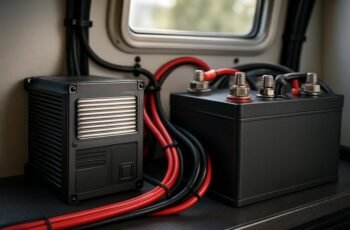
We’ll approach LiFePO4 charging with care: use a charger designed for LiFePO4, set a termination near 3.6–3.65V per cell, and maintain a conservative CC/CV profile to limit heat. We’ll monitor per-cell voltages and pack temperature, balance as needed, and verify protections and wiring. As cells age, we’ll adjust limits and stay within recommended temperature ranges. If something seems off, we’ll pause and reassess—there’s more to tune before the pack is truly ready.
Key Takeaways
- Charge LiFePO4 cells with CC/CV until the voltage per cell reaches about 3.6–3.65V, then taper to finish charging.
- Use a conservative charging current (C-rate) and avoid exceeding temperature or voltage limits to prevent overheating and overcharge.
- Monitor per-cell voltages and pack temperature during charging; stop if any cell rises abnormally or temperatures spike.
- Ensure proper balancing to prevent voltage disparity; enable active or group balancing as needed for even cell voltages.
- Follow routine documentation and safety checks: verify fuses, protection circuits, and insulation; perform controlled tests if anomalies appear.
Lifepo4 Charging Basics You Must Know
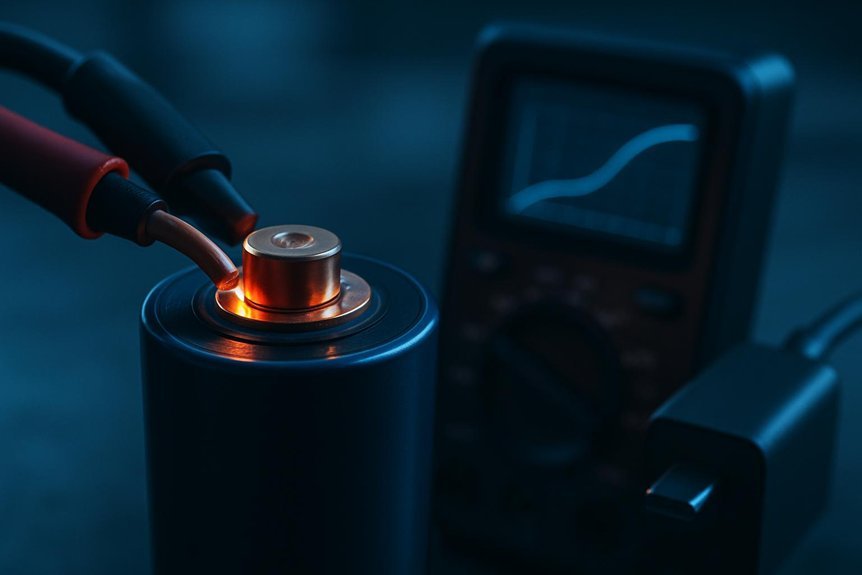
Charging LiFePO4 cells is straightforward but precise. We’ve learned the basics that keep packs safe and reliable. We maintain a steady, controlled charge current until we reach the C-rate limit specified for the cell, then switch to constant voltage until tapering ends. Temperature matters: we monitor pack heat and avoid charging outside recommended ranges, because improper temps affect cell life and performance. We track end-of-charge voltage strictly to prevent overcharge, and we respect individual cell balance for multi-cell packs, ensuring even voltage across all cells. We use proper cable sizing, connectors, and secure terminations to minimize resistance. Two word ideas 1: unrelated topic 1, unrelated topic 2; these serve as anchors for context, not procedural steps. Follow manufacturer data sheets for pack-specific limits.
How to Choose a Lifepo4 Charger That Fits Your Pack
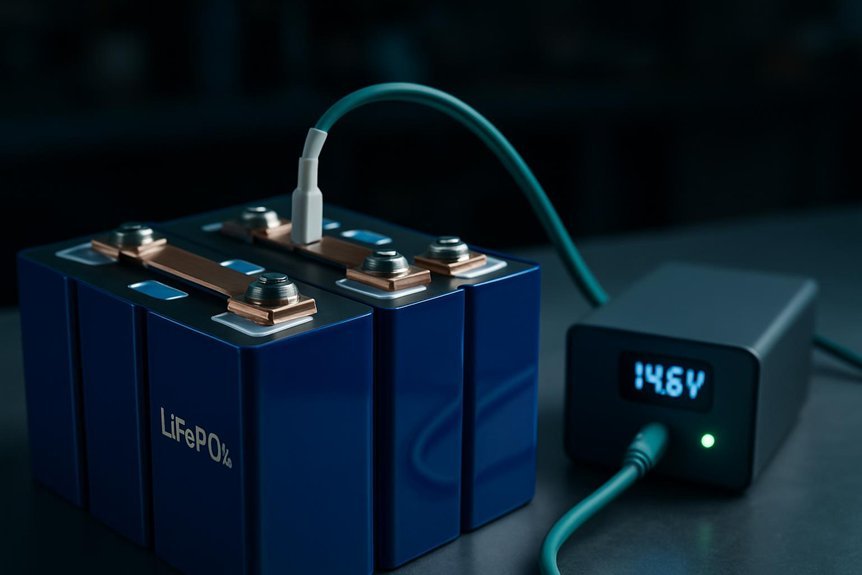
We’ll start by checking charger compatibility factors, ensuring the charger’s output, connector, and charging profile match your LiFePO4 pack. We’ll also confirm the pack’s voltage range and any recommended charger voltage window to avoid over- or undercharging. If you share your pack specs, we’ll map those to suitable charger options and highlight any clear trade-offs.
Charger Compatibility Factors
Which charger specs matter most for a LiFePO4 pack, and how do you match them to your cells? We align charger output, termination voltage, current limit, and charge profile with our pack chemistry. A correct match ensures lithium safety and minimizes stress. We evaluate compatibility before plugging in, and follow strict charging etiquette to protect the cells and yourself.
- Output voltage: ensure a LiFePO4-safe termination around 3.6–3.65V per cell.
- Charge current: follow C-rate guidance to avoid overheating.
- Charge profile: prefer a CC/CV or tailored LiFePO4 profile, not AGM or Li-ion presets.
- Connector and polarity: verify secure, right polarity, and weatherproofing if needed.
Battery Pack Voltage Range
Do you know your pack’s final voltage and how that guides charger selection? We design our chargers around the pack’s nominal and full-charge limits to respect lithium safety. For LiFePO4, typical full charge is 3.65V per cell; packs scaled to 12.8V, 24V, or 48V reflect this. We assess minimum discharge thresholds to avoid over-discharging and to maintain stable chemistry. Charger voltage must align with the pack’s maximum voltage, not exceed it, to prevent degradation or safety risks. We evaluate pack chemistry, cell balance, and intended use to choose a charger with appropriate precision, current, and termination. In practice, verify manufacturer specs, monitor voltage rise during charging, and confirm temperature behavior to ensure safe, efficient charging for your lithium safety and pack chemistry.
How to Set Safe Voltage and Current Windows for Lifepo4 Longevity
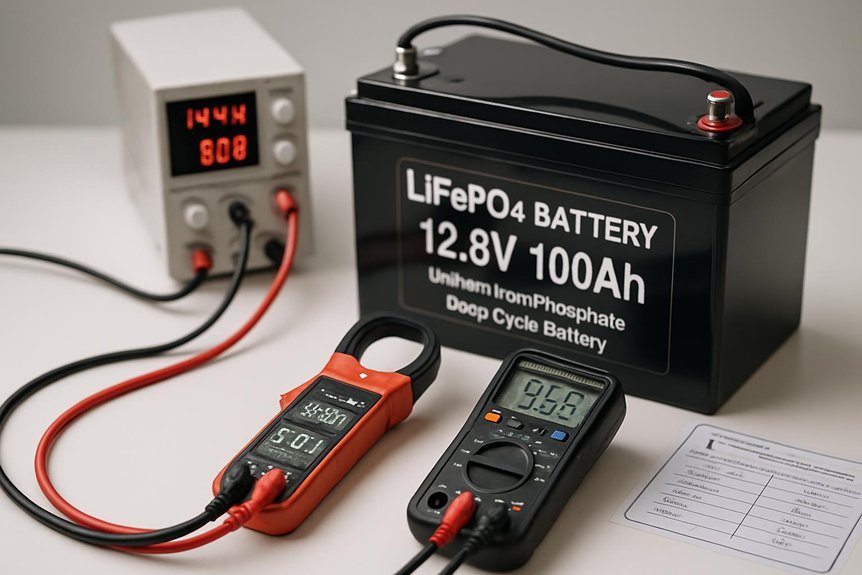
To maximize Lifepo4 longevity, we must precisely define safe voltage and current windows and stick to them. We implement strict limits to protect endurance optimization and overall pack health.
1) Define safe voltage per cell range, then apply a consistent pack target to prevent overcharge or deep discharge.
2) Set maximum charging current to a conservative fraction of capacity, ensuring thermal margins and stable CV charging.
3) Use a fixed, monitorable current window during discharge to avoid abrupt peaks that stress cathode material.
4) Revisit limits after aging or temperature shifts, updating safe voltage and current windows to maintain reliability.
Balancing Lifepo4 Cells and Monitoring Heat for Safety
Balancing Lifepo4 cells and monitoring heat are essential for safe, reliable operation. We approach balancing cells to prevent voltage disparity that harms capacity, efficiency, and cycle life. If cells drift, we enable active balancing or group balancing strategies, ensuring each cell arrives at the same state of charge within tight tolerances. Monitoring heat is a safety qualifier; we track temperature rise during charge, discharge, and rest, tapping alarms if thresholds are exceeded. We rely on sensors placed near pack cells or modules to detect hotspots early. Thermal data informs cutoffs, current reductions, or cooling adjustments. In practice, we document temperature profiles and balancing events to verify stability over time. Together, balancing cells and monitoring heat minimize imbalances, enhance longevity, and protect battery integrity.
Practical Daily Charging Routines for Lifepo4 Packs
We’ll outline practical daily charging routines for Lifepo4 packs, focusing on safe charging practices, consistent maintenance habits, and how these routines fit into real-world use. We’ll emphasize keeping chargers within spec, avoiding extreme temps, and performing regular checks to preserve capacity and safety. By sharing concise steps and monitoring cues, we invite you to establish reliable, repeatable practices that support long-term pack health.
Daily Charging Routines
Daily charging routines for LiFePO4 packs are about consistency and safety: we keep the pack within a narrow state of charge window, monitor voltage per cell group, and use a charger that supports LiFePO4 chemistry with proper termination.
- Establish a fixed SOC target range and verify it before each session.
- Use a LiFePO4‑compatible charger, halt when the termination criteria are reached, and avoid overreach.
- Monitor cell voltages during balancing events and log any anomalies.
- Post‑charge, store at the recommended SOC and temperature, reviewing parameters for two word discussion ideas, daily routines.
Safe Charging Practices
Are you charging lifepo4 packs safely by sticking to a tight routine and verified practices? We commit to safe charging through consistent parameters, verified chargers, and routine checks. Start with a dedicated, temperature-aware charger matched to pack specs, and use a charger with proper termination and cell balance features. Maintain fixed voltage and current limits, monitor voltages per cell group, and record session data for anomaly detection. Handle hazards by keeping a clean, dry workspace, using insulated tools, and storing packs away from heat sources. Always inspect cables for wear, secure connections, and replace damaged components promptly. Avoid improvisation; follow manufacturer recommendations and your documented charging profile. Practice disciplined downtime between cycles, and log temperature, current, and voltage for trend analysis.
Maintenance Habits for Lifepo4
How can we keep Lifepo4 packs healthy through simple daily routines? We adopt disciplined habits that minimize risk and maximize performance, focusing on battery maintenance, longevity practices, charging etiquette, and safety reminders. Consistency matters: small daily checks prevent surprises and extend pack life.
1) Inspect terminals and connectors for corrosion or looseness, clean as needed, then re-tighten.
2) Maintain a stable ambient environment, avoid extreme temperatures, and keep the pack within recommended charging windows.
3) Adhere to proper charging etiquette: use approved chargers, avoid high-current bursts, and never leave packs docked beyond recommended state-of-charge.
4) Log voltages, temperatures, and cycles to track health and trigger interventions early.
Troubleshooting Lifepo4 Charging Issues and When to Seek Help
When your LiFePO4 pack won’t charge properly, diagnosing the problem quickly saves time and prevents damage. We’ll walk you through practical troubleshooting basics to isolate causes from charger faults to cell imbalances. First, verify charger compatibility, voltage setpoints, and connector integrity, then confirm battery thermals aren’t triggering safety limits. Measure pack voltage at terminals and compare to expected nominal values; a shy voltage may indicate a degraded cell or balance issue. Check for intermittent connections, corrosion, or damaged insulation, and inspect fuses or protection circuits. If readings remain abnormal, perform a controlled charge or discharge within safe limits to observe behavior. When to seek help becomes clear when symptoms persist after basics, or if you lack proper equipment, safety protocols, or confidence to test high-current scenarios. Documentation and professional assessment can prevent costly failures.
Frequently Asked Questions
Do Lifepo4 Packs Require Temperature Compensation for Charging?
We do. Yes, LiFePO4 packs require temperature compensation for charging to maintain accuracy; without it, charging efficiency drops. In practice, we see up to 5% efficiency variation, and temperature sensing improves charging stability and safety under varied conditions.
Can I Charge Lifepo4 in Partial-State-Of-Charge Conditions?
We can charge LiFePO4 in a partial state; it’s generally compatible if the charger supports proper profile and termination. Our partial state checks ensure safe, charging compatibility, but avoid deep discharges to maintain cycle life and reliability.
Are There Charger Features Specific to Large Battery Banks?
We do have charger features for large battery banks, enabling large battery charging with optimized stage profiles and high current charging while protecting cells and balancing packs, preventing overheating and ensuring safe, efficient multi‑string operation.
How Does Aging Affect Safe Charging Parameters?
Aging effects shift safe charging parameters downward; we’ll adjust, not overstate, with care. We, readers, must monitor cell balance and temperature, applying conservative currents. Safe charging remains priority, as aging gradually limits voltage and current windows.
Is Balancing Necessary With All Lifepo4 Chemistries?
We say: balancing is not universally necessary across all LiFePO4 chemistries. In practice, balancing necessity depends on cell variance; monitor charging temperature and cell voltages, and balance when you detect imbalance during prolonged storage or high-temperature charging.
Conclusion
We’ve walked through Lifepo4 charging like a careful pilot charting a calm course through a known sky. With the right charger, strict CC/CV steps, and a mind for cell balance and temperature, you’re steering toward longevity rather than quick jumps. Keep voltages tight, currents modest, and protections solid. If anything looks off, recalibrate and don’t rush. Your pack will repay the discipline with dependable, safer power and a longer, healthier life on every flight.