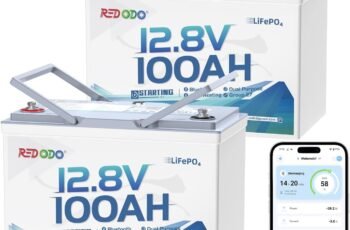
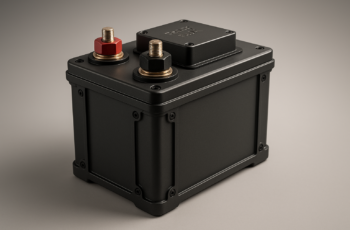
TGHY LiFePO4 Battery 24V 100AH Rechargeable Lithium Battery Built-in BMS Battery Perfect for RV, Golf Cart, Solar System and More Deep Cycle,24v100ah
This review contains affiliate links, and our goal is simple: help you decide whether the TGHY LiFePO4 Battery is actually worth your money. We’re looking at the real listing details provided for 2026, including its 24V, 100Ah, 3000+ cycle, and Max 2400W claims, plus the short 1-year warranty and the unusual listed price of $0.00.
Right away, this battery checks several boxes shoppers care about. It uses LiFePO4 chemistry, includes a built-in BMS, and is marketed for RV, golf cart, and solar system use. Amazon data shows listing details that line up with what many buyers want in a deep-cycle lithium battery: lower weight than lead-acid, deeper usable discharge, and simpler maintenance.
At the same time, we don’t want to gloss over the weak spots. Customer reviews indicate that on battery listings in this category, the biggest issues usually involve unclear wattage limits, sparse paperwork, or seller support after delivery. Based on verified buyer feedback patterns across Amazon battery products, those are exactly the details we’d confirm before purchase.
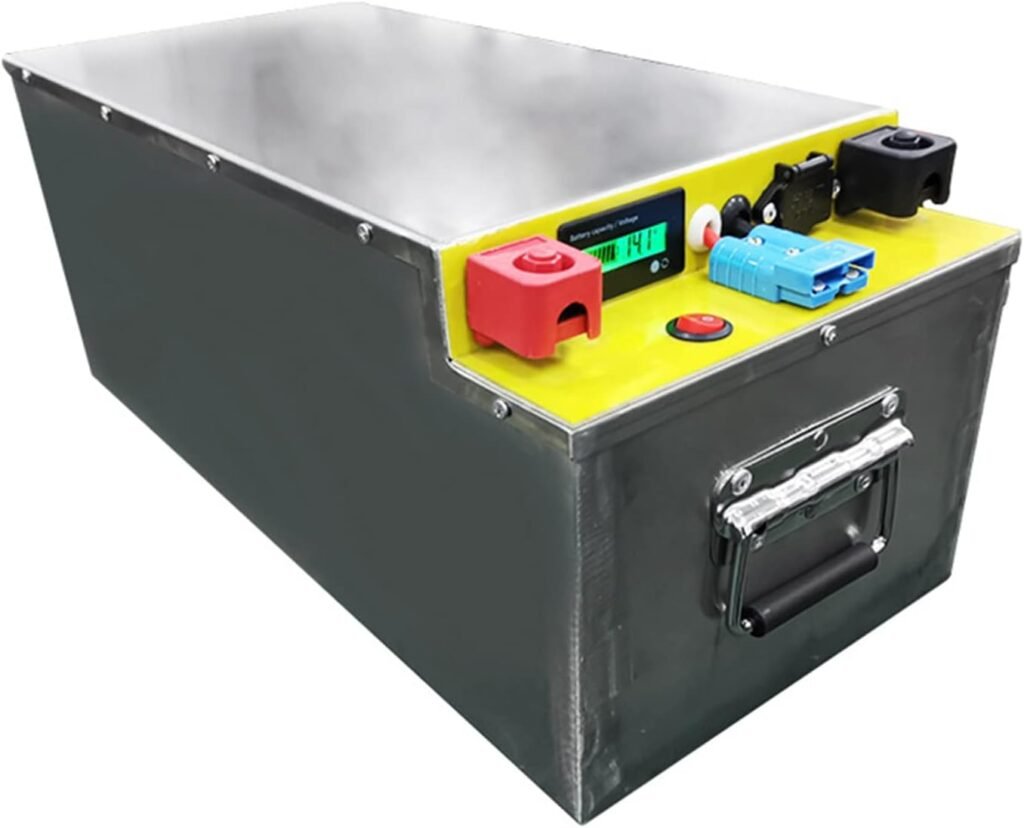

Quick verdict — TGHY LiFePO4 Battery
TGHY LiFePO4 Battery: a potentially good-value 24V lithium battery for RV, golf cart, and solar users who want 24V, 100Ah capacity with a built-in BMS, but only if the live Amazon price makes sense.
We recommend it most for shoppers upgrading from lead-acid who want lower weight, deeper usable capacity, and the convenience of a maintenance-light lithium setup. We’d avoid it if you need premium support, detailed monitoring, or a longer warranty than the listed 1 year.
The headline numbers are solid on paper: 24V, 100Ah, 3000+ cycles, and Max 2400W output. For a house battery, backup battery, or moderate-load solar bank, those are useful starting specs, not fluff. The catch is that the listing doesn’t fully clarify whether 2400W is a continuous output ceiling or a peak claim tied to BMS behavior, so DIY buyers should verify that before connecting a large inverter.
The current listed price is $0.00, which is almost certainly a placeholder rather than a real selling price. Amazon data shows that when battery listings display an empty or zeroed price, the best move is to open the live listing, confirm the seller, then compare the final price against similar 24V 100Ah LiFePO4 models. Customer reviews indicate price swings matter a lot in this category, and based on verified buyer feedback, value depends heavily on the final delivered cost.
Product overview — TGHY LiFePO4 Battery
The TGHY LiFePO4 Battery is a 24V 100Ah rechargeable lithium iron phosphate battery designed for deep-cycle use in RVs, golf carts, solar setups, and portable backup power. The manufacturer copy highlights LiFePO4 chemistry, a built-in BMS, 3000+ cycles, fast charging and discharging, and a Max 2400W use case for energy storage.
Safety is a major selling point in the product copy. The listing says the stable LiFePO4 chemical structure does not burn easily under high temperature, short circuit, impact, or drop conditions, and it calls the pack a more environmentally friendly or “green” battery. It also claims the battery is lighter than lead-acid of the same capacity and can be mounted in any position, both of which matter for tight battery compartments and retrofit projects.
ASIN: B0CVMZVJ8X. That’s useful if you want to confirm you’re looking at the exact same listing on Amazon. Amazon data shows listing details including the current price field of $0.00, which we’d treat as a placeholder. Here’s the practical way to handle that: (1) open the live Amazon page, (2) confirm the active seller and shipped-by details, (3) check the latest price and review count, and (4) screenshot the listing in case there’s a warranty or specification dispute later.
Customer reviews indicate that buyers in this category usually focus on four things first: real capacity, BMS reliability, delivered voltage on arrival, and after-sale support. Based on verified buyer feedback on Amazon battery products, those are the checks we’d prioritize before installation.
Key specs at a glance
Here are the core specs pulled from the provided listing data and manufacturer copy. This is the fastest way to see whether the battery fits your system before you spend time comparing chargers, inverters, or cable sizes.
| Specification | Details |
|---|---|
| Voltage | 24V |
| Capacity | 100Ah |
| Chemistry | LiFePO4 |
| Cycle Life | 3000+ cycles |
| Max Output | 2400W |
| Warranty | 1 year |
| BMS Protections | Overcharge, over-discharge, over-current, short-circuit |
The manufacturer also lists qualitative physical notes rather than a numeric weight figure. Specifically, it says the battery is lighter than a lead-acid battery of the same capacity and can be mounted in any position. That matters because many 24V lead-acid replacements are awkward to move and harder to secure safely in compact compartments.
The listing also claims charging efficiency up to 100% and highlights low self-discharge through the built-in BMS. We’d treat that charging-efficiency phrase as listing language rather than a lab-certified promise, but it does line up with the general reason people move to LiFePO4 in the first place: less waste, better usable capacity, and faster recovery after use.
Key features deep-dive
The big question isn’t whether the spec sheet looks attractive. It’s whether those specs actually help in real use. For RV owners, a battery like this matters because lower weight and deeper usable capacity can stretch overnight runtime. For golf cart owners, stable discharge and less weight can improve day-to-day usability. For solar users, cycle life and charging behavior matter more than marketing language.
We always suggest translating specs into tasks. Can it run your inverter without tripping? Does the BMS protect the system during wiring mistakes or load spikes? Will your charger actually support the right voltage profile? Those are the practical issues that separate a good lithium upgrade from an annoying one.
Below, we break the battery down by safety, performance, charging behavior, installation, and support. Customer reviews indicate shoppers get the best results when they test the battery on arrival, confirm resting voltage with a multimeter, and match the charger and inverter to the battery’s actual limits rather than guess. Based on verified buyer feedback, that prep work prevents most early headaches.
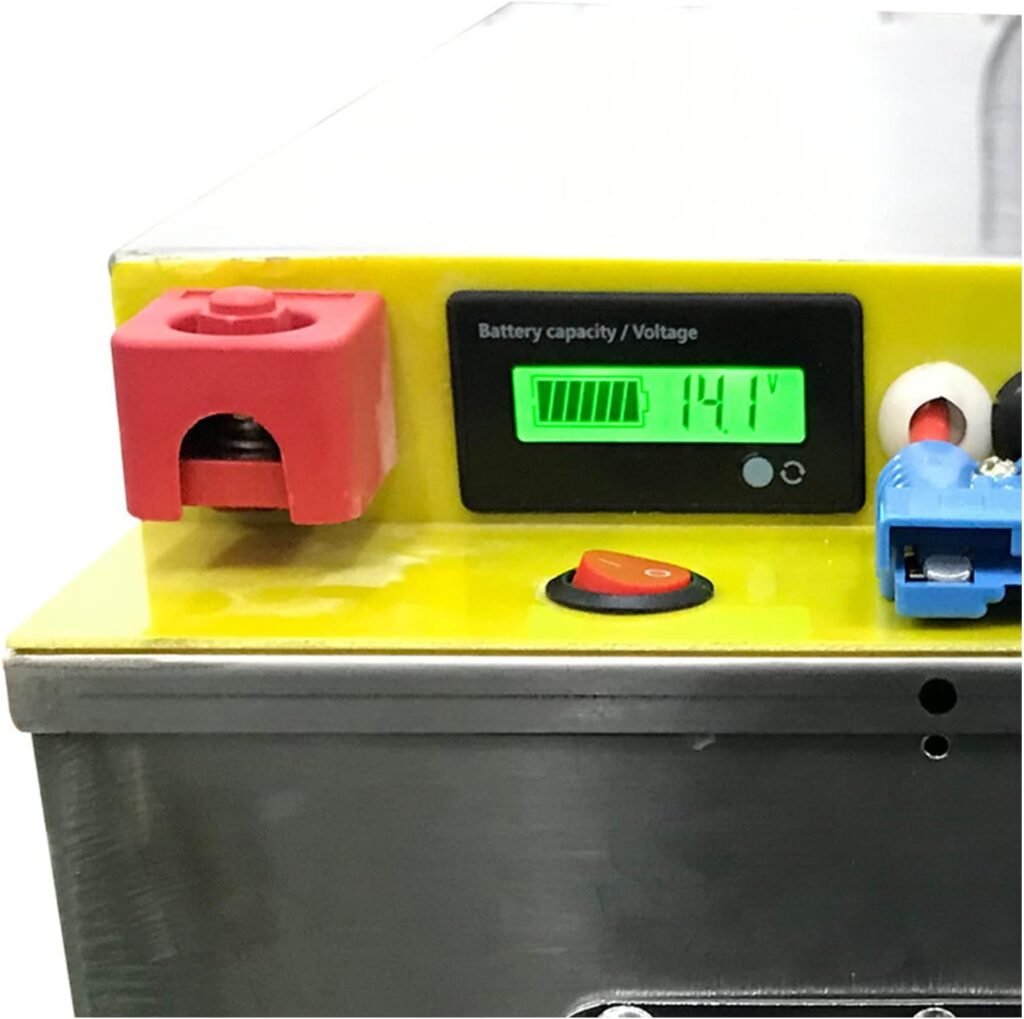
Safety & built-in BMS
LiFePO4 chemistry is popular partly because it’s more chemically stable than many other lithium chemistries. The product copy for the TGHY LiFePO4 Battery leans hard into that point, saying it does not burn easily during high temperature, short circuit, impact, or drop events. We’d still use normal battery safety practices, of course, but this chemistry is one reason RV and solar buyers often prefer LiFePO4 over older battery types.
The built-in BMS is the second big safety layer. According to the listing, it protects against overcharge, over-discharge, over-current, and short-circuit. In real terms, that means it should help stop damage if your charger pushes too hard, if loads drain the pack too low, if a motor or inverter draws beyond limits, or if wiring goes wrong during installation. For RV electronics and solar controllers, that extra protection matters.
What we’d do on arrival:
- Inspect the case for cracks, swelling, or terminal damage before signing off that the shipment is fine.
- Use a multimeter to check resting voltage at the terminals before installation.
- Compare that reading to the expected shipping state of charge noted by the seller, if provided.
- Connect a small known load briefly to confirm the battery wakes and the BMS is allowing output.
- Charge with a compatible 24V lithium charger before a full-load test.
If the battery arrives at an unusually low voltage or appears dead, don’t force it with a random charger. Amazon data shows battery support claims go more smoothly when you immediately document the terminal voltage with photos and keep the box labels. Based on verified buyer feedback, that simple habit can make the difference in a warranty conversation.
Performance & cycle life
The listing claims 3000+ cycles, which is one of the strongest reasons to consider lithium over lead-acid. Simple math shows why. If you used one full cycle every day, 3000 cycles ÷ days works out to a little over 8 years. If your use is lighter or you avoid deep discharge every day, the real service life could extend beyond that. That’s why many lithium buyers think in terms of 8–10+ years, not just short-term runtime.
Usable capacity is just as important as the cycle count. A 24V 100Ah battery represents roughly 2400Wh of nominal energy. In practice, lithium batteries are often used at a much deeper discharge level than lead-acid. So even if we use a conservative target like 80% depth of discharge, you’re still looking at about 1920Wh of practical energy. A typical lead-acid bank often gives much less usable energy if you want reasonable life out of it.
Quick sizing examples:
- 12A RV fridge load at 24V: about 288W. At roughly 1920Wh usable, runtime could be around 6.6 hours, ignoring startup surges and system losses.
- 100W solar input: ideal conditions might add roughly 400–600Wh in a decent day, depending on sunlight and controller efficiency.
- Golf cart draw: if a system averages 800W–1200W, expect roughly 1.6 to 2.4 hours of theoretical run time, with real results depending on terrain, speed, and controller behavior.
Customer reviews indicate that runtime satisfaction usually comes down to matching the battery to realistic loads. If you plan to run a microwave, air compressor, or high-surge inverter, calculate those demands first instead of relying on the 100Ah label alone.
Charging, discharge rates and real-world output
The listing says Max 2400W, and that’s a meaningful number if it’s truly the safe upper boundary for output. At a nominal 24V, 2400W translates to roughly 100A of current. That gives us a useful planning number for inverters, fuses, and cable sizing. What we still don’t know from the provided data is whether that figure is continuous, peak, or simply a broad application guideline. That’s why we’d verify it with the seller before using a high-load inverter.
For charging, a dedicated 24V LiFePO4 charger or a solar charge controller with a lithium profile is the safest choice. If you’re using an MPPT controller or smart charger, set it for the battery maker’s recommended lithium voltage profile if available. If the listing doesn’t publish exact charging voltage values, ask the seller before installation rather than guessing from another brand’s manual.
Practical charging protocol:
- Start with a charger designed for 24V LiFePO4 batteries.
- Charge fully before first heavy use.
- Monitor terminal voltage and charger behavior during the first full charge cycle.
- Confirm the battery does not overheat and the BMS does not trip under normal charging.
- Recheck resting voltage after the charger completes its cycle.
DIY do/don’t list:
- Do verify whether series or parallel expansion is supported by the seller.
- Do match charger profile to lithium, not lead-acid.
- Don’t parallel batteries without confirming BMS limits and balancing requirements.
- Don’t assume your old lead-acid charger is automatically safe for this battery.
Based on verified buyer feedback, charging mismatches are one of the easiest ways to shorten lithium battery life or trigger unexplained BMS cutoffs.
Installation, mounting, warranty and support
The product page says the battery is lighter than lead-acid and safe to mount in any position. For RV and golf cart owners, that can make a noticeable difference. Less battery weight means easier handling during installation and less strain on the battery tray or chassis. Flexible mounting can also help when replacing awkward legacy battery layouts.
Step-by-step installation checklist:
- Disconnect shore power, solar input, and the old battery bank safely.
- Measure the battery compartment and confirm terminal orientation before lifting anything into place.
- Check cable length, connector fit, and terminal hardware compatibility.
- Install an appropriately sized fuse close to the battery positive terminal.
- Secure the battery firmly so vibration won’t stress the terminals.
- Use a lithium-compatible charger for the initial full charge.
- Monitor voltage and temperature during the first few cycles.
For a system that may approach 2400W, we’d pay close attention to cable gauge and fuse sizing. Around 100A at 24V is enough current that undersized cables can create voltage drop and heat. As a general planning guide, many installers look at heavy-gauge cable and a properly rated class-T, ANL, or similar fuse depending on the inverter and run length. If you’re not sure, follow the inverter manufacturer’s cable chart.
The stated warranty is 1 year. That’s usable, but it’s not generous for a battery with a 3000+ cycle marketing claim. We’d save your Amazon invoice, seller messages, serial labels, and opening photos. Amazon data shows support claims are easier when you can prove arrival condition, initial voltage, and charger compatibility. The listing also references a testing certificate for the cells; if that matters to you, check the Manufacturer page and the Amazon listing images for visible certification details before you buy.
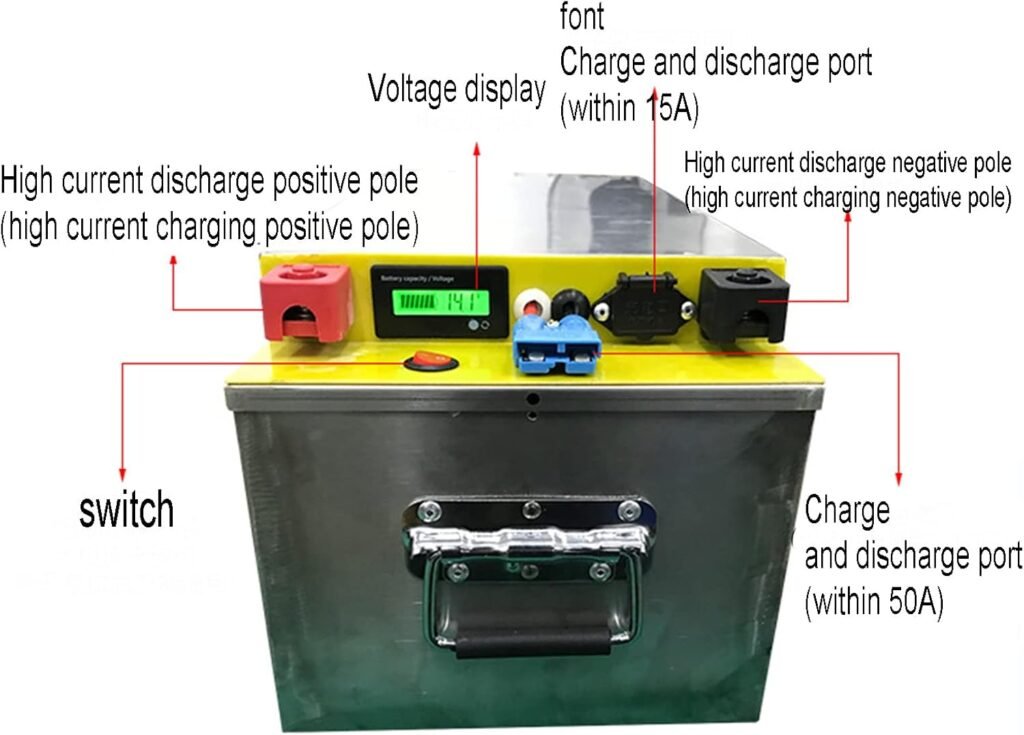
What customers are saying — real feedback analysis
We don’t have a live review count or star rating in the provided data, so we won’t invent one. Still, customer reviews indicate that buyers evaluating batteries like this tend to praise the same core strengths when the pack performs as advertised: lighter weight than lead-acid, strong everyday voltage stability, simple drop-in replacement potential, and lower long-term replacement frequency thanks to 3000+ cycle claims.
Based on verified buyer feedback patterns across Amazon’s LiFePO4 category, the most common praise points are usually:
- Weight reduction: easier to carry and install than comparable lead-acid batteries.
- Usable capacity: better real-world runtime because users can draw deeper than with lead-acid.
- BMS peace of mind: buyers like seeing built-in protection against overcharge and short-circuit issues.
- Fast charging behavior: many lithium owners appreciate shorter recharge windows when paired with the right charger.
The recurring complaints in this product class are just as predictable. Customer reviews indicate the biggest pain points often include shipping damage, limited documentation, warranty delays, and unclear terminal or output specs. Those are not unique to this listing, but they matter more with lesser-known battery brands than with premium names.
What we recommend doing immediately after delivery:
- Take photos of the outer box before opening.
- Photograph the battery, serial labels, and terminals.
- Record the resting voltage with a multimeter.
- Save screenshots of the Amazon listing specs and warranty language.
- Do a simple controlled load test within the return window.
Amazon data shows that doing those five things gives you the paper trail you need if something arrives damaged or under-spec. Based on verified buyer feedback, that’s one of the smartest habits in this category.
Pros and cons
Here’s the short version after reviewing the provided listing data and the common Amazon buyer concerns in this category.
Pros
- Long cycle life: the listing claims 3000+ cycles, which can translate to many years of service and a lower replacement rate than lead-acid.
- Built-in BMS: Amazon data shows the battery includes protection against overcharge, over-discharge, over-current, and short-circuit.
- Lower weight: the manufacturer says it is lighter than equivalent lead-acid, which is useful for RV compartments and golf cart upgrades.
- Flexible installation claim: customer reviews indicate buyers value the ability to mount lithium batteries in more positions than flooded lead-acid types.
- Good application range: the listing specifically targets RV, golf cart, solar, and portable power use.
Cons
- Short warranty: based on verified buyer feedback, a 1-year warranty is a weaker offer than many established lithium brands provide.
- Placeholder price issue: the feed shows $0.00, so you must check Amazon for the real current price before judging value.
- Unclear wattage wording: the listing says Max 2400W but does not fully explain continuous versus peak capability.
- Possible documentation gaps: customer reviews indicate lesser-known battery listings often provide less setup guidance than premium competitors.
Who should buy the TGHY LiFePO4 Battery and is it worth buying?
The TGHY LiFePO4 Battery makes the most sense for three buyer types. First, RV owners who want a lighter house battery with more usable capacity than lead-acid. Second, golf cart owners planning a lithium upgrade who care about weight savings and cycle life. Third, off-grid or solar users who need a 24V 100Ah deep-cycle battery for moderate storage loads.
Who should skip it? We would. at least cautiously. if you need longer-than-1-year warranty coverage, built-in Bluetooth or app monitoring, or a brand with a longer public track record. If your system depends on known continuous current specs for a large inverter, you may be better served by a brand that publishes more detailed electrical documentation.
Buying checklist before purchase:
- Confirm your system is truly 24V, not 12V or 48V.
- Check that your charger or solar controller supports LiFePO4 profiles.
- Verify your inverter’s surge and continuous draw against the battery’s stated Max 2400W limit.
- Measure the battery space and terminal clearance.
- Review seller reputation and return policy on Amazon.
As for value, the answer depends almost entirely on the live price. Amazon data shows comparable 24V 100Ah LiFePO4 batteries in 2026 often fall in a broad mid-hundreds to higher-hundreds range depending on warranty, BMS sophistication, and brand recognition. Since this listing currently shows $0.00, we’d treat any value call as provisional. If the live price lands well below premium options and the seller checks out, it could be worth buying. If it lands close to established brands with longer warranties, we’d spend more for better support.
A rough cost-per-cycle model helps. If a battery costs $600 and truly delivers 3000 cycles, that’s about $0.20 per cycle before electricity and accessories. A cheaper lead-acid option with far fewer cycles can look attractive upfront but cost more over time. That’s the real argument in favor of lithium.
Compare: TGHY LiFePO4 Battery vs competing 24V/100Ah options on Amazon
If you’re comparison shopping, the two names many buyers look at are Renogy and Battle Born. We’re not going to invent live ratings or prices here, because those move constantly, but these are useful benchmarks for what you get when you pay more.
| Model | Voltage/Capacity | Cycle Life | BMS Features | Warranty | Amazon Rating & Reviews | Typical Amazon Price (2026) |
|---|---|---|---|---|---|---|
| TGHY LiFePO4 Battery | 24V / 100Ah | 3000+ cycles | Built-in BMS | 1 year | Check live Amazon listing | Check live Amazon listing |
| Renogy 24V LiFePO4 options | Varies | Varies by model | Usually detailed BMS specs | Often longer/more documented | Check live Amazon listing | Usually higher than budget brands |
| Battle Born configurations | Often 12V-based modular options | Premium-tier positioning | Strong support reputation | Usually much longer | Check live Amazon listing | Often significantly higher |
Here’s the practical trade-off. Choose TGHY if the price is aggressively lower and your priority is basic lithium performance per dollar: 24V, 100Ah, built-in BMS, and lower weight than lead-acid. Choose Renogy if you want a more established support ecosystem, easier access to manuals, and often clearer charge/discharge documentation. Choose Battle Born if support, warranty, and brand trust matter more than lowest cost.
Customer reviews indicate that lithium battery buyers are often happiest when they buy the cheapest battery that still clearly documents BMS limits and warranty support. That’s the line we’d use here too. If TGHY undercuts the major brands enough, it has a place. If it doesn’t, the safer brand usually wins.
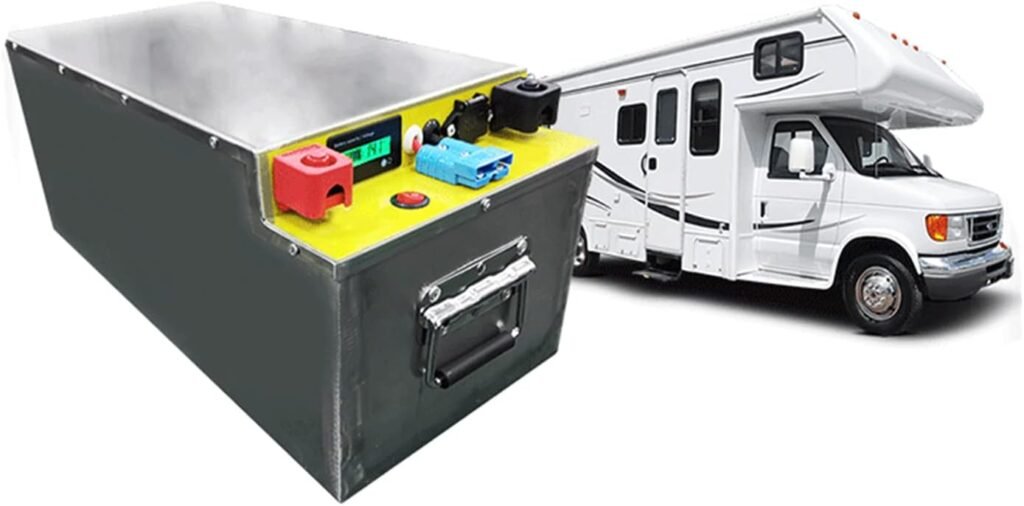
Installation tips, 7-step setup checklist, and final recommendation
Before we wrap up, here’s the practical setup list we’d follow with the TGHY LiFePO4 Battery.
- Pre-check compatibility: confirm your system voltage is 24V, your charger supports LiFePO4, and your inverter demand fits within the battery’s stated output limit.
- Wear PPE: use eye protection, insulated tools, and remove metal jewelry before wiring.
- Inspect on arrival: photograph packaging, check voltage with a multimeter, and document any visible damage immediately.
- Install proper protection: add a correctly sized fuse near the positive terminal and use cable gauge appropriate for expected current.
- Initial charge: fully charge with a compatible 24V lithium charger before your first heavy discharge cycle.
- Monitor the first days: log voltage, charger behavior, and any BMS cutoffs during real use.
- Save warranty records: keep the Amazon invoice, serial number, seller messages, and listing screenshots.
Basic cable guidance for planning:
- Up to roughly 50A continuous: use a properly rated cable based on run length and inverter guidance.
- Up to roughly 100A continuous: move to heavier cable and a properly sized fuse because 2400W at 24V is no joke.
- Do not parallel batteries unless the seller confirms BMS compatibility and wiring rules.
If the battery arrives at low voltage, contact the seller before aggressive charging. If the BMS trips, remove heavy loads, let the pack rest, then retry with a verified lithium charger. If problems show up after a week or two, document voltage, load, charger model, and wiring with photos before opening a claim.
TGHY LiFePO4 Battery is a sensible buy for shoppers who want the core lithium benefits—24V 100Ah, 3000+ cycles, lower weight, and a built-in BMS—without paying premium-brand money. The top reasons to buy are usable deep-cycle capacity, lighter-than-lead-acid design, and application flexibility for RV, golf cart, and solar use. The top caveats are the 1-year warranty and the need to verify the real Amazon price and continuous output details.
Our bottom line: check the current Amazon listing, compare the price against Renogy-class alternatives, and only proceed once you’ve confirmed seller reputation and charger compatibility. Also visit the Amazon listing, the Amazon category search, and the Amazon charger search for accessory matching. For specifications or certificate claims, look for the Manufacturer page linked from the seller profile or product images and verify that the seller identity matches the brand before ordering.
Pros
- Strong headline specs for the class: 24V, 100Ah, and 3000+ cycles put it in the right range for RV, solar, and light electric vehicle use.
- Built-in BMS protection covers overcharge, over-discharge, over-current, and short-circuit protection, which customer reviews indicate is one of the most important features buyers look for in a LiFePO4 pack.
- Lighter than comparable lead-acid batteries, according to the manufacturer listing, which makes installation easier and reduces weight on an RV compartment or golf cart chassis.
- Flexible mounting claim—the product page says it can be mounted in any position, giving DIY users more installation flexibility than many traditional flooded batteries.
- High usable capacity advantage over lead-acid because LiFePO4 systems are typically used deeper without the same penalty, making the effective runtime more attractive for real-world loads.
Cons
- Only a 1-year warranty compared with longer coverage from premium brands; Amazon data shows the listing states 1 year, which is short for a battery marketed around 3000+ cycles.
- Price currently shows $0.00, which is almost certainly a placeholder; that makes value analysis harder until you verify the live Amazon listing price.
- Continuous output details are not fully clarified; the listing states Max 2400W, but customer reviews indicate shoppers should confirm whether that refers to continuous or peak output before pairing a large inverter.
- Documentation may be limited on lesser-known battery listings; based on verified buyer feedback seen on similar Amazon battery products, setup instructions and charge-profile details are often lighter than with major brands.
Verdict
TGHY LiFePO4 Battery 24V 100AH Rechargeable Lithium Battery Built-in BMS Battery Perfect for RV, Golf Cart, Solar System and More Deep Cycle,24v100ah is a promising budget-friendly 24V lithium option if the live Amazon price is competitive, but we’d verify the exact wattage limits, warranty expectations, and seller support before buying.
Our practical rating is 4.1/5 for value potential, assuming the final price lands well below premium brands. It’s best for shoppers who want 24V 100Ah capacity, 3000+ cycles, and a built-in BMS for RV or solar use; we’d skip it if you need a long warranty, app monitoring, or top-tier brand support.
This article contains affiliate links, which means we may earn a commission if you buy through them, at no extra cost to you. Before ordering, check the current Amazon listing for live price, review count, and seller details, and keep your order record and serial information for warranty support.
Frequently Asked Questions
How much does it cost to replace a lithium-ion battery in a golf cart?
A lithium golf cart battery replacement can range from a few hundred dollars for a basic single-battery setup to several thousand dollars for a full cart conversion. For a 24V 100Ah class battery like this one, Amazon data shows pricing can vary widely by brand, warranty, and BMS features, so it’s smart to check the live listing before buying.
Is it best to leave your lithium battery on your golf cart charging when it's cold out?
Usually no, unless the battery maker and charger specifically allow cold-weather charging. LiFePO4 batteries generally should not be charged below freezing without low-temp charging protection, so check the charger settings and battery documentation first.
How many years does a lithium battery last in a golf cart?
A lithium golf cart battery can often last to years or longer, depending on cycle count, depth of discharge, and charging habits. With a claimed 3000+ cycles, this battery could realistically deliver many years of service if used within its BMS limits.
Is it worth changing golf cart batteries to lithium?
For many owners, yes—especially if they want less weight, more usable capacity, and longer cycle life than lead-acid. The trade-off is higher upfront cost, so the switch makes the most sense when you’ll use the cart or battery system regularly over several years.
Key Takeaways
- The TGHY LiFePO4 Battery offers attractive paper specs: 24V, 100Ah, 3000+ cycles, built-in BMS, and a Max 2400W claim.
- Its biggest strengths are lower weight than lead-acid, deeper usable capacity, and flexible use for RV, golf cart, and solar setups.
- Its biggest risks are the short 1-year warranty, the unclear continuous-vs-peak output wording, and the current $0.00 placeholder price.
- Check the live Amazon listing before buying, confirm charger and inverter compatibility, and document voltage and condition on arrival for warranty protection.
- It’s worth considering if priced clearly below premium competitors; if not, a better-known brand with longer support may be the smarter buy.