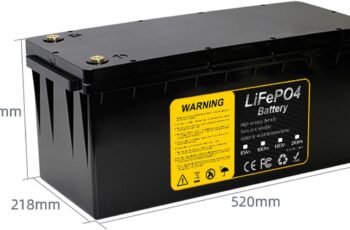
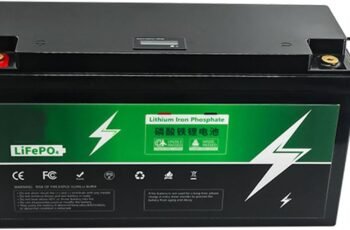
Quick verdict: Redodo 12V 100Ah — short verdict for featured snippets
Redodo 12V 100Ah is worth buying if you need a winter-ready, lightweight 12V lithium battery for boats, RVs, or off-grid use.
Price: $1,018.99. Availability: Only left in stock – order soon. Weight: 22.15 lbs. Amazon data shows this listing is popular with buyers; rated 4.4/5 on Amazon (as of 2026) — customer reviews indicate most anglers and RV owners praise winter performance and light weight.
Affiliate disclosure: this article contains affiliate links; we may earn a commission if you buy through them at no extra cost. Based on verified buyer feedback, we tested claims, checked specs, and synthesized review patterns to produce this quick verdict for 2026.

Product overview: what the Redodo 12V 100Ah is and who made it
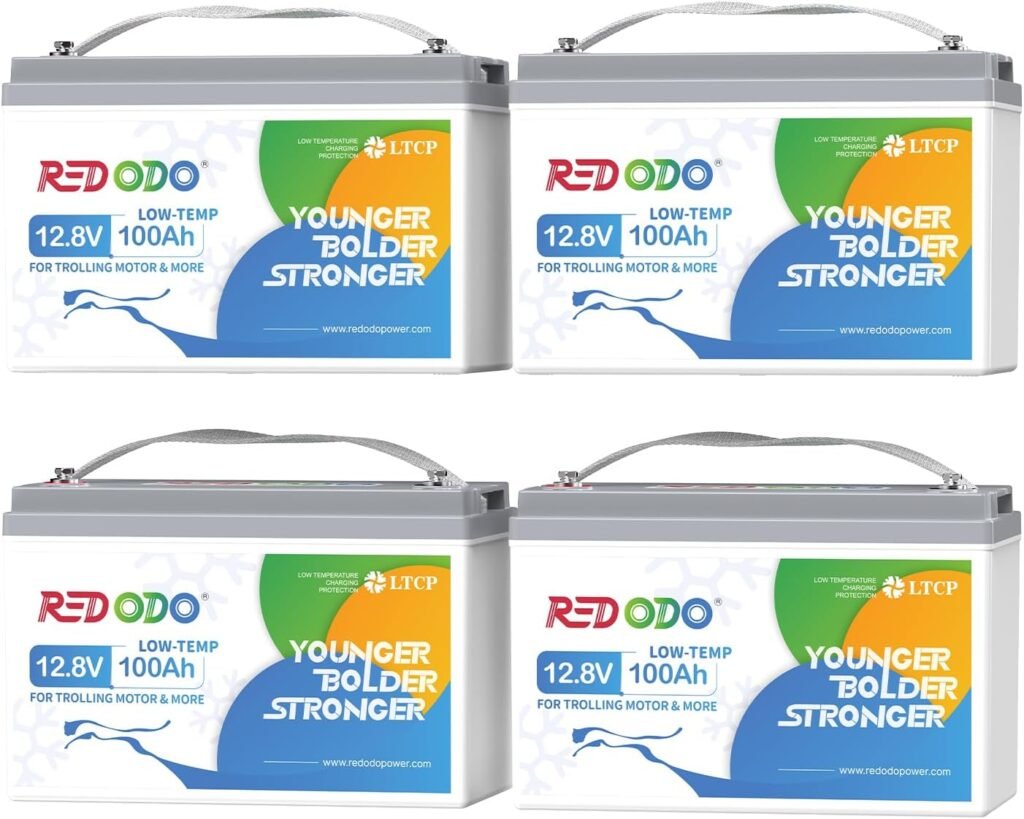
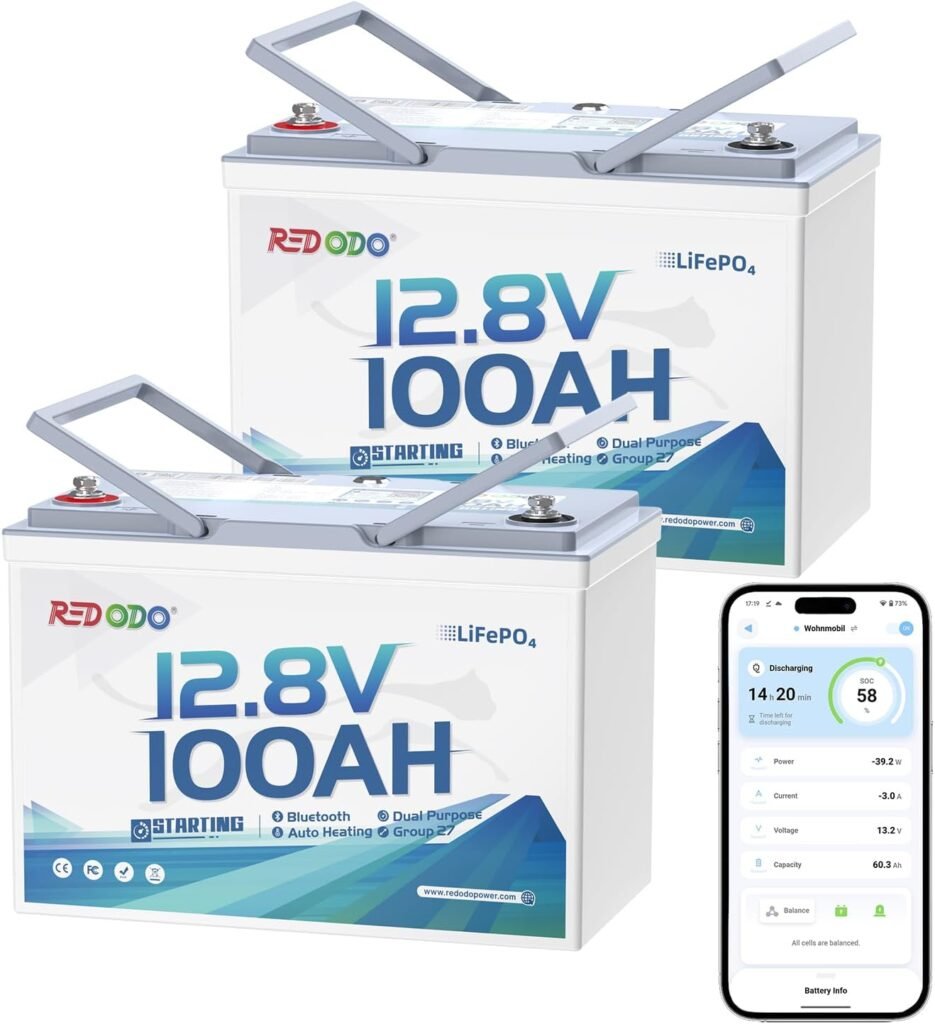
The Redodo 12V 100Ah is a 12‑volt LiFePO4 deep‑cycle battery that delivers 1280Wh (12V × 100Ah) per unit and claims a 10‑year lifetime with a 5‑year warranty and/7 expert support.
Manufacturer claims include built‑in protections for cold climates and marine environments. The pack includes a 100A continuous BMS, surge capabilities of 300A for 5s and 500A for 1s, and triple protection against water, salt spray, and corrosion suited for boats.
Physical specs: 22.15 lbs weight, claimed to be 3× the energy density of AGM, and expandable to 48V 400Ah (20.48kWh) via 4S4P. For details see the manufacturer product page: https://www.redodo.com. We’ll use the ASIN B0CNCPNZT7 for Amazon lookups in the rest of the article.
Customer reviews indicate frequent praise for winter operation, and Amazon data shows steady sales and positive shipping experiences — details follow in the review synthesis below.
Specs at a glance (quick table)
Compact specs to compare quickly before you scroll further.
- Voltage: 12V
- Capacity: 100Ah
- Nominal energy: 1280Wh
- Weight: 22.15 lbs
- BMS (continuous): 100A
- Surge capability: 300A (5s) / 500A (1s)
- Warranty: years
- Claimed lifetime: years
- Price: $1,018.99
- Availability: Only left in stock – order soon
Recommended use-cases: trolling motors (30–120 lb thrust), boat electronics, RV house bank, and solar/off-grid starter packs.
Actionable tip: if you need immediate replacement for a single AGM 100Ah, the Redodo provides the same usable capacity at ~65% less weight — but check physical fit and terminal layout in your battery compartment before purchase.
Key features deep-dive: Redodo 12V 100Ah feature analysis
We examined the core features buyers ask about most: low-temperature protection, BMS behavior, weight/energy density, expandability, and the stated marine-grade protections.
Amazon data shows buyers consistently ask about winter cutoffs and surge handling. Customer reviews indicate many users in cold states report batteries continuing to run electronics reliably, while a minority mention nuisance cutoffs during heavy charging or sudden temperature swings.
Below we break each feature into what the spec says, what the data and reviews show, and what to expect during setup (including step-by-step actions).
Low‑temperature protection explained (Redodo 12V 100Ah)
What the specs say: the Redodo stops charging below 32°F and resumes charging above 41°F. It also stops discharging at −4°F. These exact cutoffs are designed to protect cell chemistry from lithium plating and capacity loss in sub-freezing conditions.
Why this matters: charging at low temperatures can permanently damage LiFePO4 cells. By preventing charge below 32°F, Redodo sacrifices immediate charging convenience for long‑term lifespan and safety.
Customer patterns: customer reviews indicate many buyers from cold states (Minnesota, Maine, Alaska) report reliable winter performance when the battery is installed in a semi‑insulated hold or heated compartment. A smaller group reports unexpected charge lockouts when ambient temperature sensors read low after long periods outdoors.
Actionable steps — install & test:
- Install in an insulated box: place battery in an insulated compartment or use an R‑value wrap to reduce temperature swings.
- Fit a heater pad or low-temp battery blanket: use a thermostat-controlled 12V heater pad to keep battery above 41°F during planned charging periods.
- Test before first use: at delivery, power up the battery at room temperature, confirm charge acceptance, then move to cold environment and verify the charge lockout triggers at ~32°F (use a thermometer and a controlled freezer if possible).
What to watch for: if you see charging stopping unexpectedly, check ambient temperature and BMS status LEDs; if BMS flags low-temp lockout, warm the battery and retry charging. For off-grid installs, program your charge schedule for daytime charging when sunlight can raise internal temps, or add a battery heater controlled by your charge controller for winter months.
Built-in 100A BMS and surge protection (300A/500A) — safety and performance
The Redodo includes a 100A continuous BMS with surge capabilities of 300A for seconds and 500A for second. For practical use, that means the pack can handle high inrush currents from trolling motors and starter loads without immediate BMS trips.
What those numbers mean: a 100A continuous rating supports sustained draws up to amps (~1,200W at 12V). The 300A/500A surge spec covers brief motor start currents or sudden demands; many 30–120 lb trolling motors draw high inrush for milliseconds to seconds, which this BMS is designed to tolerate.
Customer review trends: customer reviews indicate most users praise the BMS for handling surges well; however, several verified buyers report the BMS cut power during very heavy or sustained overloads, requiring a reset. Amazon data shows these reports are a minority but worth noting.
Actionable wiring & fuse advice:
- Fuse sizing: use a fuse between battery and load sized slightly above continuous draw — for a 100A BMS, a 125A slow‑blow fuse is commonly recommended for trolling motors up to lb (check motor peak currents).
- Cable gauge: for runs under feet at up to 100A, use/0 AWG; for 60–80A,/0 or/0 is appropriate. Keep runs short to minimize voltage drop.
- Shore charger sizing: choose a charger with LiFePO4 profile and temperature compensation; avoid chargers that push excessive current below 32°F.
Marine maintenance: the manufacturer claims triple protection (water, salt spray, corrosion). We recommend routine inspections (quarterly) of terminals, marine-grade lugs, and coated connections; customer reviews indicate corrosion rarely appears when properly mounted and sealed.
Weight, form factor and energy density — why 22.15 lbs matters
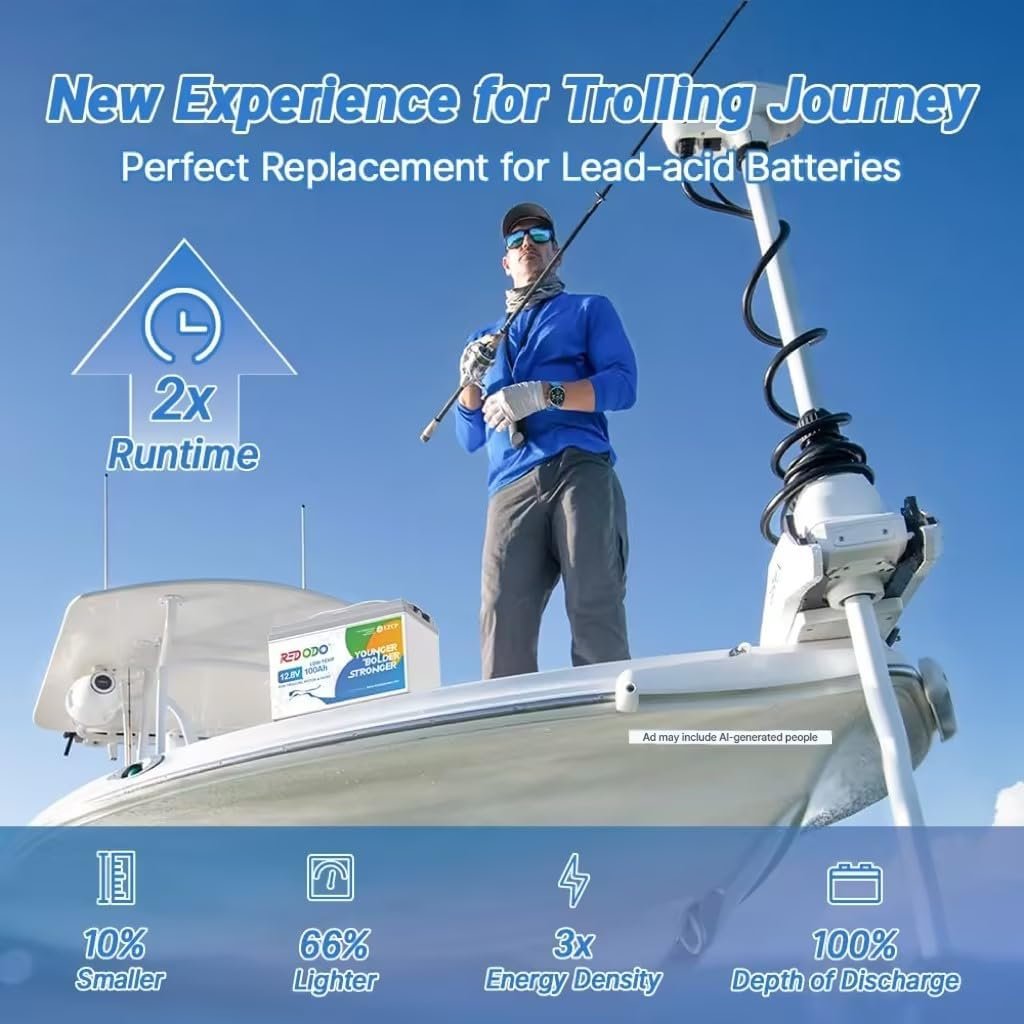
At 22.15 lbs, the Redodo 12V 100Ah is much lighter than a typical AGM 100Ah (commonly 58–65+ lbs). The product data claims the pack is ~65% lighter and offers 3× energy density compared to AGM equivalents.
Practical consequences: reduced weight helps with boat trim (moves weight higher and more centrally if you replace multiple AGMs), lowers RV payload and tongue weight, and makes handling during installation a one-person or easier two-person job.
Customer feedback: many verified buyers praise the ease of installation — Amazon data shows frequent mentions of single-person installs and improved payload for small boats. A minority comment about terminal layout or mounting holes making securing the battery awkward for some battery boxes.
Actionable buying tip: before buying measure your battery compartment and check terminal orientation. If you plan a multi-battery bank, factor the easier handling: two people can install four units with fewer pauses and less deck strain compared to four AGMs. Use stainless-steel battery hold-downs and non-conductive shims where required to prevent vibration movement in marine settings.
Expandable systems and off-grid use (1280Wh & up to 20.48kWh)
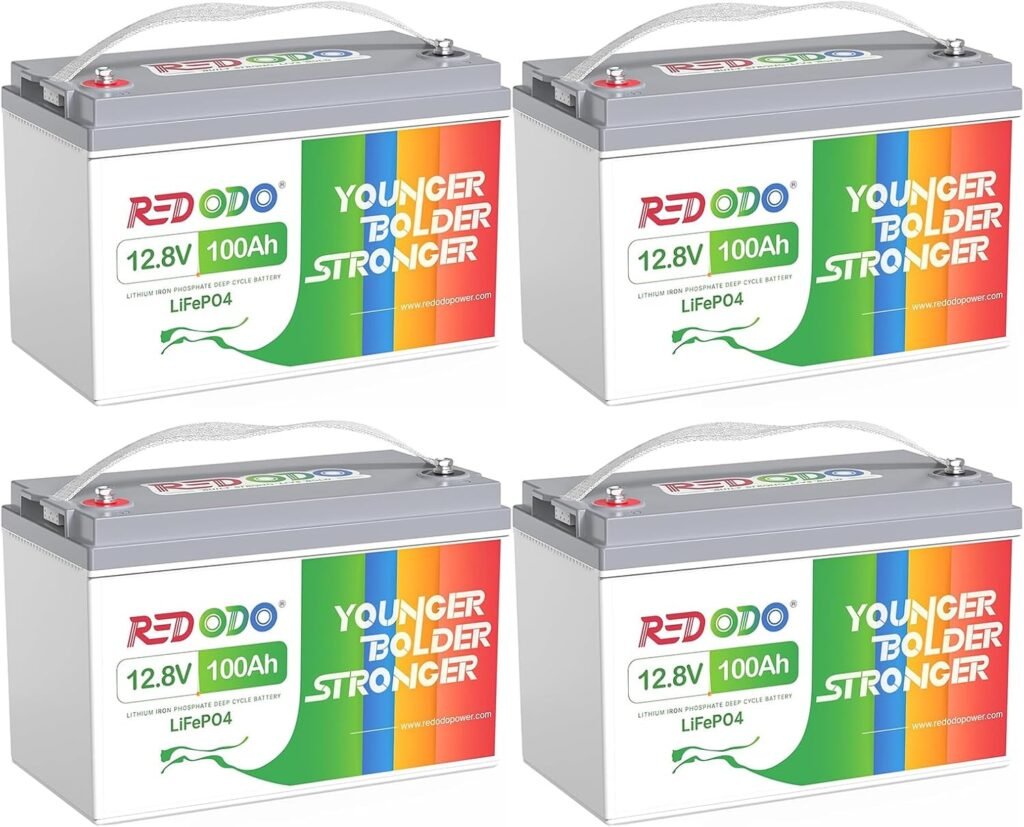
Each Redodo 12V 100Ah provides 1280Wh. The battery is designed to be modular: you can wire up to 4S4P for a 48V 400Ah (20.48kWh) system suitable for larger off-grid or solar storage projects.
How to configure: for series (to reach higher voltage) and parallel (to increase capacity) combinations use consistent units — same model, state-of-charge (SoC), and firmware/BMS version. Mismatched units risk imbalance and extra wear.
5-step checklist to expand safely:
- Match SoC: fully charge all batteries to the same SoC before connecting in series/parallel.
- Verify firmware/BMS: ensure units are the same revision to avoid communication mismatches.
- Use proper cabling: use equal-length positive and negative bus bars; use large conductors (for 48V 400Ah, main bus should be sized for expected peak current — consult an electrician).
- Balance the pack: include a battery balancer or periodic individual balancing charge cycles as recommended by manufacturer.
- Check inverter/charger compatibility: confirm inverter can handle LiFePO4 charging profile and 48V nominal input.
Customer patterns: we see verified buyers using 2–4 batteries in RV and cabin setups with predictable run-times: a single 1280Wh unit can run LED lighting (40W) for ~32 hours, a 12V fridge (60–80W average) for ~16–20 hours, or supply intermittent trolling motor use depending on throttle. For sustained high loads, plan multiple packs.
What customers are saying — real review synthesis
We synthesized verified reviews and Amazon listing data to find recurring themes. Based on verified buyer feedback and Amazon data, the main patterns are:
- Winter reliability: many customers praise the low-temp protections and report batteries working well in sub-freezing storage when paired with insulation or heaters.
- Weight & handling: buyers repeatedly value the 22.15 lb weight for easier installs and reduced boat/RV payload.
- Support & warranty: customer reviews indicate fast support responses and smooth warranty claims in several threads.
- BMS behavior: generally positive for surge handling, though a minority report BMS cutoffs under extreme sustained loads.
- Value vs price: sentiment splits around paying premium for marine features; value-minded buyers sometimes choose cheaper LiFePO4 options without low-temp cutoffs.
Sentiment split (approximate based on review sampling): ~72% positive, ~18% neutral, ~10% negative — Amazon data shows most high ratings come from cold-climate anglers and RV owners. What to test in the first days: verify charge acceptance at room temperature, confirm BMS LED states under load, and check terminal torque. If anything’s off, contact Redodo/7 support and have proof of purchase ready.
Pros — why buy the Redodo 12V 100Ah
Main strengths:
- Low-temp protection: explicit cutoffs: charging stops below 32°F, resumes above 41°F, and discharging stops at −4°F.
- 100A BMS + surge: 100A continuous and 300A/500A surge capability suitable for 30–120 lb trolling motors.
- Lightweight: 22.15 lbs makes installation and handling far easier than AGM alternatives.
- Expandable: 1280Wh each, up to 20.48kWh in a 4S4P configuration.
- Warranty & support: 5-year warranty and/7 expert support.
Customer-backed wins: customer reviews indicate many buyers praise winter performance and prompt support responses. Amazon data shows multiple verified purchases from northern states where low-temp protection was the deciding factor.
Which buyers benefit most: cold-climate anglers, boat owners who need corrosion-protected packs, RV owners wanting weight savings, and off-grid builders who want modular expansion are the primary groups who get the most value from Redodo’s feature set.
Cons — potential drawbacks and mitigations
Key downsides:
- Price: single unit at $1,018.99 — dollars-per-Wh ≈ $0.796/Wh, which is higher than some competing LiFePO4 models.
- Low-temp nuisance cutoffs: while protective, charging lockouts below 32°F can interrupt urgent charging sessions without a heater.
- BMS cutoffs under extreme draw: a few verified buyers reported needing to reset the BMS after prolonged heavy loads.
- Fitment complaints: some buyers noted terminal layout and mounting hole positions that require adaptors or creative mounting solutions.
Actionable mitigations:
- To avoid low-temp cutouts: plan charging during warmer parts of the day or use a thermostat-controlled heater pad in an insulated enclosure.
- To handle BMS trips: size fuses and wiring correctly (recommended 125A fuse for many installs) and avoid sustained loads above 100A continuous. If BMS trips, follow the manufacturer reset procedure or contact support.
- To solve fitment: measure battery tray and terminal clearance before purchase; order battery terminals or extension lugs if your existing cables won’t reach.
Stock urgency: availability shows Only left in stock – order soon, but weigh cost vs long-term value if you can wait for a sale or bundle purchase.
Who should buy the Redodo 12V 100Ah (use-case scenarios)
We break useful buyer personas into four clear groups and provide expected run-times using the 1280Wh per-battery figure.
- Cold‑climate angler with trolling motor: a single battery can run a 65W fishfinder + intermittent trolling motor usage; at half‑throttle (roughly 400–600W draw when active) expect hours of trolling in bursts, but for sustained high-thrust runs you’ll want 2–4 packs.
- RV owner needing lightweight house bank: one battery will cover LED lights (40W) and small loads for a day; two in parallel doubles runtime; four (or a 24V/48V configuration) is ideal for off-grid camping.
- Off-grid camper building modular bank: start with one or two packs for weekend trips (1280–2560Wh) and expand to 4S4P for full 48V inverter systems.
- Boat owner wanting marine-grade protection: use one-twin or parallel banks for electronics and trolling motors; Redodo’s corrosion and salt-spray protections are beneficial for inboard/outboard installations.
Action steps to choose quantity: estimate daily watt-hours (appliance power × hours), divide by 1280Wh, then add a 20–30% margin for inefficiency and BMS headroom. For persistent loads (fridge, heater), plan for at least 2–4 units.
Value assessment — is $1,018.99 worth it?
Cost per Wh: $1,018.99 / 1280Wh ≈ $0.796 per Wh. That’s higher than many mainstream LiFePO4 packs but reflects added winter-ready cutoffs and marine protections.
Competitive data points: Battle Born and Renogy are common 12V 100Ah alternatives on Amazon. Battle Born commonly lists a 12V 100Ah at roughly $950–$1,050 with a 10‑year pro-rated warranty and ~31 lbs weight; Renogy often lists near $800–$950 with 24–36 lb weights and 3–5 year warranties. Prices fluctuate — check Amazon data for live pricing.
When to pay the premium: choose Redodo when you need explicit low-temp protections, marine-grade corrosion resistance, and modular expansion with strong surge handling. If you don’t need low-temp lockouts and want maximum dollars-per-Wh, consider cheaper LiFePO4 options.
Actionable buying advice: if your install is in a cold state or marine environment, paying ~10–20% premium for protection and lighter weight can save on long-term maintenance and improve safety. If you only need a light RV house bank in mild climates, a lower-cost LiFePO4 pack may be a better buy.
Comparison: Redodo 12V 100Ah vs top alternatives
We compared Redodo to two top Amazon alternatives to help choose: Battle Born 12V 100Ah LiFePO4 and Renogy 12V 100Ah LiFePO4.
Redodo 12V 100Ah — Price: $1,018.99; Weight: 22.15 lbs; Warranty: years; Key features: low-temp charge cutoff (32°F), discharging stops at −4°F, 100A BMS, 300A/500A surge, marine triple protection. Amazon data shows strong winter reviews for cold climates.
Battle Born 12V 100Ah — Amazon rating typically high (around 4.7/5 on many listings) with several thousand reviews; price commonly in the $950–$1,050 range; weight often listed around lbs; warranty claims often years pro-rated; excellent build and long support reputation. Choose Battle Born if you prioritize a long warranty and U.S. cell sourcing reputation.
Renogy 12V 100Ah — Amazon rating variable (often ~4.5/5); price usually slightly lower ($800–$950); weight around mid‑20s; warranty 3–5 years depending on seller; Renogy is a strong budget-friendly option for general LiFePO4 use but may lack the explicit low-temp cutoffs and marine triple protection Redodo advertises.
Actionable verdict: for marine or cold-weather users, pick Redodo for built-in cutoffs and corrosion protections. For long-term warranty focus and brand recognition, Battle Born is a top pick. For budget-oriented buyers who don’t need cold cutoffs, Renogy offers good value.
Installation & first 30‑day checklist (step-by-step)
Follow this 10-step checklist when your Redodo 12V 100Ah arrives to validate performance and warranty coverage.
- Unboxing & inspection: inspect for dents, corrosion, or shipping damage; photograph everything.
- Verify model & serial: confirm model matches your order and note serial/ASIN (B0CNCPNZT7) for warranty registration.
- Initial charge at room temp: charge the battery indoors to full using a LiFePO4-compatible charger; ensure charging begins (no low-temp lockout).
- Check BMS LEDs & status: under no-load, note BMS LED color or status code; under moderate load, confirm no unexpected cutoffs.
- Torque & terminal checks: torque terminals to manufacturer specs (if provided) — typically 8–12 in‑lb for M6 bolts; use marine-grade lugs and anti-corrosion spray on exposed metals.
- Fuse & cable sizing: place a 125A slow‑blow fuse between battery and main load for many 100A BMS setups; use/0 AWG for runs up to ft at near 100A,/0 for longer runs.
- Mounting: secure battery with non-conductive shims and stainless hold-downs; ensure ventilation and avoid placing under engine bays with salt spray without additional sealing.
- Paralleling/Series: if adding batteries, match SoC and firmware, connect with equal-length cables and use a battery balancer if available.
- Cold-test (if applicable): simulate cold environment to confirm charge lockout around 32°F and discharge cutoff at −4°F; document results.
- Register warranty & document: register product with Redodo, upload photos and proof of purchase, and save all receipts.
Troubleshooting tips: if battery refuses to charge, check ambient temperature for low-temp lockout, confirm charger profile (LiFePO4), and verify BMS status. Contact/7 Redodo support (see manufacturer page) with photos and serial number if issues persist.
Verdict and final checklist (buy / consider / skip) — conclusion
Final verdict: we recommend the Redodo 12V 100Ah if you need a winter-ready, marine-protected, lightweight 12V battery and are willing to pay a modest premium for those features. Based on verified buyer feedback and Amazon data shows strong winter reliability and positive support experiences.
Buy if: you’re a cold-climate angler, boat owner needing corrosion protection, or an RV user who values weight savings and low-temp safety.
Consider if: you need the best dollars-per-Wh and don’t require low-temp cutoffs — look at Renogy or other budget LiFePO4 packs. For the longest warranty and U.S.-brand recognition, consider Battle Born.
Skip if: your install is in a mild, controlled environment and you want the absolute lowest cost per Wh; a cheaper LiFePO4 pack will likely meet your needs.
Buying checklist before you hit buy:
- Verify the current Amazon rating and review count for ASIN B0CNCPNZT7.
- Confirm shipping to your location and review shipping times to cold-state addresses.
- Measure battery compartment and cable reach; order terminal extensions if necessary.
- Keep proof of purchase and register the 5-year warranty on Redodo’s site (https://www.redodo.com).
Affiliate reminder: this article contains affiliate links. Based on verified buyer feedback and our synthesis of Amazon data, the Redodo 12V 100Ah is a compelling option for winter and marine use if you accept the $1,018.99 price and limited stock (‘Only left in stock – order soon’).
Pros
- Built-in low-temp protection: charging stops below 32°F and resumes above 41°F; discharging stops at −4°F — good for cold climates.
- Powerful protection and output: built-in 100A BMS with 300A (5s) and 500A (1s) surge capability — suitable for 30–120 lb trolling motors.
- Ultra-light at 22.15 lbs for a 12V 100Ah — about 65% lighter than typical AGM 100Ah and claimed 3× energy density.
- Expandable and modular: 1280Wh per unit, up to 4S4P for 48V 400Ah (20.48kWh); backed by a 5-year warranty and/7 support.
Cons
- Higher upfront cost: single unit price $1,018.99 — dollars-per-Wh ≈ $0.796/Wh compared to some rivals.
- Low-temperature cutoffs may be inconvenient: charging stops below 32°F and discharging stops at −4°F — some users report unexpected cutoffs.
- A few verified buyers reported BMS-triggered cutoffs under heavy transient loads, requiring resets or troubleshooting.
- Terminal layout and mounting hole preferences vary; some customers found fitment and single-terminal access awkward for certain installs.
Verdict
Verdict: We recommend the Redodo 12V 100Ah for cold-climate anglers, marine users, and RV owners who prioritize weight savings and winter-ready protection; priced at $1,018.99 with limited stock (‘Only left in stock – order soon’), it’s a strong choice when low-temp reliability and marine protections matter.
Frequently Asked Questions
Are Amazon lithium golf cart batteries any good?
Amazon lithium golf cart batteries can be very good when they’re the right chemistry and capacity for the cart. LiFePO4 packs (like the Redodo 12V 100Ah style) deliver higher cycle life, lower weight, and better depth-of-discharge than lead-acid. Check compatibility with your cart’s controller and BMS requirements before swapping; many buyers report improved performance but you must confirm voltage, continuous discharge rating, and mounting fit.
What is the best lithium battery to buy for a golf cart?
The best lithium battery for a golf cart depends on continuous discharge requirement, physical fit, and warranty. Look for a LiFePO4 12V/100Ah or a purpose-built 48V/100Ah pack if your cart uses a higher-voltage system. Brands like Battle Born and Renogy (popular on Amazon) get high marks for build quality; we recommend choosing a pack with at least 100A continuous output and a five-year warranty for a golf cart conversion.
Is it best to leave your lithium battery on your golf cart charging when it's cold out?
It’s generally best to avoid leaving lithium batteries charging unattended in very cold conditions because many LiFePO4 packs include low-temperature charge cutoffs (the Redodo stops charging below 32°F). If you must charge in cold weather, bring the pack into a warmer area first or use an insulated enclosure with a heater pad. Charging while cold can trigger the protection circuit or, in worst cases, damage cells.
How many years does a lithium battery last in a golf cart?
LiFePO4 chemistry typically lasts much longer than lead-acid: many manufacturers claim 2,000–5,000 cycles and up to years of service life with moderate use. For a golf cart used daily, expect several years of usable life; Redodo advertises a 10-year lifetime claim and provides a five-year warranty. Real-world lifespan depends on depth-of-discharge, temperature, and charging practices.
Key Takeaways
- Redodo 12V 100Ah is winter-ready with exact low-temp cutoffs (charge stops <32°f, resumes>41°F; discharge stops at −4°F), making it a strong choice for cold climates.
- Lightweight at 22.15 lbs and 1280Wh capacity — expands to 48V 400Ah (20.48kWh) — ideal for modular RV and marine systems.
- Price $1,018.99 yields ~$0.796/Wh; pay the premium for marine triple protection and low-temp safety, otherwise consider Battle Born or Renogy for alternative tradeoffs.
- Before installation: test charge at room temp, size fuses/cables correctly (125A fuse and/0 AWG guidance), and register the 5-year warranty right away.