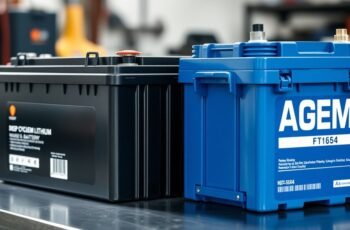
When weighing the options for a 100AH deep cycle lithium battery, the question isn’t just about capacity but about what truly underpins long-term performance and safety. We recognize that choosing the right model involves analyzing chemistry, safety features, and durability—factors that directly impact system reliability. As technology advances, it becomes essential to compare the nuances among leading options, ensuring your investment aligns with both your energy needs and operational expectations. So, what should you prioritize when selecting the best fit?
Key Takeaways
- Compare battery chemistries like LiFePO4 for longer cycle life and safety.
- Evaluate safety features such as integrated BMS and protections against overcharge and thermal runaway.
- Assess performance metrics including energy density, voltage stability, and charge acceptance.
- Consider durability factors like cycle life, resistance to thermal stress, and build quality.
- Analyze price-to-performance ratio, including upfront costs and long-term reliability benefits.
What to Consider When Choosing a 100AH Deep Cycle Lithium Battery
When selecting a 100AH deep cycle lithium battery, it’s essential to evaluate several technical factors to guarantee peak performance and longevity. Battery safety must be prioritized, ensuring the battery features built-in protections against overcharge, over-discharge, and thermal runaway. Proper installation tips are critical for maintaining safety and ideal operation; this includes correct wiring, secure connections, and adequate ventilation. Compatibility with your existing system, such as voltage and current requirements, also influences the choice. Additionally, consider the battery’s BMS (Battery Management System) for monitoring and safeguarding functions. A thorough assessment of these factors ensures reliable performance, prevents safety hazards, and extends the lifespan of the battery in demanding applications.
Top Features of Leading 100AH Lithium Batteries for RV, Marine, and Solar Use
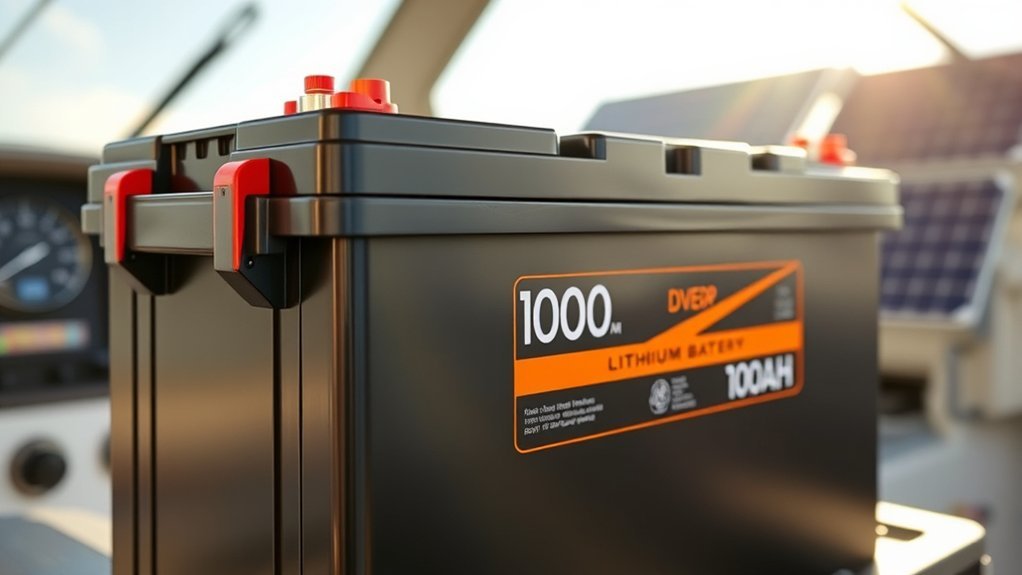
Leading 100AH lithium batteries for RV, marine, and solar applications are distinguished by a combination of advanced safety features, high energy density, and robust durability. These batteries incorporate sophisticated battery safety mechanisms, such as integrated BMS (Battery Management Systems), which prevent overcharging, thermal runaway, and short circuits, ensuring safe operation across diverse environments. Their high energy density offers efficient power storage with minimal weight, *essential* for mobile and space-constrained applications. Additionally, these batteries demonstrate exceptional durability, maintaining performance over numerous charge-discharge cycles. From an environmental perspective, leading models minimize environmental impact through reduced toxic materials, recyclability, and lower carbon footprint during manufacturing. These features collectively make them reliable, safe, and environmentally conscious choices for RV, marine, and solar energy systems.
Comparing Price, Performance, and Durability of Popular 100AH Models
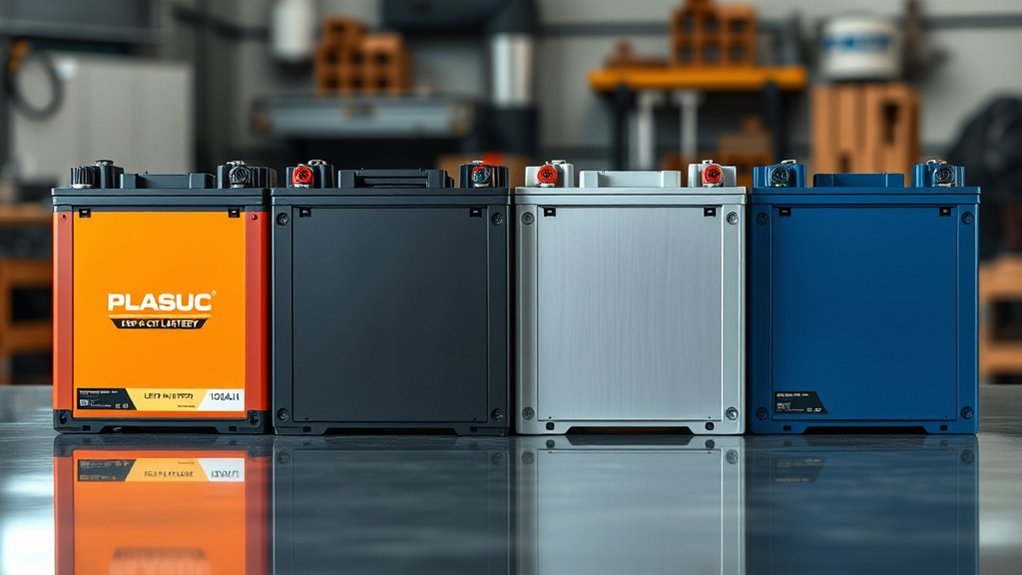
Evaluating 100AH lithium batteries involves a close examination of their cost, operational performance, and long-term durability. Battery chemistry plays a critical role, influencing both cycle life and efficiency; for instance, lithium iron phosphate (LiFePO4) batteries generally outperform other chemistries in longevity and thermal stability. Performance metrics such as voltage stability and charge acceptance depend heavily on appropriate charging protocols, which vary among models. Differences in design and build quality also affect durability, with some brands offering better resistance to thermal stress and cycling wear. Price variations often reflect these factors, but higher upfront costs can translate into better long-term value. Ultimately, appraising these elements helps identify models that deliver ideal performance and durability within a reasonable price range.
How to Select the Best 100AH Lithium Battery for Your Energy Needs
Selecting the most suitable 100AH lithium battery requires a thorough assessment of your specific energy requirements and operational conditions. We recommend evaluating your daily power consumption, depth of discharge, and charging cycles to determine capacity needs. Pay close attention to battery safety features, such as built-in protection circuits, to prevent overcharging or overheating. Additionally, consider installation guidelines to guarantee proper ventilation, secure mounting, and appropriate wiring, which are critical for safe operation. Compatibility with existing systems, such as inverters and charge controllers, also influences ideal selection. By analyzing these factors, you can identify a battery that maximizes performance while maintaining safety standards. This strategic approach ensures your chosen 100AH lithium battery aligns with your energy demands and operational safety protocols.
Tips for Maintaining and Extending the Life of Your 100AH Lithium Battery
To maximize the lifespan and performance of your 100AH lithium battery, consistent maintenance practices are essential, especially given the battery’s sensitivity to operational conditions. Prioritizing battery safety involves monitoring for signs of overvoltage, overheating, or physical damage, which can compromise integrity and reduce lifespan. Strict adherence to proper charging protocols is critical; this includes using compatible chargers with appropriate voltage and current settings, avoiding deep discharges, and maintaining a consistent charge cycle. Regularly inspecting terminals and ensuring proper thermal management prevent corrosion and thermal runaway, respectively. By implementing these technical maintenance measures, you optimize battery efficiency, safety, and longevity, ensuring reliable performance over time.
Frequently Asked Questions
Are 100AH Lithium Batteries Safe for All Weather Conditions?
Yes, 100Ah lithium batteries are generally safe across all weather conditions due to their excellent temperature resilience and battery longevity. However, extreme environments may still impact performance, so proper insulation and monitoring are recommended for ideal operation.
How Do 100AH Lithium Batteries Compare to Lead-Acid Options?
Imagine powering an RV; 100Ah lithium batteries outperform lead-acid by offering longer battery lifespan and higher charging efficiency, reducing maintenance and downtime. We find lithium’s advanced chemistry provides superior performance in demanding, real-world conditions.
Can 100AH Lithium Batteries Be Used for Off-Grid Applications?
Yes, 100AH lithium batteries suit off-grid use due to their longer battery lifespan and higher charging efficiency, reducing maintenance and downtime. They provide reliable energy storage, making them ideal for remote, renewable, or mobile off-grid systems.
What Are the Environmental Impacts of Using Lithium Batteries?
We recognize lithium batteries’ environmental impacts, including mineral extraction and waste. Recycling programs mitigate these effects by reclaiming materials, but ongoing improvements are essential for sustainable use and reducing ecological footprints over their lifecycle.
Are There Any Warranties or Guarantees on 100AH Lithium Batteries?
We find that most 100AH lithium batteries come with warranties covering battery lifespan and charging efficiency, typically ranging from 3 to 10 years, providing assurance of performance and durability through manufacturer guarantees.
Conclusion
In the vast landscape of 100AH deep cycle lithium batteries, making the right choice is akin to steering through a complex labyrinth. By analyzing factors like chemistry, safety, performance, and durability, we can chart a course toward ideal energy solutions. Remember, the right battery isn’t just a component—it’s the backbone of your power system, ensuring your energy journey remains steady and reliable amid the shifting currents of technology and needs.