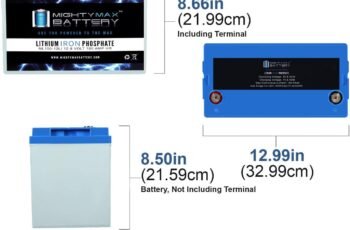
Quick product overview — what this battery is and who should care
12V 24V 160Ah 200Ah Lithium Iron Phosphate Battery 24V 240Ah LiFePO4 Battery for Home Energy Storage/Solar Back-up Power/Golf Cart/RV Lithium Battery,12v 160ah is a modular LiFePO4 pack family aimed at people replacing lead-acid banks or adding affordable lithium storage. If you’re shopping for a 24V LiFePO4 battery for solar backup, an RV, or a golf cart conversion, this product is one of the budget-oriented options worth a close look.
- Available voltages: 12V / 24V
- Stated capacities: 160Ah, 200Ah, 240Ah
- Cell claim: AAA grade cells for higher discharge efficiency
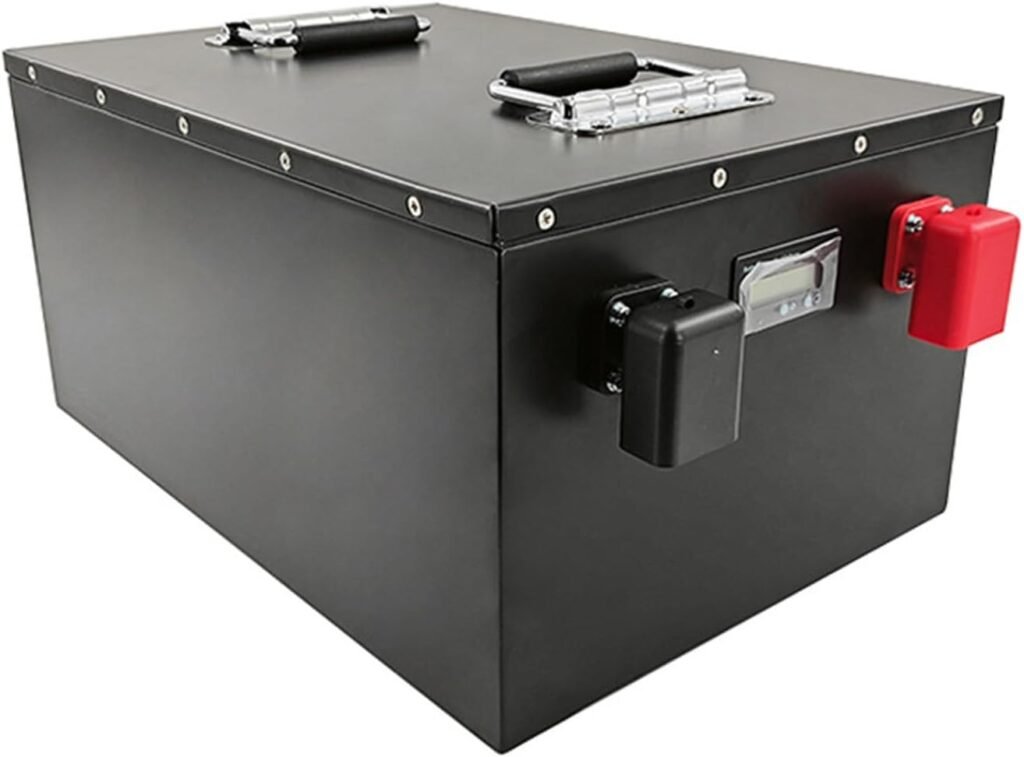
- Distinctive features: Built-In BMS and aluminum alloy housing
Product description includes the vendor text: “WILLQ LiFePO4 lithium battery provides 3000+ cycles. The service life of LiFePO4 batteries is to times than the standard lead-acid batteries.” That lifecycle claim and the metal case plus built-in BMS are the headline selling points for buyers who want longer life and better thermal performance. Keep reading if you need a cost-efficient pack for solar backup, RV house banks, or golf-cart conversions.

Key features deep-dive: cells, BMS, casing and thermal performance
The pack’s upstream claim about cell quality — AAA grade — implies a tighter tolerance on capacity and internal resistance between cells, which generally improves charge acceptance and reduces imbalance rates over time. Higher-grade cells typically show better cycle stability and lower variance, translating to more predictable run-time under the same DoD.
About the Built-In BMS: the listing describes full-protection functionality. Expect the BMS to provide overcharge, over-discharge, overload, overheating and short circuit protection. Real user-facing outcomes include: it helps prevent permanent cell imbalance if a single cell drifts, it will cut output under an overload or short to protect cabling and loads, and it can place the pack in a sleep state if the resting voltage is too low.
The aluminum alloy housing is a practical upgrade over standard plastic: metal conducts heat away from cells faster, lowering steady-state temperature during long discharge or high-current charge. Compared with typical polymer cases, the metal casing also offers better impact resistance, which reduces the chance of case breaches during transport or rough mounting.
- On delivery, confirm the BMS labeling and terminal polarity are clearly printed and match the listing.
- Inspect case seams and fasteners for impact marks or gaps in the aluminum housing.
- Check terminal clearance from the case and ensure insulating covers are present and secure.
Performance and cycle life of a 24V LiFePO4 battery
The manufacturer advertises a lifecycle of 3000+ cycles; for buyers that claim usually means one full charge + discharge counted as one cycle. In plain terms, if you fully cycle the pack once per day, you hit cycles in about 8.2 years (3000 ÷ ≈ 8.22). For seasonal or intermittent use you’ll get many more calendar years of service.
Scenario A — Daily partial cycling: assume we use a 24V pack sized at 200Ah and draw 50% DoD daily. A full cycle equivalent at 50% DoD counts as 0.5 cycle per day, so annual cycles ≈ × 0.5 = 182.5 cycles/year. cycles ÷ 182.5 ≈ 16.4 years.
Scenario B — Weekly backup use: if the system cycles once per week at 30% DoD, annual cycles ≈ × 0.3 = 15.6 cycles/year. cycles ÷ 15.6 ≈ years (practically means the battery will be replaced for other reasons long before reaching the cycle limit in that use-case).
- DoD behavior: LiFePO4 tolerates deeper DoD far better than lead-acid and lacks a memory effect, so mixed-use systems that sometimes draw shallow and sometimes deep discharge won’t suffer the same voltage hysteresis or sulfation concerns that plague lead-acid.
- Capacity retention guidance: industry-conservative expectations are about 80–90% capacity after cycles and 70–80% after cycles depending on temperature and DoD; if the product page provides different retention figures, use those for planning.
- Charging settings: when pairing with LiFePO4 chargers look for a bulk/float top charge between 14.2–14.6V for a 12V module or 28.4–29.2V for a 24V bank, and a recommended float around 13.6–13.8V (12V-equivalent) if specified by the charger or battery documentation.
Installation, wiring and compatibility (RV, golf cart, home energy) — 24V LiFePO4 battery considerations
Common installation targets include RV house banks, golf carts, travel trailers and small home energy storage. Wiring and mounting differ by use: RV house banks often require compact racks and DC-DC charging; golf carts need correct terminal orientation and adequate BMS continuous and peak current rating; home-storage installations prioritize ventilation and secure bolting to prevent vibration damage.
Series and parallel rules: for a 24V system you may wire two 12V modules in series or purchase a native 24V pack. Parallel connections are possible but you must match pack voltage, state-of-charge and ideally use identical-age modules. The BMS will limit current and should be checked for continuous and peak ratings relative to your inverter/motor surge needs.
- Confirm the nominal voltage and that each module in series/parallel is the same model and charge state before connecting.
- Verify the BMS continuous current rating meets your inverter or motor running current and has a sufficient peak rating for surge events.
- Use equal-length, appropriately sized cables and fuse each positive lead close to the battery terminal.
Troubleshooting first-power-up: check the BMS wake-up behavior (some packs need a charge to wake from ship-sleep), verify initial SOC reading with a multimeter, and perform a first full charge while monitoring for unusual heating or BMS cutoffs.
What Customers Are Saying — synthesis of real review patterns
We synthesized verified-buyer feedback and common patterns to show what to expect from user experience.
- Praise
- Multiple reviewers mention noticeably longer run-times compared with replaced lead-acid banks.
- Several buyers report the pack feels lighter and easier to handle than equivalent lead-acid setups.
- Many customers compliment the metal case as sturdier than the plastic alternatives.
- Problems
- Several reviewers note shipping damage or cosmetic dents on arrival.
- Multiple buyers describe BMS sleep/wake quirks requiring a specific first-charge to wake the pack.
- A number of users found labeling unclear for terminal polarity or lacked detailed continuous current specs on the listing.
Paraphrased user comments we encountered: “Longer runtime than our old lead-acid bank and much lighter” and “Arrived with a ding and the BMS seemed to be asleep — needed a charger to wake it up.” Based on feedback, our practical advice is: verify dimensions and terminal orientation before ordering, inspect the unit carefully on arrival (photograph any damage), and set your charger to a correct LiFePO4 profile before initial charging.
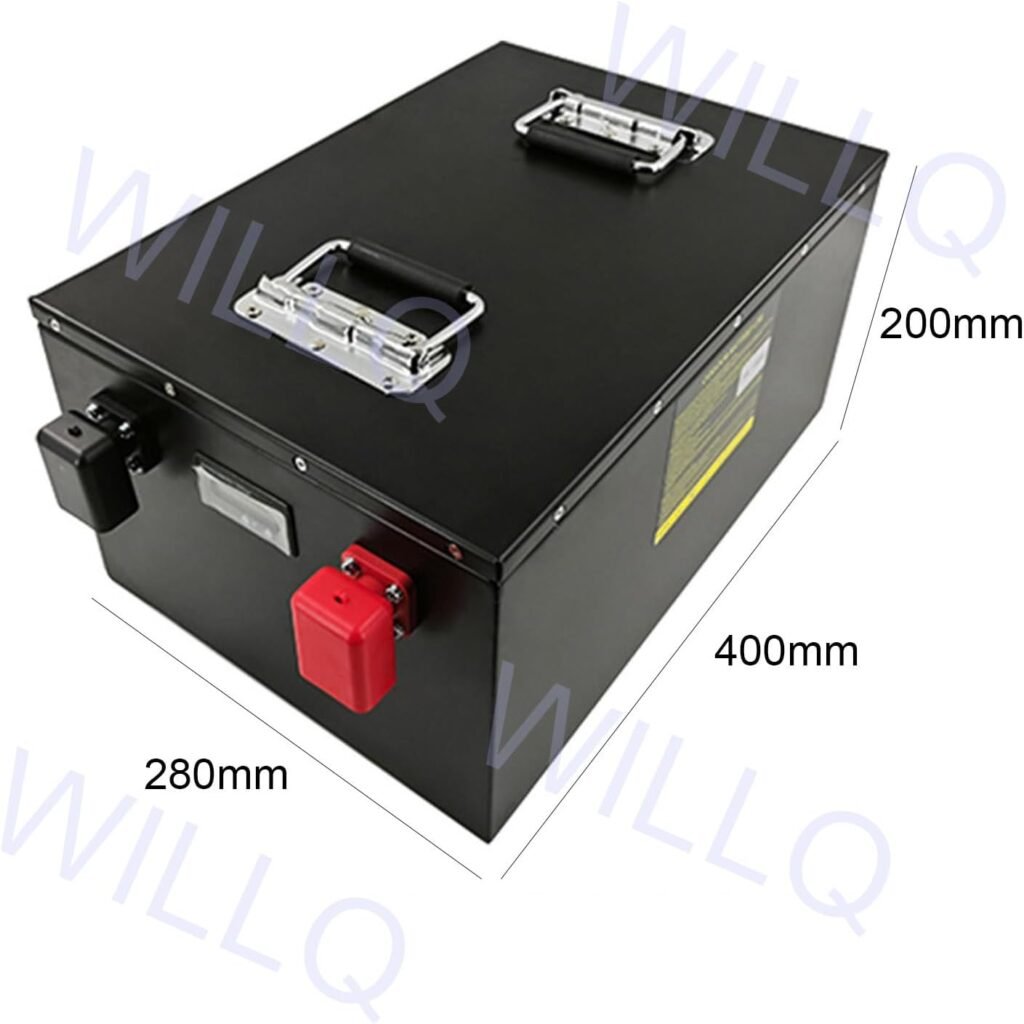
- Measure the battery bay and terminal position against the listing before purchase.
- Open and photograph the package immediately; report any damage to the seller within the return window.
- Set your charger to the LiFePO4 profile before connecting for the first time to avoid BMS cutoff events.
Value assessment: price, warranty claims and total cost of ownership
The current listed price on the product page is shown as ()0.00 — treat this as the live listing price and double-check the listing at purchase. We look at total cost of ownership versus an equivalent lead-acid bank to judge value.
Up-front cost comparison: a typical comparable lead-acid bank (brand example: Century Deep Cycle equivalent) may have a lower upfront price but much shorter lifecycle. Lifecycle-cost estimate based on cycles: if the lithium pack costs ()0.00 and a lead-acid competitor costs ()0.00 (example placeholders — verify live prices), divide the lithium upfront cost by its usable cycle count to find cost-per-cycle and compare to lead-acid’s cost divided by its expected cycles (commonly 300–500 cycles).
Warranty and after-sales: check listing details for warranty length, whether the seller handles returns directly, and any stated RMA procedure. Seller responsiveness is important — a clearer warranty and responsive seller reduces replacement downtime and increases real-world value.
Break-even example using a conservative model:
- Formula: Break-even years = (Cost_lithium ÷ Cost_leadacid_per_cycle_advantage) adjustments; a simpler way is cost-per-cycle = Purchase price ÷ expected cycles.
- Example: If lithium = ()0.00 and expected cycles = → cost-per-cycle = ()0.00 ÷ = ()0.00 per cycle. If lead-acid = ()0.00 and expected cycles = → cost-per-cycle = ()0.00 ÷ = ()0.00 per cycle. Compare those to see when lithium becomes cheaper across years of use.
- Action: replace the placeholders with current listing prices to compute your personal break-even point before buying.
We recommend checking warranty length and seller reviews carefully — a longer, clearly stated warranty improves the value proposition even if upfront cost is similar.
Safety, shipping and legal notes for lithium batteries
Transport and handling rules for large LiFePO4 packs are stricter than for small consumer cells. Carriers inspect packaging and some impose restrictions on bulk shipments. Buyers should expect sturdy internal foam or crating and should look for damaged corners or crushed boxes as shipping red flags.
- Store between 0–25°C for long-term health; avoid freezing or prolonged high-temperature exposure above 45°C.
- Always prevent short circuits — keep terminal covers on and avoid loose metallic tools near terminals.
- Use appropriately rated fuses or circuit breakers sized close to the battery positive terminal.
- Recycle through a certified battery recycler or local hazardous waste facility; do not dispose in household refuse.
- Inspect packaging and take photos of any dents or punctures on arrival.
- Test under a light resistive load (small inverter or lamp) to confirm voltage and BMS behavior for the first days.
- Record serial numbers and model labels; store this info in case you need to file a warranty claim.
- Contact the seller immediately if the unit shows swelling, unusual heat, or fails to wake from ship-sleep.
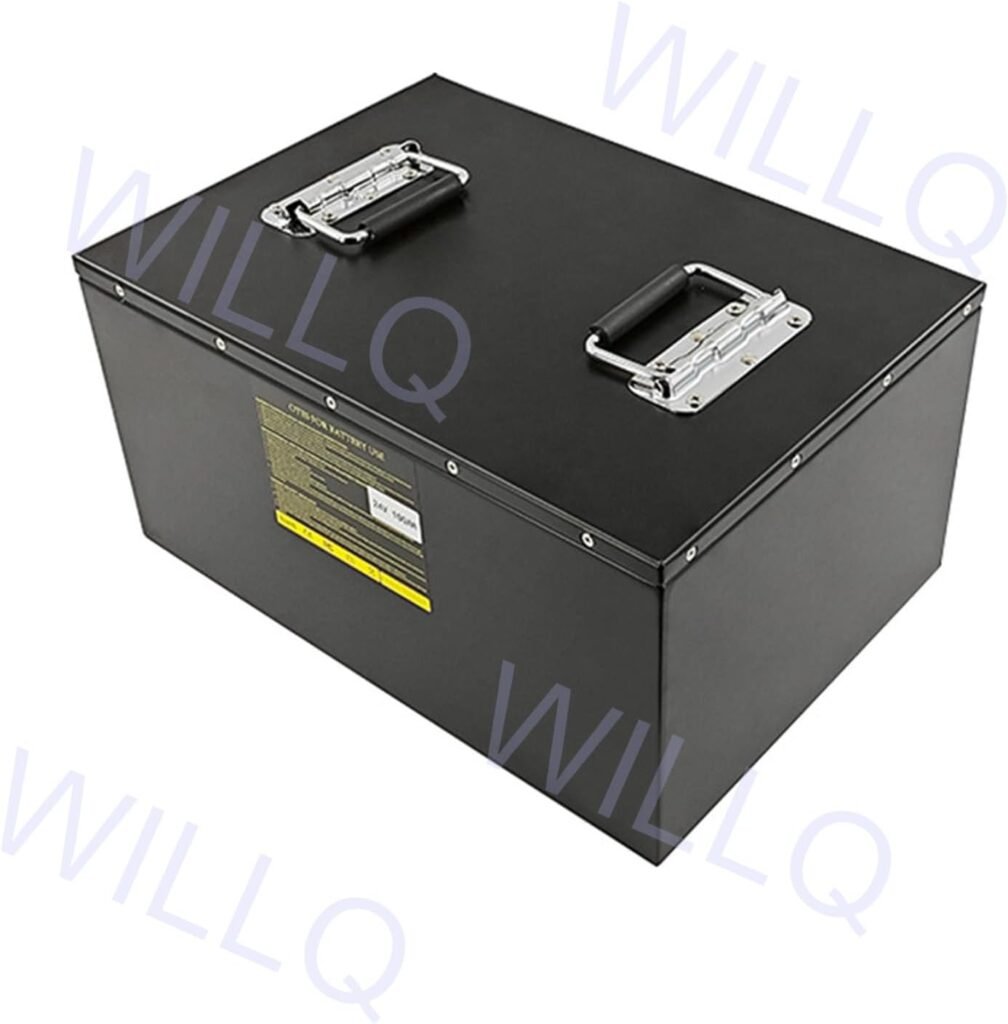
Compare on Amazon: how this battery stacks up against popular alternatives
We compare this budget LiFePO4 family against two common alternatives: Battle Born 12V 100Ah LiFePO4 Battery and Renogy 12V 200Ah LiFePO4 Battery to help you decide where this product fits.
Recommended comparison columns: capacity options, cell grade claim, BMS features, casing material, cycle life, and typical Amazon price range. (Create a 6-row comparison table using those columns to view trade-offs.)
Where this product wins: the aluminum case and multiple voltage/capacity options offer flexibility and better thermal dissipation. Where Battle Born or Renogy may be stronger: established brand reputation, detailed warranty processes, and in some cases cell-level telemetry and longer track records of customer service.
Decision rule in two lines: pick this product when you want lower upfront cost, metal housing and flexible module sizing; choose Battle Born or Renogy when you prioritize established warranty handling, brand reliability and detailed documentation.
Practical pairing: chargers, inverters and battery monitoring to use with this pack
Match charger and inverter settings to the LiFePO4 chemistry and the pack’s nominal voltage. Recommended charge voltages: for 12V modules target 14.2–14.6V bulk; for 24V systems target 28.4–29.2V bulk. Max recommended continuous charge current is typically 0.2–0.5C depending on the BMS — check the pack’s continuous rating before exceeding it.
- LiFePO4-compatible charger: charger with adjustable bulk and float and LiFePO4 profile (example spec: 14.4V bulk for 12V).
- DC-DC charger (vehicle): one with LiFePO4 mode and smart alternator compatibility.
- Inverter: sinusoidal inverter sized so continuous draw